I’ve seen coworking spaces thrive when people from different cultures work together. The mix of languages, traditions, and perspectives creates an environment where ideas flow more freely.
When you actively embrace cultural diversity in your coworking space, you build a stronger, more connected community that benefits everyone.

Diversity doesn’t happen by accident—it grows when you create the right environment. You can make everyone feel welcome by hosting inclusive events, having flexible policies, or offering shared learning opportunities.
Some spaces host cultural celebrations or skill-sharing workshops to help members connect on a deeper level.
When people feel valued for who they are, they contribute more and work better together. A coworking space that celebrates cultural diversity becomes a place where people want to stay, work, and grow.
Understanding Cultural Diversity in Coworking Spaces
Coworking spaces bring together people from many different cultures, industries, and experiences. This mix shapes how we work, share ideas, and solve problems in ways that a single-culture environment can’t match.
Defining Cultural Diversity and Inclusion
Cultural diversity means having people from different nationalities, languages, religions, and traditions working in the same coworking environment. It’s not just about who is present—it’s about the range of perspectives they bring.
Inclusion means making sure everyone feels welcome, respected, and able to contribute. Without inclusion, diversity can exist on paper but not in practice.
In a coworking space, this can look like:
- Offering multilingual signage and communication
- Respecting cultural and religious holidays
- Designing spaces that are accessible to people with disabilities
When diversity and inclusion work together, members feel valued and collaborate more willingly. This boosts creativity and strengthens the coworking community.
The Evolution of Coworking Environments
Coworking started as a flexible alternative to traditional offices. Early spaces attracted freelancers and startups looking for affordable work areas.
Over time, the model expanded to include corporate teams, remote workers, and nonprofits. This growth brought more diverse backgrounds into the same physical space.
In some regions, coworking operators now design their spaces to foster diversity and inclusion. They focus on community-building events, cultural exchange programs, and inclusive hiring for staff.
Modern coworking environments often blend workstations, quiet zones, and social areas. This setup supports different work styles and cultural preferences.
By evolving beyond shared desks, coworking spaces have become hubs for cross-cultural learning and professional networking.
Why Cultural Diversity Matters
Cultural diversity in coworking spaces directly affects how well members connect, innovate, and solve problems. Different perspectives lead to new ideas and approaches that a more uniform group might miss.
For example, someone from the U.S. and someone from Japan might tackle a marketing challenge in different ways. In a shared coworking environment, these viewpoints can merge into a stronger solution.
Diversity also helps build empathy. People become more aware of global issues and more skilled at communicating across cultures.
Spaces that embrace cultural diversity often see higher member satisfaction and retention.
Benefits of Embracing Cultural Diversity
Working alongside people from different cultures brings fresh perspectives, new problem-solving approaches, and a richer exchange of ideas. These differences can lead to better solutions and stronger professional connections.
Enhanced Creativity and Innovation
Cultural diversity often sparks creativity and innovation because each person brings unique experiences and viewpoints. When we share these ideas, we approach challenges from new angles.
In coworking spaces, I’ve seen teams combine design trends from one country with marketing strategies from another. This mix can lead to products or services that stand out.
Research shows that diverse teams make more well-rounded decisions because they consider a wider range of possibilities. In my experience, this means fewer blind spots and more chances to discover solutions that work for more people.
A coworking space that promotes diversity, like those described in this guide on workplace diversity, often sees members collaborate in ways that push boundaries.
Broader Networking Opportunities
Working with people from various backgrounds expands my networking opportunities. Each person has their own set of contacts, industries, and cultural insights.
This variety means I can connect with professionals in fields I never expected. For example, I once met a designer from Japan who introduced me to a client in Europe.
Coworking spaces that host events celebrating different cultures make it easier to meet people I might not meet otherwise. These events often lead to collaborations that go beyond the shared workspace.
Personal Growth and Empathy
Being around people from different cultures has helped me develop personal growth and empathy. I’ve learned to listen more carefully and adapt my communication style.
This skill helps me at work and improves my relationships in everyday life. It also makes it easier to work in international teams.
In one project, I worked with colleagues from five different countries. By understanding their perspectives, I avoided conflicts and built trust faster.
As coworking diversity research shows, this kind of environment helps people become more adaptable and open-minded.
Building an Inclusive Coworking Community

I focus on creating spaces where people feel welcome, respected, and able to contribute. This means paying attention to how we connect, how we design our environment, and how we support those who may face barriers.
Fostering a Sense of Belonging
I make sure every new member feels noticed from day one. A simple personal introduction to other members helps break the ice.
I also encourage casual meetups like coffee mornings or shared lunches. Shared rituals build trust.
For example, celebrating small wins together—like a project launch—creates positive memories.
Ways I build belonging:
- Learn and use people’s names
- Pair new members with a “welcome buddy”
- Create open seating areas for easy interaction
When people feel they belong, they are more likely to share ideas and collaborate. This strengthens the coworking community.
Inclusive Community Practices
I design our space and rules with everyone in mind. Clear guidelines for respectful behavior set the tone.
I make sure our events and resources are accessible to people with different needs. I use feedback forms to learn what’s working and what’s not.
This gives members a voice in shaping the community.
Some practices I follow include:
| Practice | Why It Matters |
|---|---|
| Flexible seating | Supports different work styles |
| Quiet zones | Helps those who need focus |
| Language accessibility | Encourages participation from non-native speakers |
By applying these steps, I create an inclusive coworking environment where everyone feels valued.
Supporting Underrepresented Groups
I reach out to people from backgrounds that are less represented in coworking. This includes women in tech, people with disabilities, and minority entrepreneurs.
I partner with local organizations that support these groups. Together, we host workshops and networking events that lower barriers to entry.
I also offer flexible membership options, such as discounted rates or part-time access, to make the space more affordable.
By highlighting diverse role models and sharing their stories, I help underrepresented members see themselves as an important part of the community.
This approach aligns with best practices for diversity and inclusion in coworking spaces.
Best Practices for Promoting Cultural Diversity
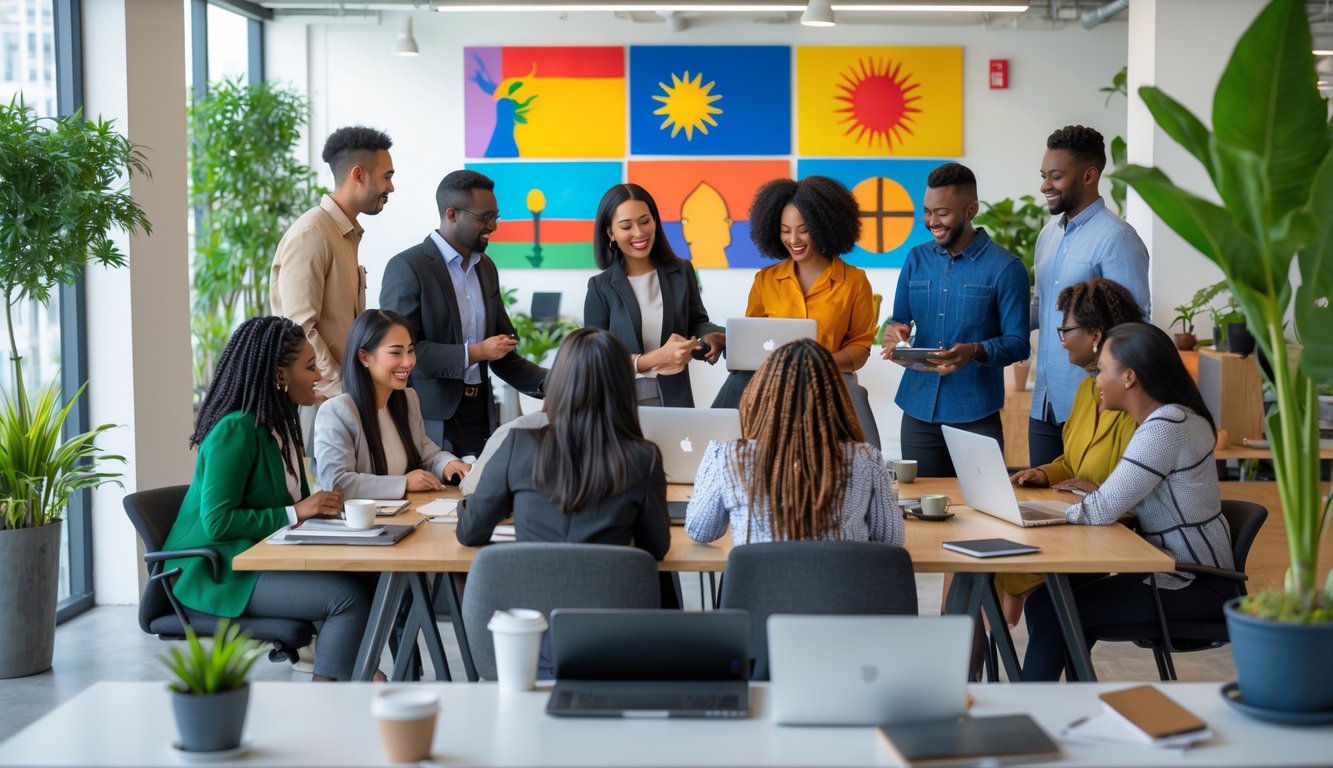
I focus on clear actions that make a coworking space more welcoming for people from different cultural, linguistic, and social backgrounds. This includes setting fair rules, creating learning opportunities, and making sure the physical space works for everyone.
Implementing Inclusive Policies
I put inclusive policies in writing so everyone knows what behavior is expected. These policies cover respect for different cultures, languages, and traditions.
I make sure membership plans are flexible. For example, I offer part-time or remote-friendly options so people with different work styles and needs can join.
I also provide language support. Multilingual signage or translation tools help members feel more comfortable.
To keep policies fair, I review them regularly with feedback from members. I also make them easy to access by posting them online and in shared areas.
This transparency builds trust and encourages accountability.
A simple table helps track key policy areas:
| Policy Area | Example Action | Review Frequency |
|---|---|---|
| Anti-discrimination | Zero tolerance for harassment | Every 6 months |
| Accessibility | Wheelchair-friendly entrances | Yearly |
| Language Support | Bilingual signs | Every 6 months |
Hosting Diversity and Inclusion Workshops
I lead workshops that help members learn from each other’s cultures and experiences. These sessions cover topics like intercultural communication, unconscious bias, and conflict resolution.
I invite speakers from different backgrounds to share practical tips. Their stories make the content relatable and grounded in real experiences.
I encourage interactive activities. Group discussions, role-playing, or cultural exchange events help members connect in a personal way.
I schedule workshops at different times and offer both in-person and online formats. This flexibility lets more members participate.
For inspiration, I follow ideas from coworking diversity events that focus on global inclusion and cultural exchange.
Designing Accessible Shared Spaces
I design shared spaces so everyone can use them comfortably. This includes ramps, wide doorways, and adjustable desks for physical accessibility.
I consider sensory needs too. Quiet zones, good lighting, and noise control help people who prefer calm environments.
Cultural considerations matter. For example, I provide prayer rooms or flexible seating layouts for group or solo work.
I make signs, instructions, and safety information clear and offer them in multiple languages. This reduces confusion for members from different backgrounds.
I draw from inclusive coworking design practices to create welcoming and functional spaces for everyone.
Facilitating Collaboration and Intercultural Communication

I create work environments where people from different backgrounds can share ideas openly. I give everyone the tools, time, and space to work together while respecting different communication and problem-solving styles.
Encouraging Collaboration Among Diverse Teams
Diverse teams work best with clear goals and shared responsibilities. This helps everyone feel their contributions matter.
I mix team members with different skills and cultural perspectives. This often leads to more creative solutions.
To make collaboration easier, I use:
- Flexible meeting formats (in-person, virtual, hybrid)
- Shared project tools like Trello or Google Workspace
- Rotating leadership roles so everyone can guide discussions
Open layouts in coworking spaces help people connect naturally. I also provide quiet areas for focused work.
Breaking Down Barriers
Cultural and language differences can cause misunderstandings. I encourage people to ask questions instead of making assumptions.
I set up informal meetups like coffee breaks or lunch sessions. These let team members talk without the pressure of a formal meeting.
Some coworking spaces, like those in coworking diversity initiatives, run workshops on unconscious bias and inclusive communication. I use similar activities to help people see situations from new viewpoints.
I keep rules simple:
- Listen fully before responding.
- Respect different working styles.
- Share credit for team achievements.
Improving Intercultural Communication Skills
Intercultural communication improves when people learn about each other’s cultures in practical ways. This can be as simple as discussing local holidays or explaining common phrases from one’s native language.
I invite guest speakers to share insights on cultural norms and workplace etiquette. Spaces like multicultural coworking communities show how this builds trust and reduces miscommunication.
To strengthen skills, I use:
- Role-playing exercises for handling cross-cultural misunderstandings
- Language exchange sessions to improve comfort with different accents and terms
- Feedback loops where team members can suggest better ways to communicate
I include these practices in daily work so teams can adapt quickly and collaborate better.
Leveraging Diversity for Competitive Advantage

Cultural diversity in coworking spaces helps members discover new business opportunities and connect with new audiences. People with different skills and perspectives can solve problems faster and more creatively.
Gaining Insights into Global Markets
When I work with people from different backgrounds, I learn things I wouldn’t find in a textbook. A conversation over coffee can reveal customer habits in another country or trends in a new market.
These insights help me adapt my products or services to local needs. For example, a designer from Japan once told me that certain colors have strong cultural meanings, which changed my branding choices.
Coworking spaces bring together members with experience in many countries. This mix helps me understand regulations, payment methods, and marketing approaches that work in different regions.
Some spaces host cultural exchange events or workshops. These sessions let me test ideas with people who represent my target audience before I enter a new market.
By using this network, I avoid costly mistakes and move faster when entering new regions. It feels like having an advisory board from all over the world.
Attracting Entrepreneurs and Freelancers
I’ve noticed that diverse coworking spaces attract more entrepreneurs and freelancers. People choose to work in places where they feel welcomed and valued, no matter their background.
Spaces that promote inclusivity—like offering flexible membership plans or hosting cultural networking events—often stand out. These practices help create a community where members collaborate and share opportunities.
For me, I get to work alongside people who are open to partnerships. A freelance marketer might team up with a startup founder.
A developer could find a client in the same building. The variety of skills and industries in these spaces makes it easier to find the right person for a project.
I don’t have to search far—often, the talent I need is just a desk away.