I find that email marketing is one of the best ways to connect with people who might join a coworking space.
It gives me a direct way to share updates, promote events, and highlight what makes the space special.
A well-planned email campaign can turn casual interest into long-term memberships.

When I segment my contact list and send targeted messages, I see more engagement and better results.
A monthly newsletter keeps members informed about upcoming events, while a welcome series guides new leads toward booking a tour.
Using these strategies helps me build trust and keep the community engaged.
I make sure my emails work with other marketing channels.
When my email campaigns match my social media posts and website updates, the message feels consistent and professional.
This approach attracts new members and strengthens relationships with current ones.
The Importance of Email Marketing for Coworking Spaces

I use email marketing to share updates, promote offers, and keep members connected without spending a lot on advertising.
It gives me a direct way to reach people who already showed interest in my coworking space and helps me stay top of mind when they are ready to join.
Benefits Over Traditional Marketing
Traditional marketing like flyers, billboards, or print ads can be costly and hard to measure.
I prefer email because I can track opens, clicks, and sign-ups in real time.
This helps me see what works and adjust quickly.
With email, I can segment my list and send different messages to potential members, current members, or past members.
Each group gets information that fits their needs.
It’s also more budget-friendly.
I can send hundreds of emails for a fraction of the cost of a single print ad.
Unlike physical materials, I can update my message instantly without reprinting.
| Traditional Marketing | Email Marketing |
|---|---|
| Higher cost | Lower cost |
| Hard to track results | Easy to track |
| Static message | Editable anytime |
Role in Member Acquisition and Retention
Email helps me attract new members by sharing tours, trial offers, and upcoming events.
I send welcome sequences to new subscribers that introduce my space, explain benefits, and encourage them to visit.
For current members, I use email to keep them engaged.
This includes updates on new amenities, reminders about events, and tips for getting the most out of their membership.
When members feel informed, they are more likely to stay.
By sending regular, relevant updates, I help members remember the value they get here.
You can read more about effective strategies in these best practices for coworking email marketing.
Building a Coworking Community
A strong coworking community needs regular communication.
I use email to highlight member achievements, share stories, and invite people to connect.
This builds a sense of belonging even for those who work remotely.
Event invitations are one of my most effective tools.
Whether it’s a workshop, networking session, or casual coffee meetup, email ensures everyone knows what’s happening.
I also share surveys to get feedback.
This shows members that I value their opinions and helps me improve the space.
These small touches make the community feel more personal and connected.
If you want more ideas for fostering connection, check out how coworking newsletters can grow your business.
Understanding Your Target Audience
I focus on the people most likely to use my space so I can send emails that speak directly to them.
This helps me share the right offers, events, and updates that match their needs and work style.
Identifying Ideal Coworking Members
I start by looking at who benefits most from my coworking space.
This often includes freelancers, startups, and remote teams who need flexible work areas.
I also think about industries.
For example, tech startups may value high-speed internet and meeting rooms, while creatives might prefer open layouts and design-friendly spaces.
To narrow it down, I ask:
- What is their daily routine?
- Do they value networking events?
- Are they price-sensitive or willing to pay for premium features?
I keep an updated profile of my ideal members.
This includes their job roles, preferred communication style, and common challenges.
Knowing these details makes it easier to create email content that feels personal and relevant.
If I’m not sure where to start, I review my current members and note what they have in common.
This real-world data is more reliable than guesses.
Building and Growing Your Email List
I only add people who want to hear from me.
This keeps my list engaged and reduces unsubscribes.
I collect emails during tours, events, and sign-ups.
I also add a simple form on my website with a clear reason to join, like early access to events or special offers.
Sometimes I run small giveaways or free workshops for startups and local freelancers.
Attendees can opt in to my list during registration.
I segment my list so I can send targeted messages.
For example, new leads might get a welcome series, while current members receive updates about upcoming networking events.
For more ideas on attracting the right audience, I look at coworking space marketing strategies that focus on audience needs.
This helps me keep my list fresh and relevant.
Crafting Effective Email Marketing Campaigns

I focus on sending the right message to the right people at the right time.
I also make sure every email feels useful, personal, and easy to read so members and prospects see value in opening it.
Types of Emails for Coworking Spaces
I use a mix of email types to keep my audience engaged.
Welcome emails help me introduce new members to the space, share house rules, and highlight amenities.
Event invitations are great for promoting networking opportunities, workshops, or community lunches.
These help members connect and see the value of the space beyond just a desk.
I also send newsletters with updates, success stories, and tips.
This keeps my community informed and connected.
For prospects, I rely on promotional campaigns that share limited-time offers or free trial days.
According to Optix’s best practices, mixing educational and promotional content helps build trust before asking for a commitment.
I use onboarding sequences for new members so they get information in small, helpful steps.
Personalization and Segmentation
I segment my email list based on membership type, interests, and engagement level.
This way, freelancers get different content than corporate teams, and active members get different offers than inactive leads.
For example, I might send event invites only to people who attended past networking opportunities.
This makes the email more relevant and increases the chance they’ll respond.
I also personalize subject lines and greetings with first names.
Even small touches like “Hi Alex” can improve open rates.
Using tools with email segmentation features makes this process easier.
I also run my copy through Grammarly to make sure my tone is friendly and my writing is clear.
By tailoring both the audience and the message, I avoid sending one-size-fits-all emails that people ignore.
Writing Compelling Content
I keep my emails short, clear, and easy to scan.
I use bullet points for schedules, bold text for key dates, and short paragraphs for readability.
Every email has one main goal—whether it’s to get people to RSVP, read an article, or claim an offer.
I make that call-to-action stand out with a button or bold link.
I avoid filler and focus on benefits.
Instead of saying “We have a workshop,” I say “Join our workshop to learn how to pitch clients in 10 minutes.”
I also test different subject lines and preview text to see what gets the best open rates.
As suggested in this coworking email marketing guide, small changes in wording can make a big difference in engagement.
Choosing the Right Email Marketing Tools

I focus on tools that help me send targeted messages, track results, and manage my contact list without wasting time.
The right choice lets me automate tasks, personalize emails, and keep my members engaged.
Selecting an ESP
When I choose an Email Service Provider (ESP), I look for features that match my goals.
I check if it supports list segmentation so I can send different messages to members, leads, and event attendees.
I also want clear analytics.
Open rates, click rates, and unsubscribe data help me see what works.
If the ESP offers A/B testing, I can test subject lines or layouts before sending to everyone.
Pricing matters too.
Some ESPs charge based on the number of contacts, while others use the number of emails sent.
I compare plans to avoid paying for features I won’t use.
Here’s a quick checklist I follow:
| Feature | Why It Matters |
|---|---|
| Segmentation | Send relevant content to each group |
| Automation | Save time on repetitive tasks |
| Analytics | Measure campaign success |
| Integration | Connect with CRM or booking tools |
| Support | Get help when needed |
Popular Platforms: HubSpot and More
I use HubSpot because it combines email marketing with CRM tools.
This means I can track a lead from their first email click to becoming a member.
It also offers automation workflows that save me hours.
Mailchimp is another option.
It’s easy to use and has templates that make my emails look professional.
I can segment my audience and run basic automations without much setup.
For a budget-friendly choice, I use EmailOctopus.
It’s simpler but still lets me send campaigns, manage lists, and view reports.
If I need advanced features like deep analytics or complex automation, I explore ActiveCampaign.
It’s more technical but gives me more control over my campaigns.
Each platform has strengths, so I match the tool to my coworking space’s size, budget, and marketing needs.
Optimizing Email Campaign Performance
I make sure my emails are easy to read, load quickly, and give people a reason to take action.
I also track how people interact with them so I can improve results and keep my list healthy.
Mobile and Website Optimization
Most people open my emails on their phones. I design with mobile first in mind.
I use single-column layouts and large buttons. I keep subject lines short.
This helps readers scan and click without zooming in.
I check that my website works well on mobile devices. If someone clicks a link in my email, the page should load fast and display correctly.
I make sure my website is easy to navigate on any device. Slow or broken pages cause people to leave before they read my offer.
I test my links before sending emails. I use clear calls-to-action that stand out.
My site always has up-to-date contact information, location details, and positive reviews to build trust.
Analyzing Engagement Metrics
I track open rates, click-through rates, and unsubscribe rates after each campaign. If open rates drop, I review my subject lines and sending times.
If clicks are low, I check if my links are clear and relevant.
I compare performance by segment. New subscribers might respond better to welcome offers.
Long-term members may prefer updates about events or perks.
I use A/B testing to try two subject lines or two versions of the same email. This helps me see what works best.
I keep a simple spreadsheet to track changes and results over time.
Managing Inactive Subscribers
If someone hasn’t opened my emails for months, I notice it. I send a re-engagement email with a short survey or a special offer.
This helps me find out if they still want to hear from me. If they stay inactive, I remove them from my list.
This keeps my email deliverability strong and saves resources.
I give people an easy way to update their preferences. Some may want fewer emails instead of unsubscribing.
This way, I keep my list active and engaged without annoying my audience.
Integrating Email with Other Marketing Strategies
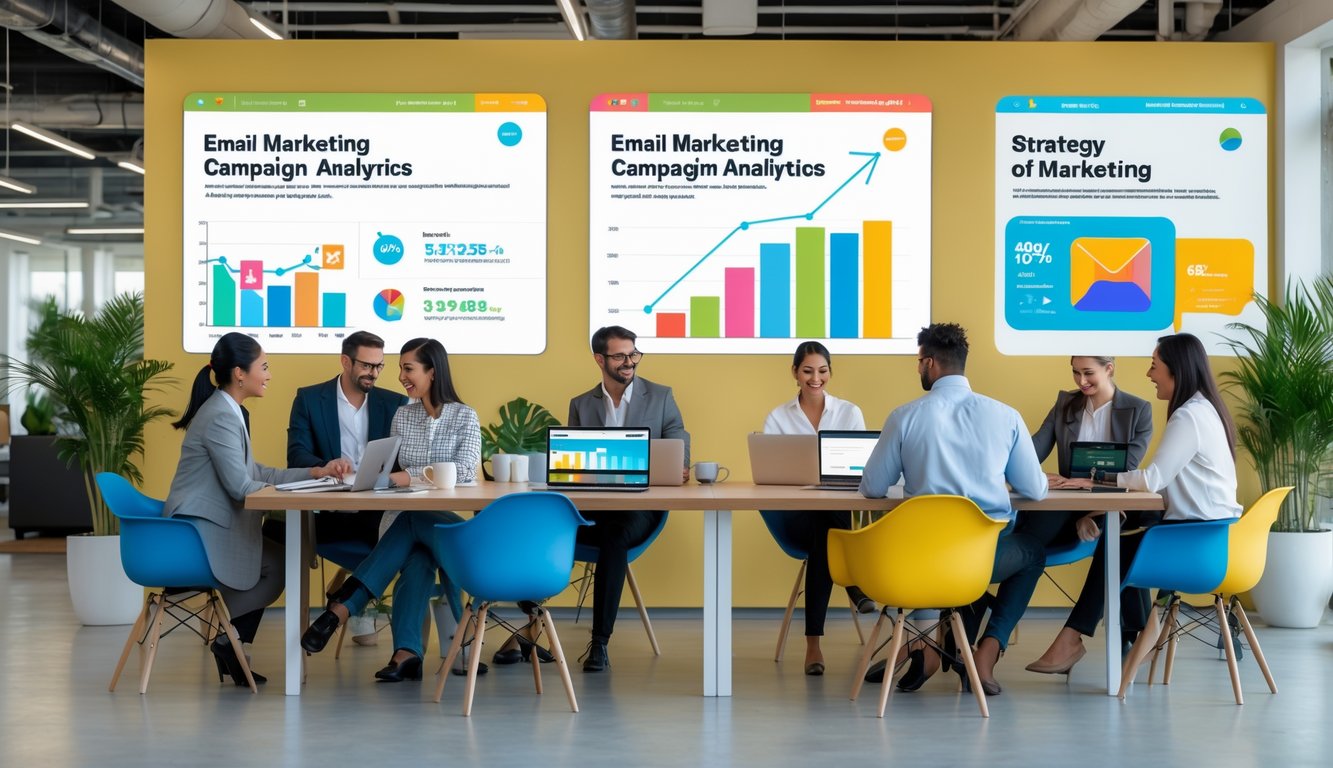
I use email to connect with people. I get better results when I combine email with other channels.
This helps me reach more potential members and keep my brand consistent.
Social Media Marketing
I share my email content on LinkedIn, Instagram, and Facebook. This lets me reach people who may not be on my email list yet.
When I post a short version of my newsletter with a link to sign up, I can grow my list faster.
I use polls or questions on social media to gather feedback. I include the results in my next email.
To keep my message consistent, I plan my email and social media posts together. Tools like Buffer or Hootsuite help me schedule both in advance.
Running a LinkedIn post that teases exclusive email content attracts professionals to my coworking space.
Referral and Influencer Programs
I use referral programs with email to encourage members to invite friends. I email members a simple referral link they can share.
Offering a reward, like a free day pass, motivates them to participate.
I work with local influencers who share a similar audience. I send them a short, clear email they can forward or adapt for their followers.
This makes it easy for them to promote my space.
I track referrals from both members and influencers. I adjust my campaigns to focus on the most effective partnerships.
Pairing influencer shoutouts with an email sign-up link increases my subscriber count.
Event Marketing and Community Building
I use email to promote events like open houses, workshops, and networking nights. These events give people a reason to visit my space and meet the community.
Before the event, I send reminder emails with clear details—date, time, location, and RSVP link.
After the event, I follow up with photos, a thank-you note, and an invite to join as a member.
I highlight upcoming events on my social media, linking back to the email sign-up form. This way, people who see the event online can get more details in their inbox.
Leveraging Paid Ads
I run targeted ads on Google Ads and LinkedIn Ads. These ads reach people who search for coworking spaces or related services.
I direct these ads to a landing page with an email sign-up form. This approach helps me capture leads.
After capturing leads through ads, I continue the conversation through email. I make sure my ad message matches the first email they receive.
Sometimes I retarget people who clicked my ad but didn’t sign up. I show them a new offer, such as a free trial day, and include a link to join my list.
Paid ads and email work together to reach active searchers. They also help me connect with people who may not be looking yet but are open to coworking.