I’ve noticed how much waste traditional offices create—piles of paper, single-use plastics, and unused supplies. In a shared workspace, we can cut that down without losing comfort or productivity.
Coworking spaces cut waste by sharing resources, encouraging reuse, and making recycling simple. This helps the environment and keeps the space organized.
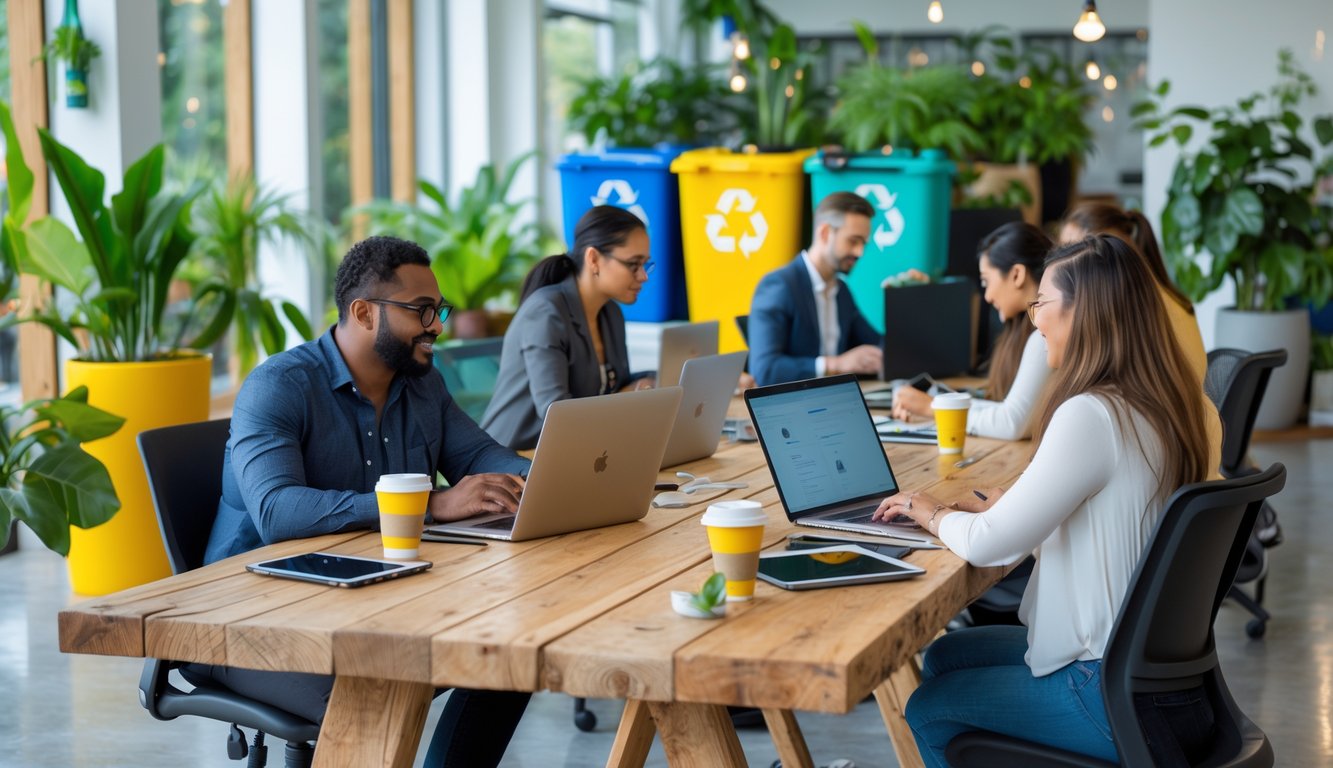
When I walk into a well-run coworking space, I see coffee mugs instead of disposable cups. Recycling bins sit in convenient spots, and energy-efficient lighting saves both power and money.
Some spaces use eco-friendly designs and sustainable practices that make waste reduction part of daily life. These small, steady actions create a big impact.
The Role of Coworking Spaces in Reducing Waste
Coworking spaces cut waste by sharing items, promoting eco-friendly habits, and offering flexible setups. These steps save resources and lower costs.
Shared Resources and Space Utilization
When I work in a coworking space, I don’t need my own printer, coffee machine, or meeting room. We share these resources, which means fewer items to buy, maintain, or throw away.
This shared setup also means less unused space. One well-designed workspace serves many people, which lowers energy use for lighting, heating, and cooling.
Some spaces use modular furniture that can be rearranged instead of replaced. This extends the life of desks, chairs, and storage units.
Spaces following circular economy principles often reuse or repurpose materials. This keeps waste low while meeting members’ needs.
Community-Driven Sustainability Initiatives
Coworking spaces work best when members join in sustainability efforts. Many provide recycling stations, compost bins, and reusable kitchenware so it’s easy to avoid single-use items.
Some spaces run workshops on waste reduction or host “swap days” where members exchange office supplies or furniture. This keeps items in use longer and builds a sense of community.
Clear signage and simple sorting systems help everyone dispose of waste correctly. These steps make recycling easy and help avoid confusion.
Spaces that focus on green-minded members often attract people who already value these habits. This makes programs more effective.
Flexible Workspace Models
One of the biggest waste savers is the flexibility of coworking memberships. I can choose a desk only when I need it, instead of renting a large office that sits empty most days.
This model reduces the need for extra construction and furniture. Fewer permanent setups mean fewer materials used and less waste over time.
Coworking operators adjust their space based on demand. This scalability avoids overbuilding and prevents unused areas from wasting energy and resources.
By offering hot desks, shared offices, and on-demand meeting rooms, spaces can serve more people with fewer assets. This supports sustainable workspace design.
Sustainable Practices and Waste Management
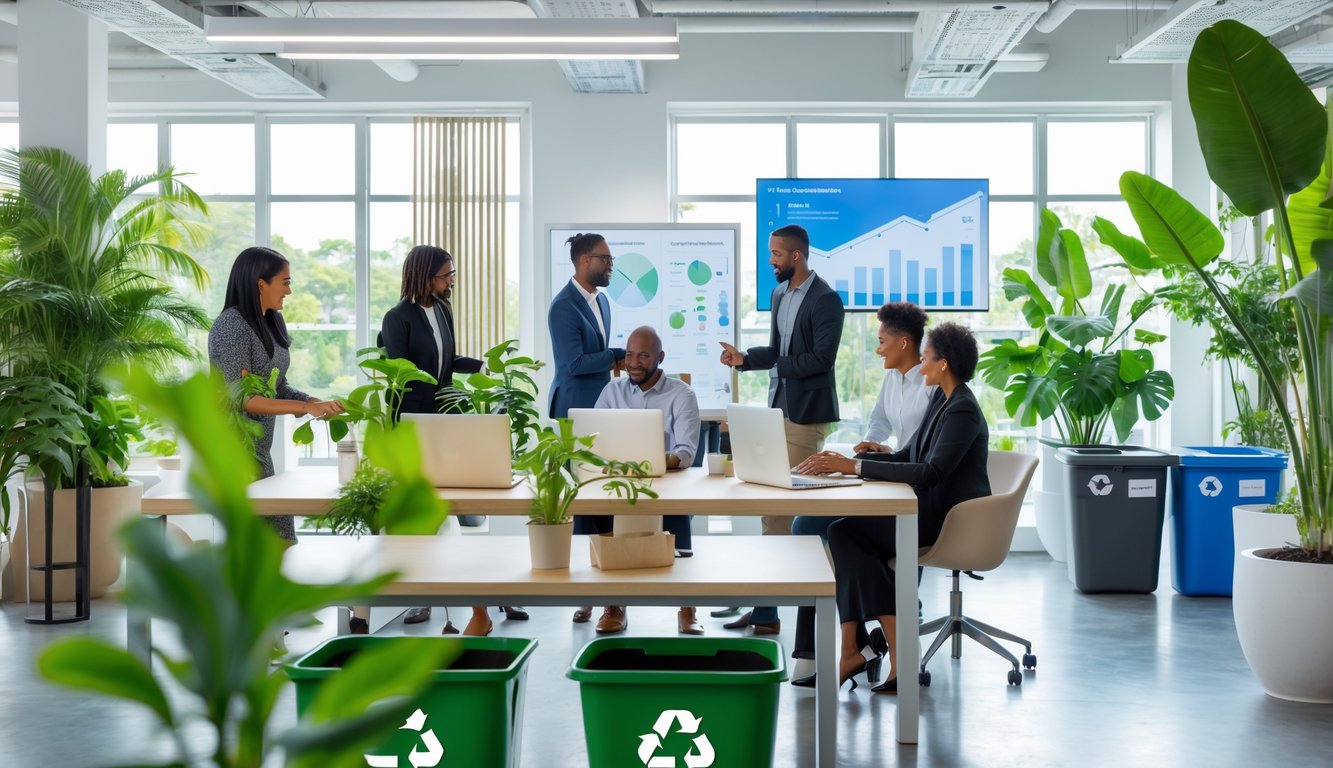
I use simple, practical steps to reduce waste in a coworking space. Smart waste management and eco-friendly office habits help keep the workspace cleaner and save resources.
Recycling and Composting Programs
I place recycling bins where people need them, like near desks, kitchens, and meeting rooms. This makes it easy to separate paper, plastics, and metals.
For food and organic waste, I set up a composting system. In shared kitchens, a small compost bin with a tight lid controls odors and keeps scraps out of landfills.
I work with local waste services to handle materials properly. Some coworking spaces partner with recycling centers that accept electronics and batteries.
Tip: A visual guide above each bin helps members know what goes where.
Minimizing Single-Use Items
I avoid stocking single-use cups, plates, and utensils. Instead, I provide reusable mugs, glasses, and cutlery, which cuts down on plastic waste and saves money.
For events, I use bulk beverage dispensers instead of bottled drinks. I keep cloth towels and napkins instead of paper ones.
When disposable items are needed, I choose compostable or recyclable options. Many coworking spaces now use plant-based materials for takeout containers and cups.
Easy swaps:
- Reusable water bottles instead of plastic bottles
- Metal cutlery instead of plastic forks
- Cloth napkins instead of paper napkins
Digital Solutions for Paper Reduction
I use digital tools for communication, scheduling, and record-keeping. Shared calendars, project management apps, and cloud storage help us work together without printing.
When printing is necessary, I set printers to double-sided by default and use recycled paper. I encourage members to preview documents before printing.
Some coworking spaces have stopped printing newsletters and use email updates or internal messaging instead.
Digital alternatives to printing:
| Task | Digital Tool |
|---|---|
| Meeting notes | Shared documents |
| Event flyers | Email or chat apps |
| Forms and contracts | E-signature platforms |
Energy Efficiency and Environmental Impact
I make workspaces more sustainable by lowering energy use, improving air and light quality, and choosing cleaner power sources. These steps cut costs and reduce our carbon footprint.
Reducing Energy Consumption
I start by checking where most electricity goes. Heating, cooling, and lighting use the most energy in many offices.
By using LED lighting, smart thermostats, and energy-efficient appliances, I lower that demand. Shared spaces also mean fewer devices running at once.
Instead of ten printers in ten offices, one efficient printer serves everyone. This cuts both energy use and electronic waste.
I use timers or motion sensors for lights in low-traffic areas. Nomadworks notes that these small changes can lower overall electricity use.
Ventilation and Natural Lighting
Good ventilation keeps indoor air fresh without heavy use of HVAC systems. I open windows when possible to let in outside air, which reduces the need for air conditioning or heating.
Natural lighting helps too. Large windows, glass walls, and light-colored surfaces let daylight reach more areas.
I pair artificial lighting with daylight sensors. These adjust the lights based on available sunlight, keeping comfort high while saving energy.
The team at United Co points out that natural light also improves mood and productivity.
Adopting Renewable Energy Sources
Switching to renewable energy directly lowers environmental impact. If possible, I install solar panels to supply some of the workspace’s electricity.
If on-site generation isn’t an option, I choose green energy plans from local utilities. This ensures our power comes from wind, solar, or hydro sources.
I track our energy mix over time. By monitoring the share of renewable power, I can see our progress and make improvements, as suggested by CapeSpace.
Promoting Sustainable Transportation
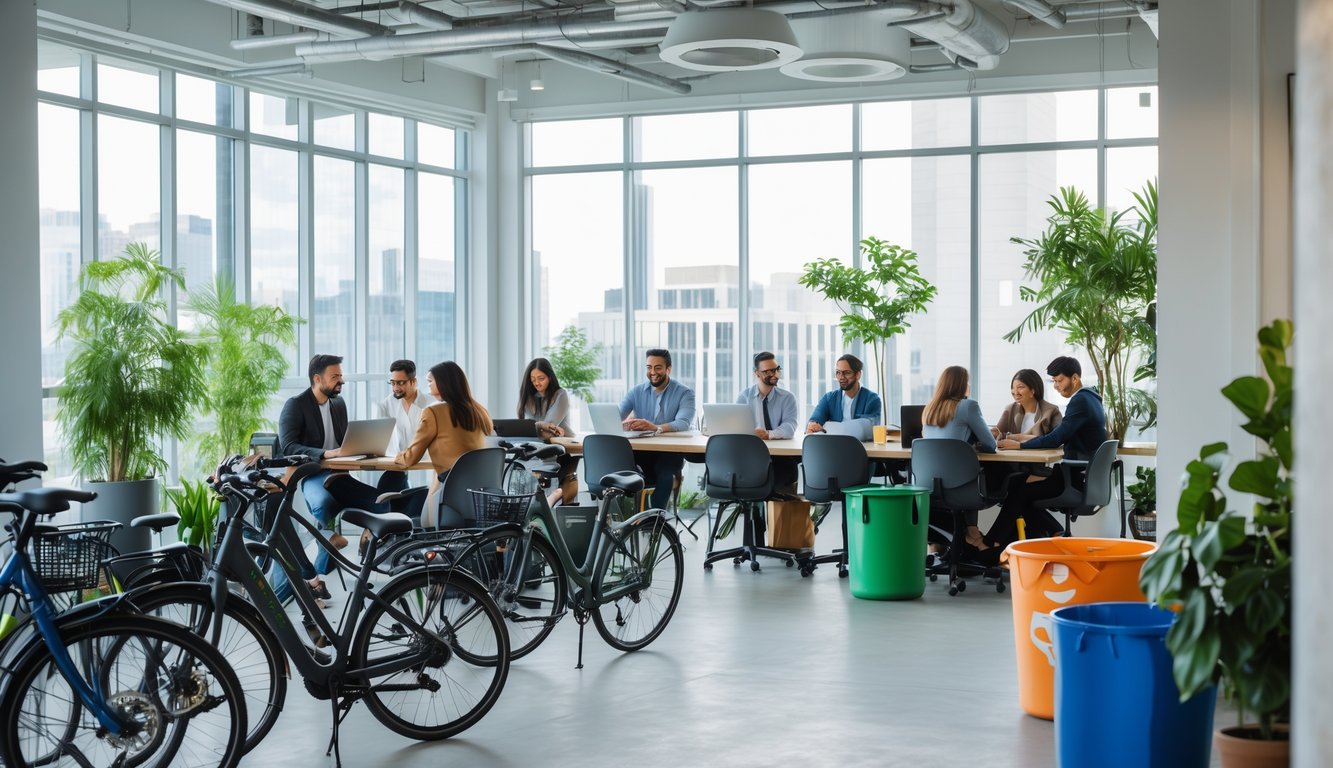
I look for ways to make daily travel to coworking spaces less harmful to the environment. Simple choices like cycling, walking, or working closer to home lower my carbon footprint.
Encouraging Cycling and Walking
Cycling and walking cut down on fuel use and emissions. Every trip I take without a car reduces my environmental impact.
For short trips, walking is easy, free, and needs no parking. Cycling works well for longer trips and helps me avoid crowded public transport.
Coworking spaces that support these options often provide route maps, safety tips, and group ride events. These efforts make active travel easier.
When I cycle or walk, I save money on gas and avoid traffic stress. This helps me start my workday in a better mood.
Providing Bike Racks and Showers
Secure bike racks are important if I cycle often. When I can lock my bike in a safe, sheltered spot, I feel confident leaving it there.
Some spaces offer indoor storage for expensive bikes, which helps in areas with theft or bad weather.
Showers and changing rooms make cycling to work practical. If I can freshen up before work, I’m more likely to ride in.
Spaces that provide lockers for clothes and gear make cycling even easier. According to Green Office: 5 Key Elements of a Sustainable Workspace, these facilities support the green office movement and encourage more members to cycle.
Reducing Commuting Distances
I work closer to home to cut my carbon footprint. Shorter commutes mean fewer emissions and less time on the road.
Many coworking providers open several locations in a city. This way, I can choose the one nearest to me.
This flexibility helps me avoid long drives or transit rides. Sometimes, I can even walk or cycle to a nearby space.
When I walk or bike, I skip using motorized transport. The Encouraging Sustainable Commuting to Coworking Spaces guide shows that this approach also supports healthier lifestyles.
Fostering a Circular Economy Through Coworking
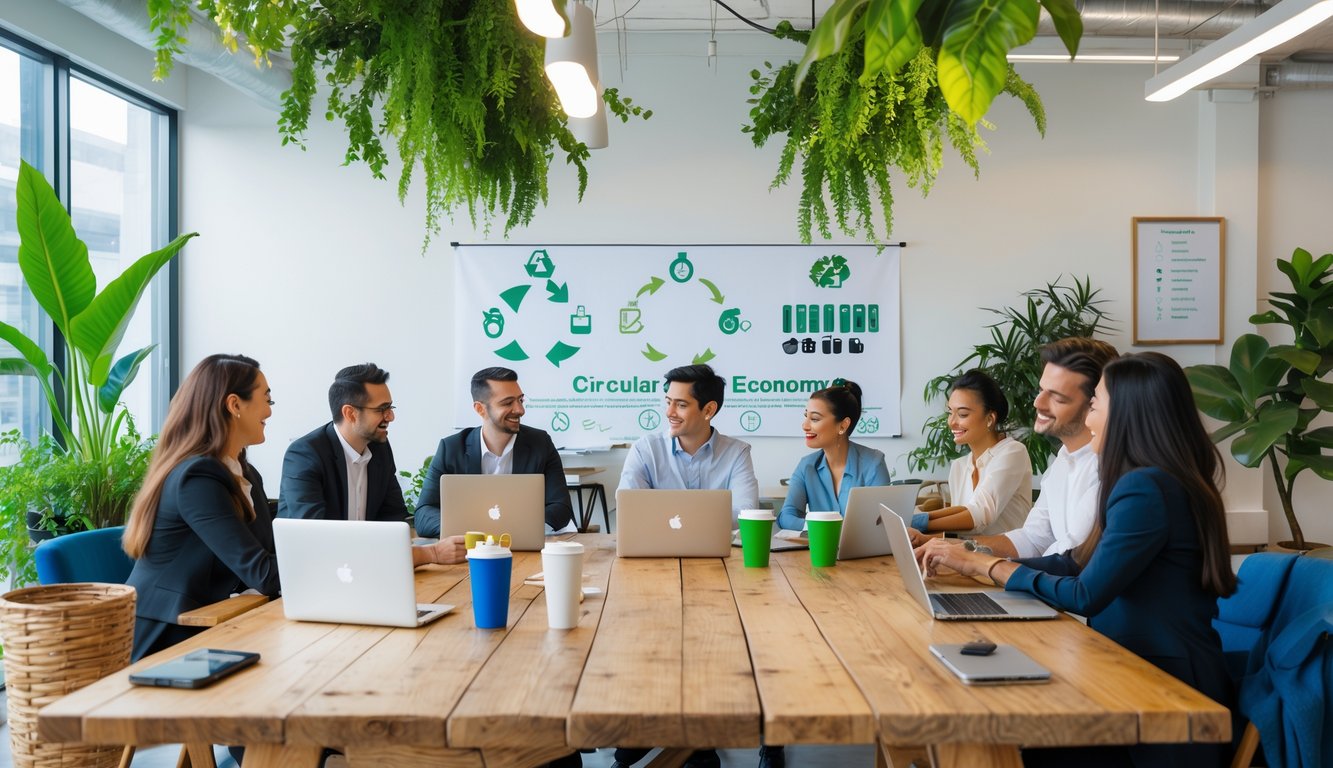
I reduce waste by keeping materials in use as long as possible. I choose products that last and share what I learn with others.
These steps save resources and lower costs. They also make our workspace more sustainable.
Reuse and Repurposing Materials
I look for ways to reuse items before buying new ones. I repair old desks instead of replacing them and give worn chairs new upholstery.
In my space, I’ve seen shelves built from reclaimed wood. I’ve also seen partitions made from repurposed glass panels.
These projects cut costs and reduce waste. Here are some things that work for me:
- Furniture swaps between members.
- Refurbishing electronics instead of discarding them.
- Creative upcycling for décor and storage.
By rethinking how I use materials, I help keep them in the loop. This is a core principle of the circular economy.
Sustainable Procurement
I choose suppliers who value sustainability. I buy from companies that use recyclable packaging, energy-efficient production, and ethical sourcing.
For example, I use paper products made from post-consumer waste. I also select cleaning supplies that are biodegradable.
Choosing quality over quantity matters because durable items last longer. This reduces the need for replacements.
I keep a simple checklist for purchases:
| Question | Why It Matters |
|---|---|
| Is it reusable or refillable? | Cuts down on single-use waste. |
| Is it made from recycled content? | Supports material recovery markets. |
| Is the supplier local? | Reduces transport emissions. |
By following these criteria, my workspace avoids unnecessary waste. We also support a more responsible supply chain.
Educational Workshops and Seminars
I organize workshops to share skills that help members reduce waste. These sessions cover repairing office equipment, composting food scraps, and setting up recycling stations.
Guest speakers often bring new ideas. For example, a seminar on eco-design inspired members to redesign their product packaging using less material.
I keep these events hands-on and interactive. People can use what they learn right away.
This approach builds a culture of sustainability and encourages innovation in resource management.
Enhancing Collaboration and Productivity

I see how shared work environments help people connect and exchange ideas. When we combine different skills, we create better solutions and use resources more wisely.
Networking for Sustainable Solutions
When I work in a coworking space, I meet people from many fields—designers, developers, marketers, and environmental consultants. These connections spark ideas for reducing waste and improving efficiency.
For example, I joined a small group that started a reusable container program for local cafés. The idea came from a casual chat in the lounge area.
Coworking spaces host events like green business mixers or panel talks on sustainability. These gatherings let me connect with others who share my values.
Some spaces partner with eco-friendly organizations. This makes it easier to find collaborators for projects that cut waste or save energy.
I notice that informal conversations—like while making coffee—often lead to quick problem-solving. This kind of networking happens naturally when I work near others who care about similar goals.
Knowledge Sharing Among Members
In my experience, coworking spaces encourage open knowledge exchange. People often share tips, tools, and contacts that help everyone work smarter.
For instance, a fellow member once showed me how to set up a paperless workflow using free digital tools. That small change reduced my printing needs and helped me stay organized.
Many spaces use shared boards, online groups, or lunchtime talks to spread ideas. I’ve learned about composting systems, energy-efficient lighting, and recycling programs from these channels.
This steady stream of information helps me stay productive. I can use proven methods from others instead of figuring everything out by myself.