I know how tricky it can be to make a small coworking space feel open, functional, and welcoming. The right layout can turn even the smallest floor plan into a productive and comfortable place to work.
A smart small coworking space layout uses zoning, light, and flexible furniture to maximize every square foot without feeling cramped.
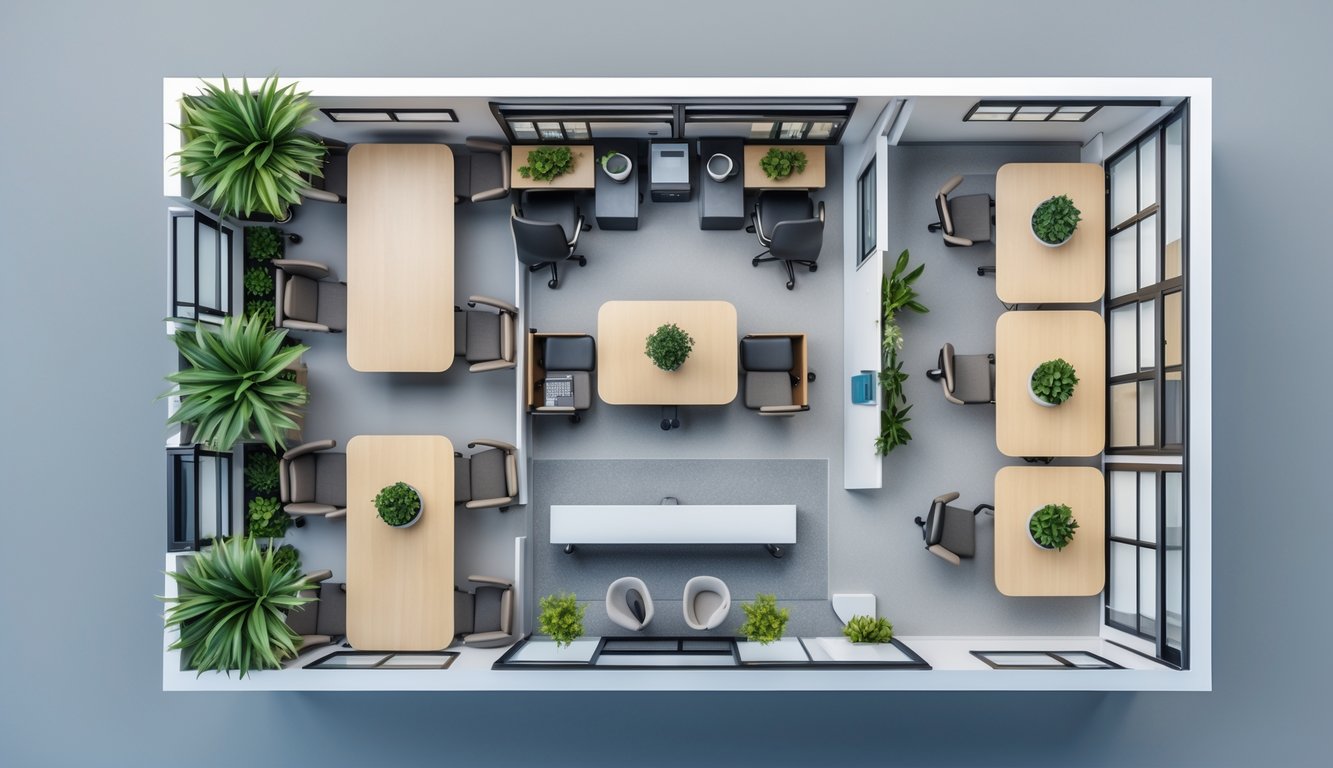
When I design a space, I focus on how people will actually use it throughout the day. I create quiet zones for focus, open areas for collaboration, and make sure movement flows naturally.
Details like natural light, acoustics, and storage can make a huge difference in how the space feels and functions.
Choosing modular furniture or adding community-focused features shapes how people connect and work together. If you want a space that feels bigger than it is, start with a thoughtful plan.
Core Principles of Small Coworking Space Layouts
I use space efficiently while keeping it comfortable and functional. Every square foot needs a purpose, whether it supports focused work, casual meetings, or community interaction.
Good planning helps create a shared workspace that feels open but still meets different work needs.
Defining Small Coworking Spaces
When I think of a small coworking space, I picture a shared workspace under 3,000 square feet. It often serves freelancers, remote workers, or small teams.
These spaces usually combine flex desks, a few private offices, and multi-use areas. I aim to fit essential functions without overcrowding.
I pay attention to traffic flow. People should move easily between desks, meeting spots, and amenities.
Narrow walkways or blocked paths can make the space feel cramped. I use modular furniture and movable partitions so I can reconfigure the layout as needs change.
Flexibility is key to keeping the space functional over time.
Key Design Objectives
My main design objectives are comfort, productivity, and community. Comfort means ergonomic chairs, good lighting, and proper ventilation.
Productivity improves when I reduce noise, offer reliable internet, and provide a mix of seating types.
| Area Type | Purpose | Example Feature |
|---|---|---|
| Quiet Zone | Focused work | Sound-absorbing panels |
| Collaboration Hub | Group work and meetings | Whiteboards and large tables |
| Social Area | Community building and breaks | Coffee station and lounge chairs |
Community grows when people have casual spaces to connect. I like adding a small kitchen or coffee bar because it encourages interaction.
I make sure the layout supports clear sightlines. People feel connected while still respecting work boundaries.
Balancing Collaboration and Privacy
Too much openness can hurt productivity. In a small coworking space, I balance collaboration and privacy by mixing open areas with enclosed spots.
I place phone booths or quiet rooms near the main workspace. This gives people a place to step away for calls or deep work.
Acoustic solutions, like rugs or panels, help reduce noise without isolating members. I use zoning by placing louder areas like a lounge away from focus zones.
When I arrange seating, I avoid putting desks directly face-to-face unless it’s a team area. This simple choice reduces distractions and makes the shared workspace feel more comfortable for everyone.
Zoning Strategies for Effective Space Utilization
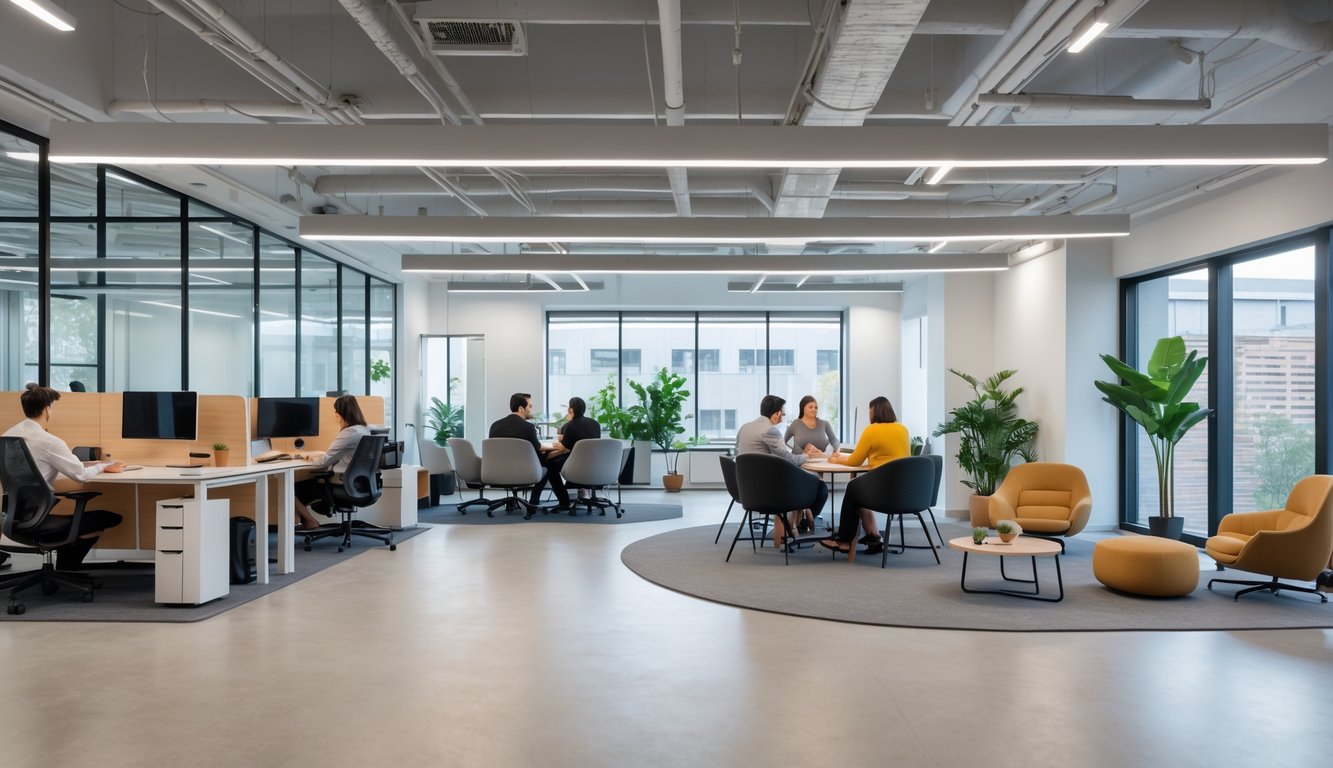
I divide a small coworking space into areas that match different work styles. This helps me keep noise under control, use each workstation well, and give people choices that fit their tasks.
Open Floor Plan Concepts
I use an open floor plan for shared office areas to encourage interaction. I arrange desks or tables so people can see and talk to each other without barriers.
To keep it from feeling crowded, I space out workstations and add clear walking paths. I use plants, shelves, or low dividers to create subtle boundaries without blocking light.
An open layout works best when I group similar work activities together.
| Area | Purpose | Example Setup |
|---|---|---|
| Collaboration zone | Team discussions | Large table + whiteboard |
| Focus zone | Solo work | Desks with desk dividers |
This setup makes the space feel open but still organized.
Private Offices and Quiet Zones
To minimize distractions, I use private offices or small quiet zones. These enclosed areas work well for calls, writing, or meetings that need privacy.
I keep them simple—soundproofing panels, comfortable seating, and good lighting. Even in a small coworking space, one or two quiet rooms can help a lot.
Quiet zones don’t have to be full rooms. I set up high-backed booths or enclosed pods along a wall.
This gives members privacy without taking up too much space. I make sure these spaces are clearly marked so everyone knows they’re for focused work only.
This keeps noise low and helps maintain a professional atmosphere.
Flexible Workspaces and Dedicated Desks
I offer both flexible workspaces and dedicated desks. Flexible areas let members choose any open spot for the day, which works well for drop-in users or part-time members.
Dedicated desks are for people who want to keep their setup in one place. I assign these in quieter parts of the office to reduce interruptions.
To make flexible areas work, I use lightweight furniture that’s easy to move. This way, I can quickly switch from group seating to individual workstations.
I plan for storage—lockers or small cabinets—so even flexible users have a secure place for their belongings. This mix of seating types helps me serve different needs without wasting space.
Optimizing Natural Light and Acoustics
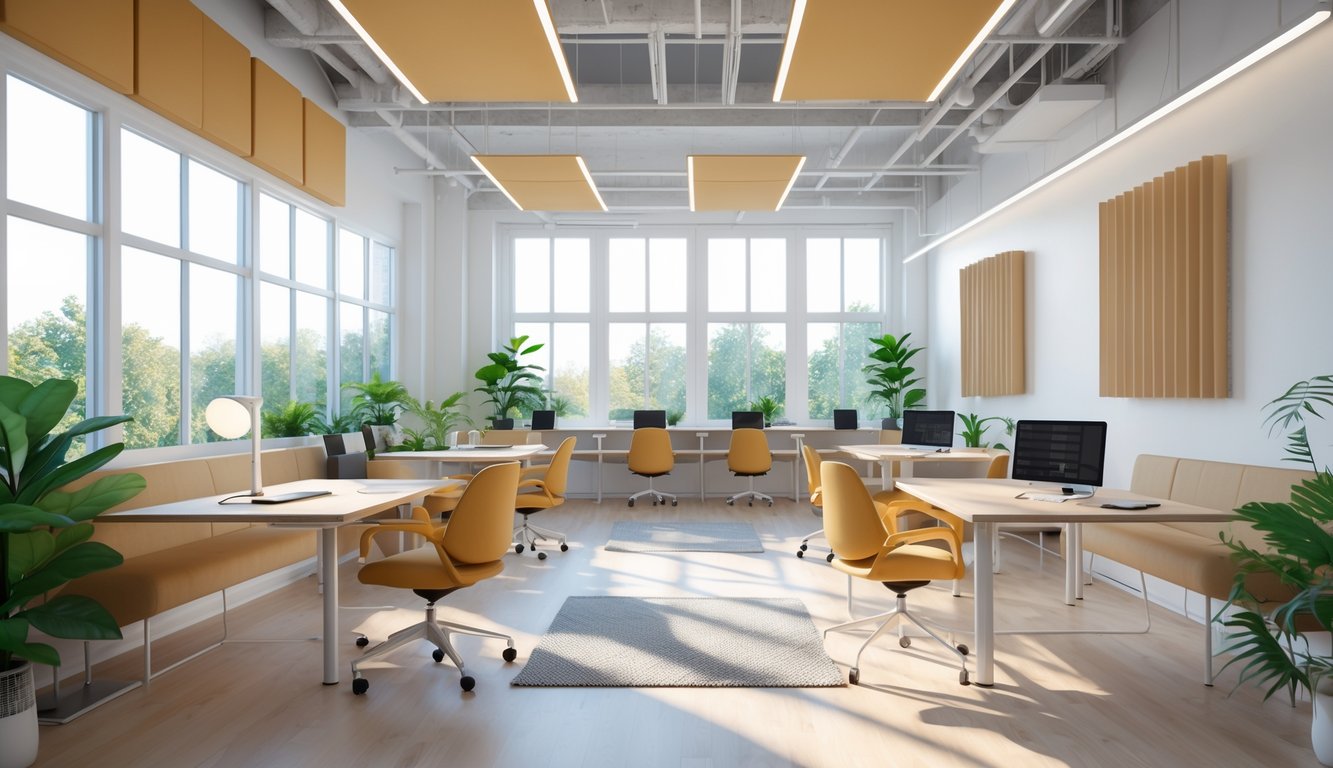
The right balance of daylight and noise control makes a small coworking space feel more open and comfortable. Good lighting design can boost focus, while proper sound control keeps distractions low.
Maximizing Natural Light and Skylights
I place desks and seating near windows to capture as much daylight as possible. I choose layouts that let light travel deep into the space.
When wall windows are limited, I use skylights. They bring light from above and brighten central areas without adding glare.
Skylights with diffused glazing work best because they soften direct sunlight and reduce heat gain. I avoid blocking windows with tall furniture or storage.
I use light-colored walls and ceilings to reflect sunlight and make the room feel larger.
Glass Walls and Partitions
To separate areas without losing light, I use glass walls or partitions. They define meeting rooms or private offices while letting daylight pass through.
Frosted or textured glass gives privacy without making a space feel closed in. Clear glass works well for open, collaborative zones where I want visual connection.
Slim, minimal frames keep the look clean and modern. Full-height panels maximize light flow.
In small coworking spaces, glass partitions make even narrow rooms feel open and airy.
Acoustic Panels and Soundproof Booths
Noise can be a big challenge in coworking areas. I use acoustic panels on walls or ceilings to absorb sound and reduce echo.
Soft materials like fabric-covered foam work well, and I choose colors that match the space’s style. For private calls or focused work, I add soundproof booths.
These enclosed pods block outside noise and keep conversations contained. They work especially well near busy zones like kitchens or entrances.
I combine panels with rugs, curtains, and upholstered furniture. Softer surfaces help control sound without making the space feel closed off.
A mix of acoustic treatments works better than relying on one solution alone.
Furniture and Modular Solutions for Small Spaces
I choose furniture that saves space, adapts to different needs, and supports comfort for long work hours. I look for designs that make it easy to reconfigure the area without heavy lifting or permanent changes.
Choosing Modular Furniture
I use modular furniture because I can rearrange it for different group sizes or tasks. Stackable chairs, nesting tables, and mobile storage units give me more layout options.
A set of foldable desks can turn a meeting room into a workshop area within minutes. Multi-functional furniture—like benches with hidden storage—keeps clutter out of sight.
Here are a few modular items I often choose:
- Mobile shelving units for flexible storage
- Convertible sofas for seating or rest areas
- Folding desks for quick setup and removal
I also make sure the finishes and colors match the space so it feels cohesive, even when I move things around.
Movable Partitions for Flexibility
I use movable partitions to create privacy or divide space without building walls. These include lightweight panels, sliding glass dividers, or fabric screens.
When I need a quiet corner for calls, I roll a partition into place. Later, I move it to open the space back up.
Modular walls and partitions help me set up temporary meeting zones.
Some partitions have built-in whiteboards or shelving. This way, they block noise and add function.
I prefer partitions with wheels so I can change the layout quickly. Opaque panels give more privacy, while glass or acrylic ones keep the space feeling open.
Ergonomic Workstations
I make sure every workstation supports good posture and comfort. This means using adjustable chairs, desks at the right height, and monitor stands.
In small coworking spaces, I choose compact desks with built-in cable management. This keeps wires tidy and organized.
Ergonomic setups help reduce strain during long hours. I also like sit-stand desks for flexibility.
Even in tight spaces, a narrow sit-stand desk can fit against a wall. Pairing these with task lighting and a supportive chair improves comfort and productivity.
Amenities and Community-Building Features
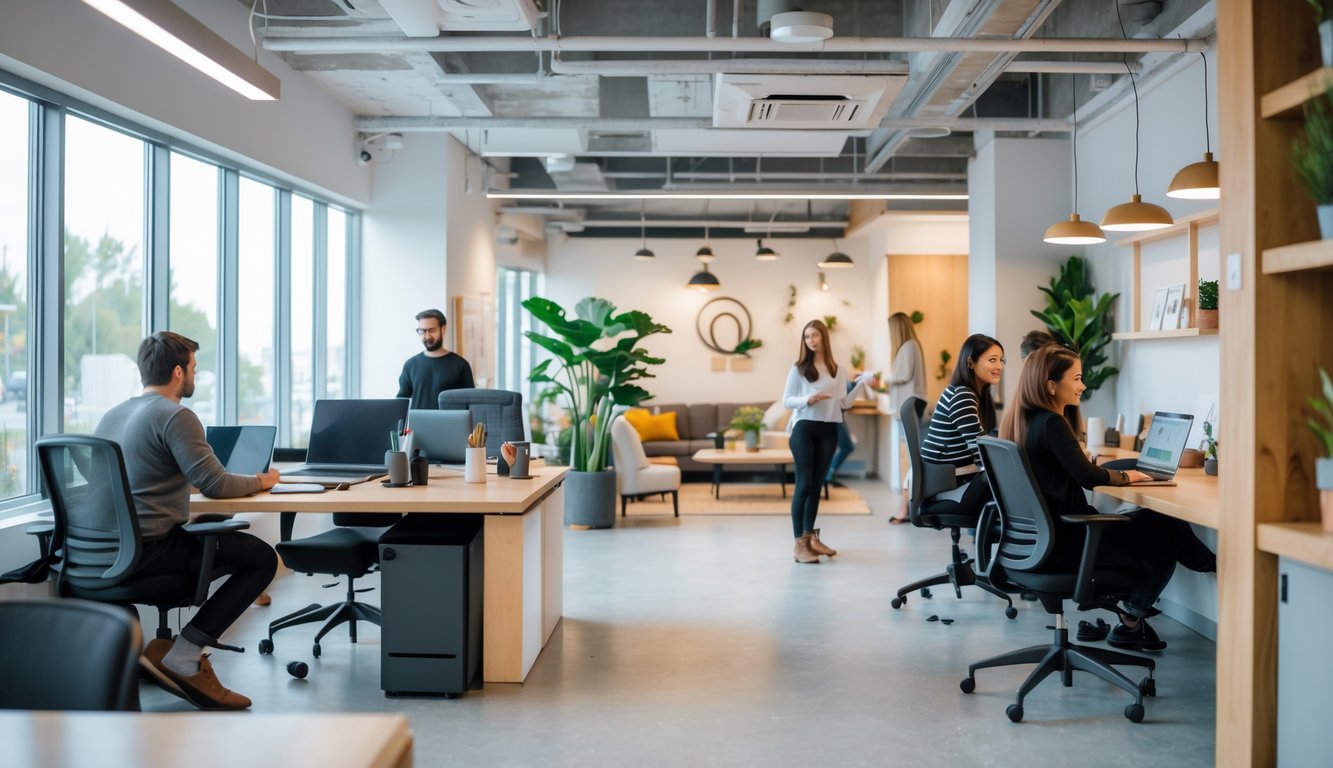
I focus on creating spaces that make people feel welcome and motivated to work. The right mix of amenities encourages natural interactions and helps members feel part of a community.
Lounge and Relaxation Areas
I include a lounge with comfortable seating, good lighting, and a calm atmosphere. Sofas, armchairs, and small coffee tables work well for casual breaks or informal chats.
A good lounge needs quiet corners where members can step away from their desks. This helps reduce stress and supports mental well-being.
Adding plants, soft colors, and natural light makes the space more inviting. These details encourage members to use the lounge regularly.
For small coworking spaces, I choose multi-use furniture so the lounge can double as a casual meeting spot. This flexibility saves space and keeps the area comfortable.
Meeting Rooms and Collaboration Zones
A coworking space needs at least one meeting room. Even in a small layout, I set up a private area with a table, chairs, and a screen for video calls.
For collaboration, I create open zones with whiteboards, movable chairs, and shared tables. These areas encourage brainstorming and quick discussions.
I soundproof meeting rooms when possible to prevent noise from disturbing others. This keeps the space professional.
I use glass partitions to separate collaboration areas. This keeps the space open and bright while still providing some privacy.
For ideas on functional layouts, I often reference guides like this coworking space layout overview.
Kitchen and Coffee Bar
I always add a small kitchen or coffee bar because it naturally draws people together. Even a counter with a coffee machine, tea station, and mini fridge makes a big difference.
A few bar stools or a standing table create a casual spot for quick chats. This helps members connect without scheduling formal meetings.
I keep the kitchen stocked with basics like mugs, utensils, and filtered water. Good organization keeps the space tidy and easy to use.
When possible, I place the coffee bar near the lounge to create a social hub. This encourages spontaneous conversations and strengthens the sense of community.
Designing for Diverse Users: Startups, Freelancers, and Entrepreneurs
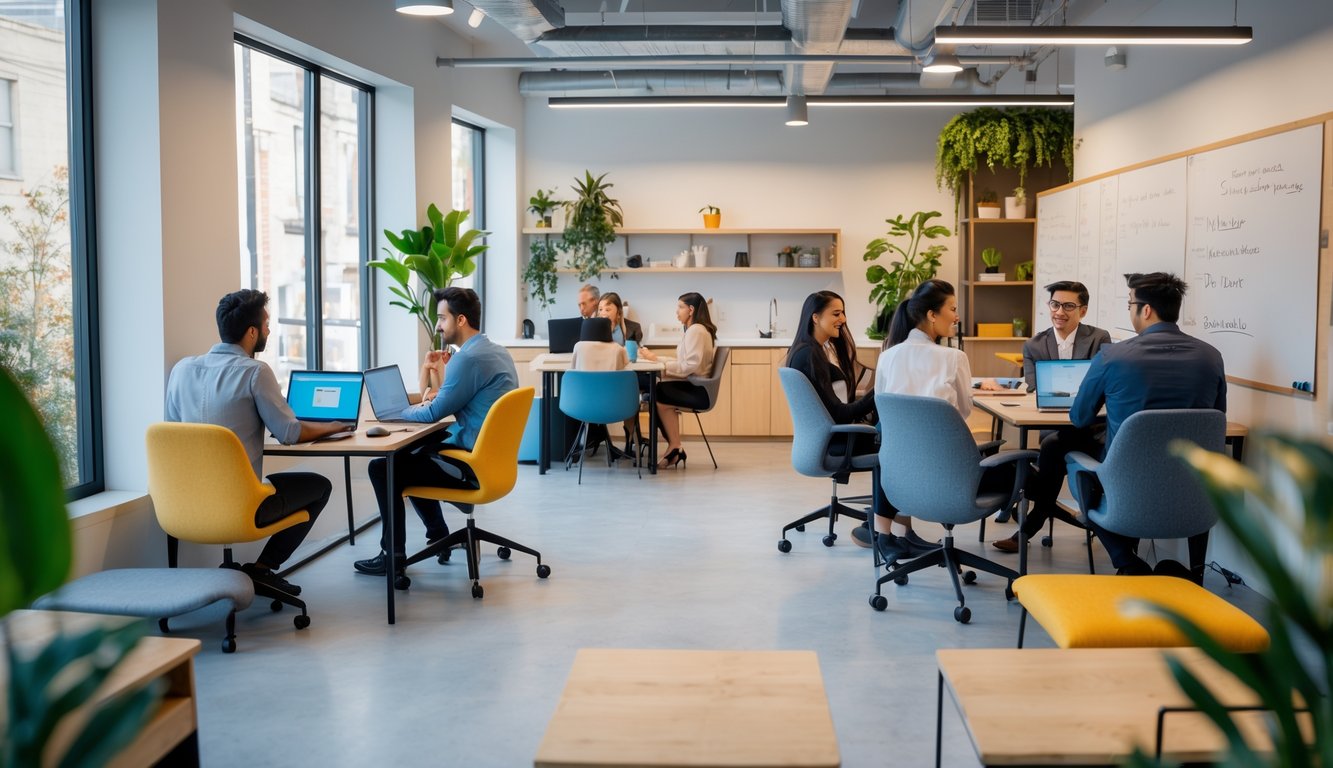
I create layouts that work for different work styles and team sizes. The goal is to balance private areas for focus with shared spaces that encourage interaction and idea sharing.
Understanding Member Needs
I start by learning what each group values most. Startups often need small private offices or team tables so they can work closely without distractions.
Freelancers usually prefer open desks or hot desks they can book as needed. Entrepreneurs may want both—quiet spots for planning and open areas for networking.
I also look at schedules. Many freelancers work flexible hours, while startups may keep a standard 9–5.
That means I plan for 24/7 access, varied seating, and reliable internet in all zones. To manage different user types, I use membership management tools.
This helps track desk bookings, meeting room use, and access rights. Platforms like these make it easier to balance availability and avoid overcrowding.
| User Type | Key Needs | Best Layout Option |
|---|---|---|
| Startups | Team collaboration, privacy | Private offices, pods |
| Freelancers | Flexibility, affordability | Hot desks, shared tables |
| Entrepreneurs | Networking, quiet planning space | Mix of open + private |
Creating a Creative Coworking Space
I design creative coworking spaces to inspire people without overwhelming them. I use natural light, plants, and art to make the space feel open and welcoming.
I choose comfortable chairs and adjustable desks to help members stay productive. For collaboration, I add breakout zones with whiteboards and casual seating.
Movable furniture lets people reconfigure the space for workshops or group projects. I set aside soundproof booths or small rooms for calls and focused work.
This balance between open and private zones supports both teamwork and concentration. I add tech-friendly features like ample outlets and strong Wi-Fi.
Screens for presentations help members work efficiently in any part of the space. For more layout inspiration, I look at guides like this coworking space design plan to adapt spaces for different user needs.