I’ve noticed that work habits shape the planet. When I started using coworking spaces, I saw more than shared desks and Wi-Fi.
I saw a shift toward smarter and greener ways of working. Coworking spaces lower energy use, cut waste, and reduce commuting, making them important for environmental sustainability.
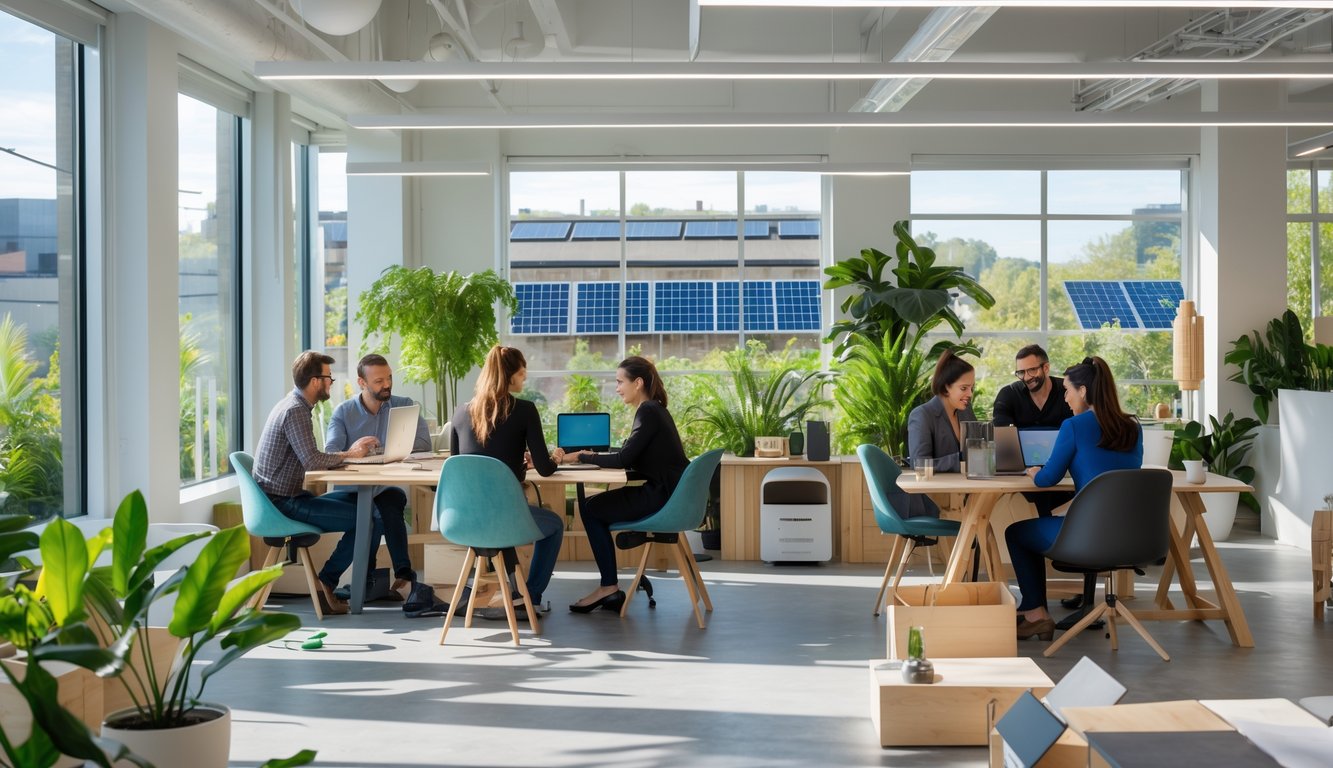
By sharing resources, coworking spaces avoid the need for multiple individual offices. This saves heating, cooling, and lighting.
Many spaces use eco-friendly materials and energy-efficient designs. These choices make the work environment healthier and lower environmental impact.
Some spaces host events to teach members about sustainable work habits. I’ve also seen coworking spaces encourage less driving and more remote collaboration.
Shared meeting rooms and digital tools make it easy to work together without constant travel. Over time, these choices create a smaller carbon footprint and a more responsible way of working.
Environmental Impact of Coworking Spaces
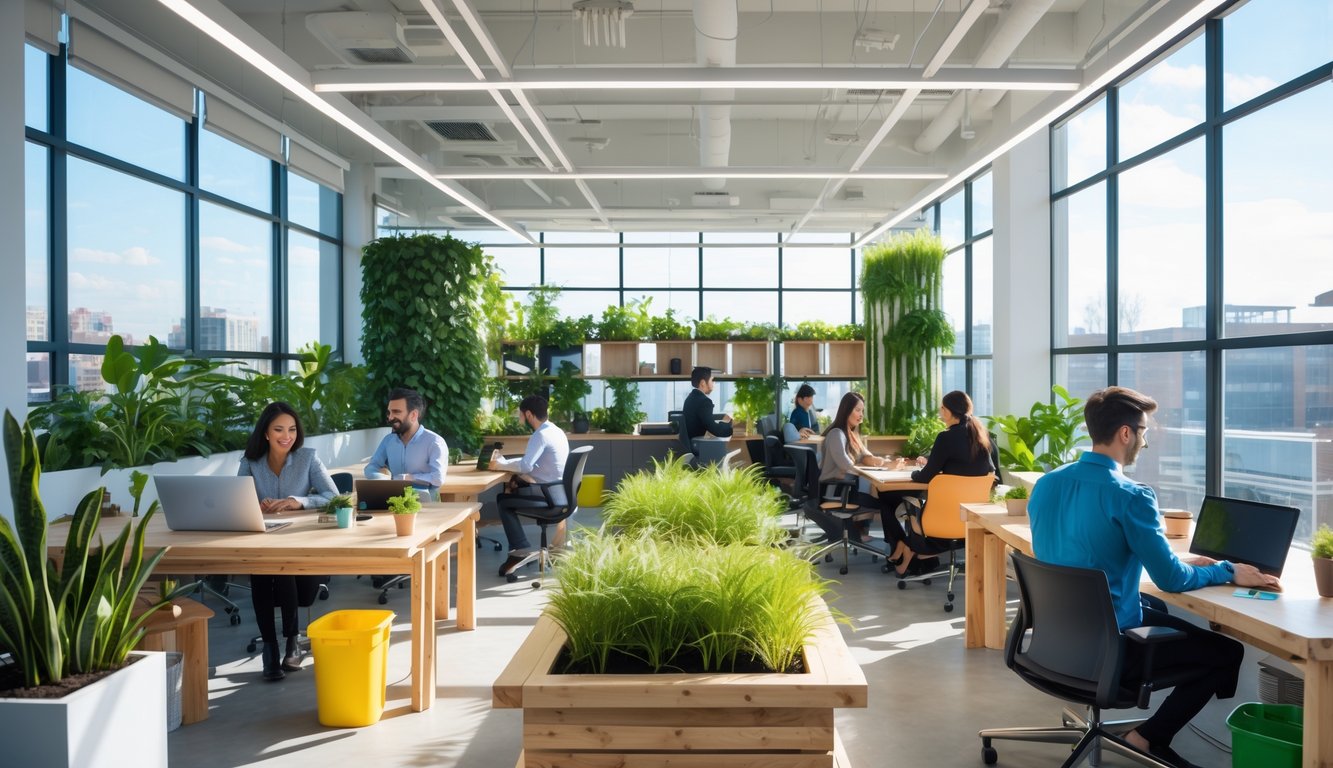
I’ve noticed that shared workspaces change how we use buildings, energy, and materials. By grouping many workers in one location, coworking spaces use fewer resources and create less waste than separate offices.
These changes also help cut emissions from daily commutes and building operations.
Comparison to Traditional Offices
When I compare coworking spaces to traditional offices, I notice better space efficiency. In a standard office, each company rents or owns its own area, which often leads to unused desks and empty meeting rooms.
This setup wastes energy. In coworking spaces, different individuals and teams share the same infrastructure.
Lighting, heating, and cooling serve more people in less space. Here’s a quick look at the difference:
| Feature | Traditional Offices | Coworking Spaces |
|---|---|---|
| Desk Usage | Often under 60% | Higher due to shared use |
| Meeting Rooms | Reserved to one company | Accessible to all members |
| Energy Demand | Higher per person | Lower per person |
Coworking spaces often choose central locations. This reduces the need for long commutes.
Reduction in Carbon Footprint
One of the biggest environmental benefits I’ve seen is the drop in carbon emissions. Shared workspaces lower the carbon footprint in two main ways:
- Reduced commuting – Many coworking spaces are closer to where people live, so members can walk, bike, or use public transit.
- Efficient building operations – Instead of multiple half-empty offices running separate HVAC systems, one building serves everyone.
Some coworking spaces use renewable energy and energy-efficient designs. This includes LED lighting, smart thermostats, and motion-sensor controls.
These steps cut emissions and lower utility costs for operators and members.
Optimized Resource Utilization
Coworking spaces focus on maximizing the use of materials and resources. Shared printers, kitchen appliances, and office supplies mean fewer items need to be purchased and maintained.
Many spaces run waste reduction programs. This can include composting, recycling stations, and digital-first policies to reduce paper use.
Some spaces promote sustainable mobility by offering bike racks, EV charging stations, or incentives for public transit use, as seen in green coworking initiatives.
By pooling resources, coworking spaces cut down on overproduction and extend the lifespan of shared equipment. This approach reduces waste and the demand for new raw materials.
Key Sustainability Practices in Coworking Spaces
I use practical ways to reduce energy use, cut waste, and create healthier work environments. These approaches lower costs and make the space more comfortable.
Energy-Efficient Lighting and Smart Technologies
I choose LED lighting because it uses less energy and lasts longer than traditional bulbs. I install motion sensors so lights turn off automatically when no one is in the room.
Smart thermostats help me control heating and cooling more precisely. They adjust temperatures based on occupancy and time of day.
I use smart plugs to cut power to devices that don’t need to run all day. This reduces standby energy use.
Here’s a quick view of the benefits:
| Technology | Main Benefit | Energy Savings Potential |
|---|---|---|
| LED lights | Lower power use, long life | Up to 75% less energy |
| Motion sensors | Lights only when needed | 20-30% lighting savings |
| Smart thermostat | Optimized HVAC use | 10-15% HVAC savings |
Use of Renewable Energy Sources
I look for ways to power my coworking space with renewable energy sources like solar or wind. Installing rooftop solar panels can supply a significant share of daily electricity needs.
When on-site generation isn’t possible, I choose green energy plans from utility providers. This ensures my electricity comes from certified renewable energy projects.
I also track my energy use to see how much comes from clean sources. This helps me set clear goals for increasing my renewable share each year.
Some spaces, like those featured in sustainable coworking initiatives, reach net-zero energy through a mix of solar, battery storage, and efficiency upgrades.
Sustainable Materials and Green Design
I select sustainable materials such as reclaimed wood, recycled metal, and low-VOC paints. These choices reduce harmful emissions and support a healthier indoor environment.
Furniture made from recycled or responsibly sourced materials helps create an eco-friendly office. This doesn’t sacrifice style or comfort.
I also bring in biophilic design elements like indoor plants and natural light. This improves air quality and boosts mood and focus.
Many coworking spaces, such as those using green design principles, combine these materials with layouts that maximize natural ventilation and daylight. This reduces the need for artificial lighting and mechanical cooling.
Waste Reduction and Resource Management
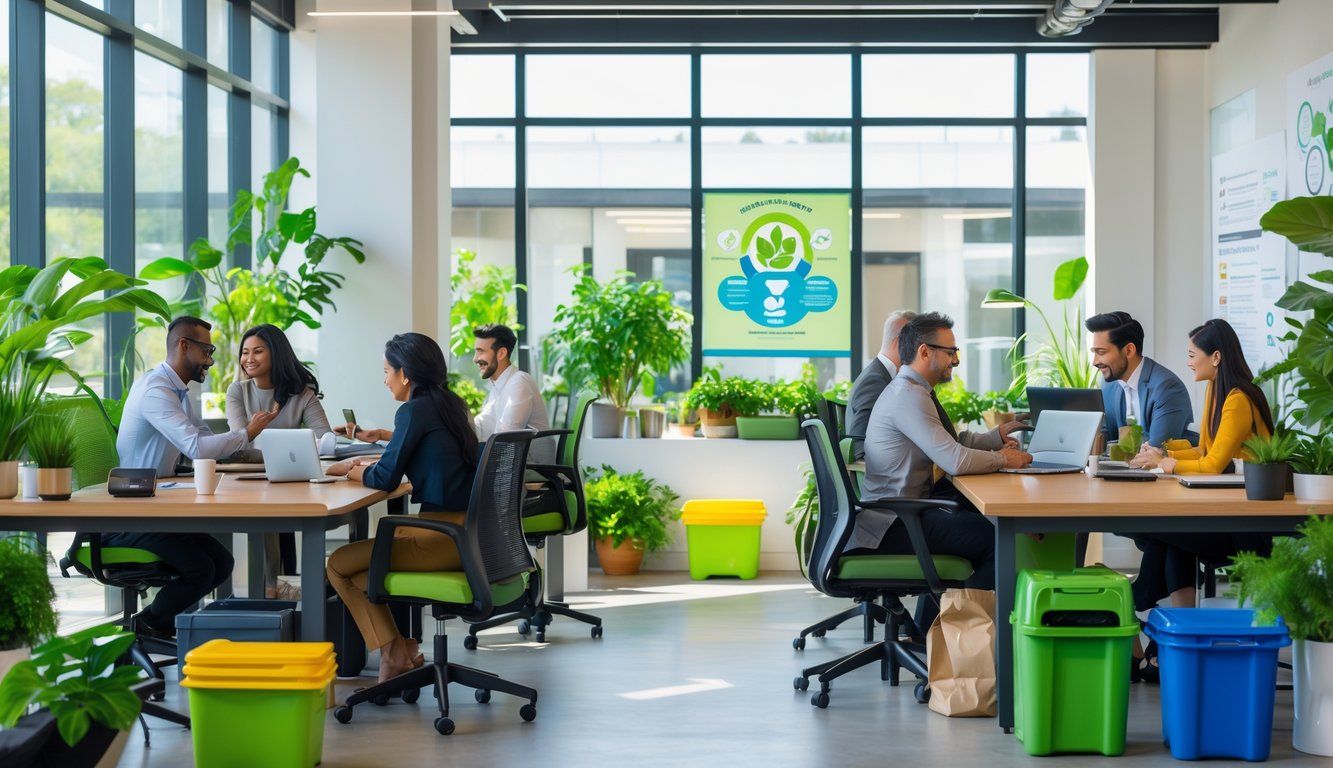
I focus on cutting down waste and using resources wisely in my coworking space. This means setting up clear systems for recycling, saving water, and reducing single-use items.
Recycling and Composting Initiatives
I make it easy for members to recycle by placing clearly labeled bins in common areas. Paper, plastics, glass, and metals each have their own spot.
I partner with local recycling services to ensure materials get processed properly. For food scraps, I keep a composting station in the kitchen.
Members drop in fruit peels, coffee grounds, and other compostable waste. The compost goes to a local farm, which turns it into soil for crops.
I post simple guides near the bins. Clear instructions help prevent contamination.
Some coworking spaces, like those described in green coworking initiatives, run workshops on sorting waste correctly. I’ve found this builds awareness and keeps the system effective.
Water-Saving Fixtures and Conservation
I installed low-flow faucets and dual-flush toilets to cut water use. These fixtures save hundreds of gallons each month.
In the kitchen, I use dishwashers with eco modes that use less water and energy. I encourage members to only run them when full.
I do monthly checks of plumbing and fixtures to spot leaks early. Even a slow drip can waste gallons of water over time.
Spaces that follow water-saving practices can cut utility costs and lower their environmental footprint.
Minimizing Single-Use Products
I avoid stocking single-use coffee cups, plastic cutlery, and bottled water. Instead, I provide reusable mugs, plates, and stainless-steel utensils.
For events, I set up refillable water stations and encourage people to bring their own bottles. This keeps hundreds of plastic bottles out of the trash each month.
When ordering supplies, I choose vendors who use minimal or recyclable packaging. Some coworking spaces, like those highlighted in sustainable workspace practices, bulk order to cut packaging waste.
By making these options the default, I’ve seen members shift toward less wasteful habits.
Transportation and Commuting Benefits
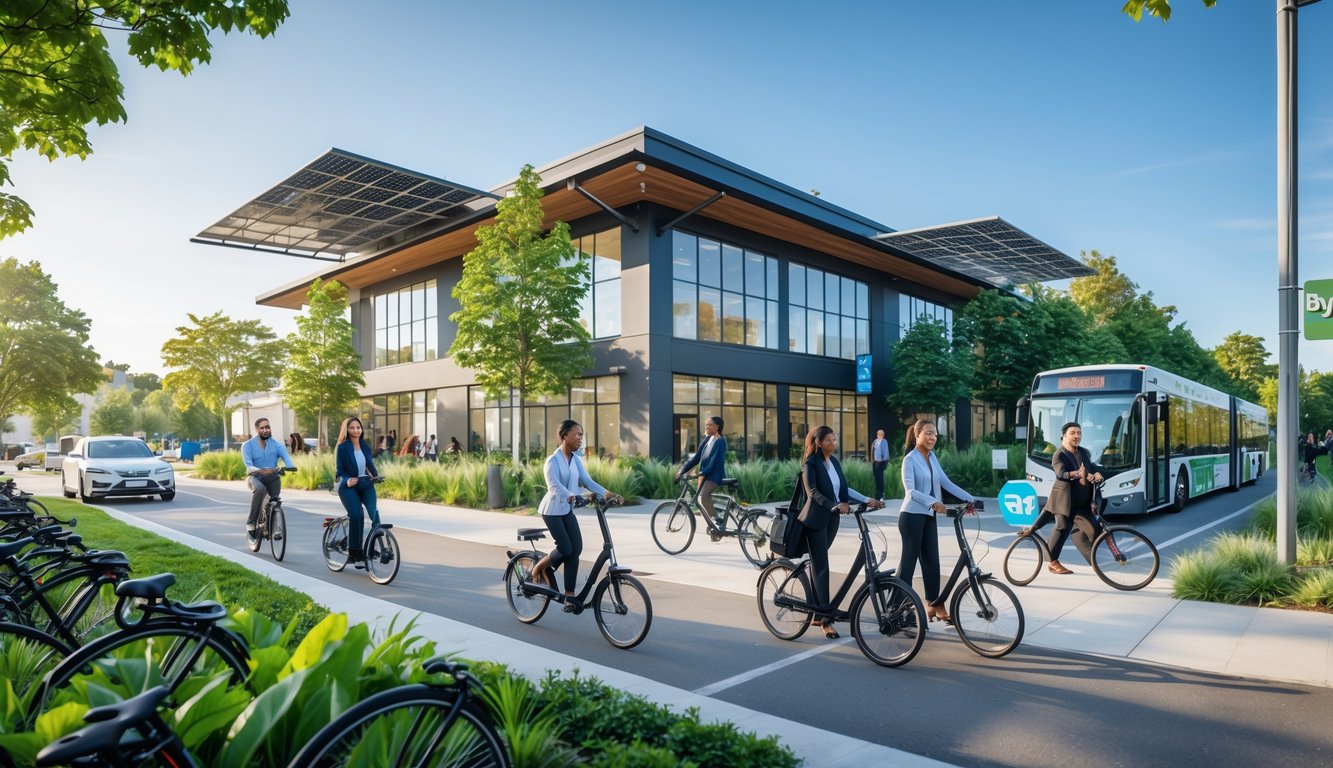
Where I work affects how much and how I travel. Shorter trips and greener choices lower carbon emissions and make daily life easier.
Reduced Commuting Distances
When I choose a coworking space near my home, I often cut my daily travel time in half. This saves me time and means my car stays parked more often.
Less driving means less fuel use and fewer greenhouse gases released into the air. Transportation is one of the largest contributors to carbon emissions, so even small reductions matter.
Some coworking spaces are located in residential areas or near public transit hubs. This makes it easier for me to walk, bike, or take a short bus ride.
By working closer to where I live, I avoid the stress of rush-hour traffic. That’s a win for my productivity and my well-being.
Encouragement of Sustainable Transportation
Many spaces I’ve used support eco-friendly travel. Some offer secure bike parking, shower facilities, and electric vehicle charging stations.
These features make it easier for me to choose greener options. I’ve seen coworking spaces promote carpooling boards or ride-sharing apps for members.
This reduces the number of cars on the road and cuts down on emissions. Spaces near train or bus lines often provide route maps and schedules to encourage public transit.
For example, some coworking spaces promote sustainable transportation options by making these resources easy to find.
When my workplace makes sustainable commuting simple, I’m far more likely to stick with it. It feels good knowing my daily choices help reduce my environmental impact.
Shared Spaces and Collaboration Tools
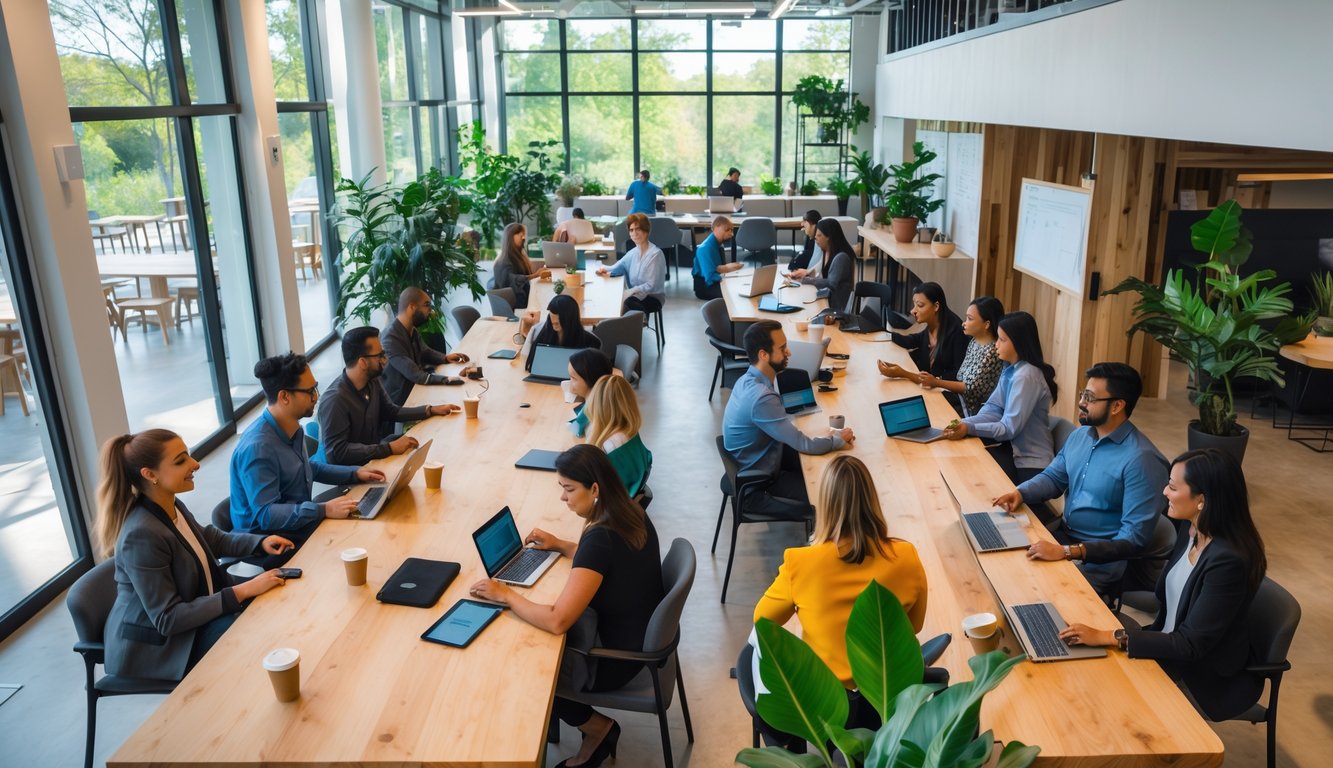
I’ve noticed that shared offices save resources by letting many people use the same rooms and tools. This approach reduces waste, lowers costs, and makes it easier for people to collaborate without putting extra strain on the environment.
Efficient Use of Meeting Rooms
In my coworking space, I can book meeting rooms only when I need them. This keeps the rooms busy throughout the day instead of letting them sit empty.
The spaces often have flexible layouts. I’ve seen one room used for a client meeting in the morning and for a workshop or team call later in the day.
Many locations use online booking systems to prevent double-booking and reduce wasted space. Some share usage data so members can choose less busy times.
By sharing meeting rooms, businesses avoid renting or building their own. This saves materials and reduces the energy needed for heating, cooling, and lighting extra rooms.
Digital Collaboration for Sustainability
I use digital tools like video calls, shared documents, and project management apps. These tools reduce travel because I can meet with clients or teammates from my desk.
Platforms such as Zoom, Google Workspace, and Slack help us use less paper. We share agendas online instead of printing them.
Some coworking spaces encourage members to use digital collaboration tools for events and workshops. This allows remote participation and reduces the need for large in-person gatherings.
Combining shared spaces with strong digital options helps me work efficiently and keep my environmental impact lower.
Long-Term Benefits and the Future of Work
I’ve noticed that shared work environments shape how we design offices, use resources, and support people’s daily routines. They often lead to lower energy use and healthier, more flexible spaces that adapt to changing business needs.
Shaping Sustainable Work Trends
I see coworking spaces leading the way in reducing energy consumption. Instead of each business running its own office with separate utilities, shared facilities use lighting, heating, and cooling more efficiently.
Many spaces now include renewable energy sources and waste reduction programs. Some add bike racks or electric vehicle charging stations to support low-carbon commuting, as seen in future-focused coworking designs.
Flexible layouts make it easier to adjust to new work patterns. When teams grow or shrink, the space can be rearranged without major renovations.
These changes reduce construction waste and help the space stay useful for years. I think these trends will become standard as more companies look for cost savings and greener operations.
Impact on Employee Wellbeing and Productivity
From my experience, a well-designed coworking space improves focus and comfort. Shared offices often offer natural light, plants, and quiet areas.
These features reduce stress and boost productivity. Access to amenities like ergonomic furniture and wellness rooms helps create a more balanced workday.
Many spaces now include healthy snacks and prioritize sustainable design. I’ve found that the social aspect matters too.
Working alongside others, even from different industries, sparks ideas and reduces feelings of isolation. Lower commuting time and healthier environments also support long-term employee satisfaction.