I know how challenging it is to make a small coworking space work for a growing startup or tight-knit team. Every square foot counts, and the right design choices can turn a cramped office into a productive, inspiring environment.
You can create a space that feels open, supports focus, and encourages collaboration—even with limited room.
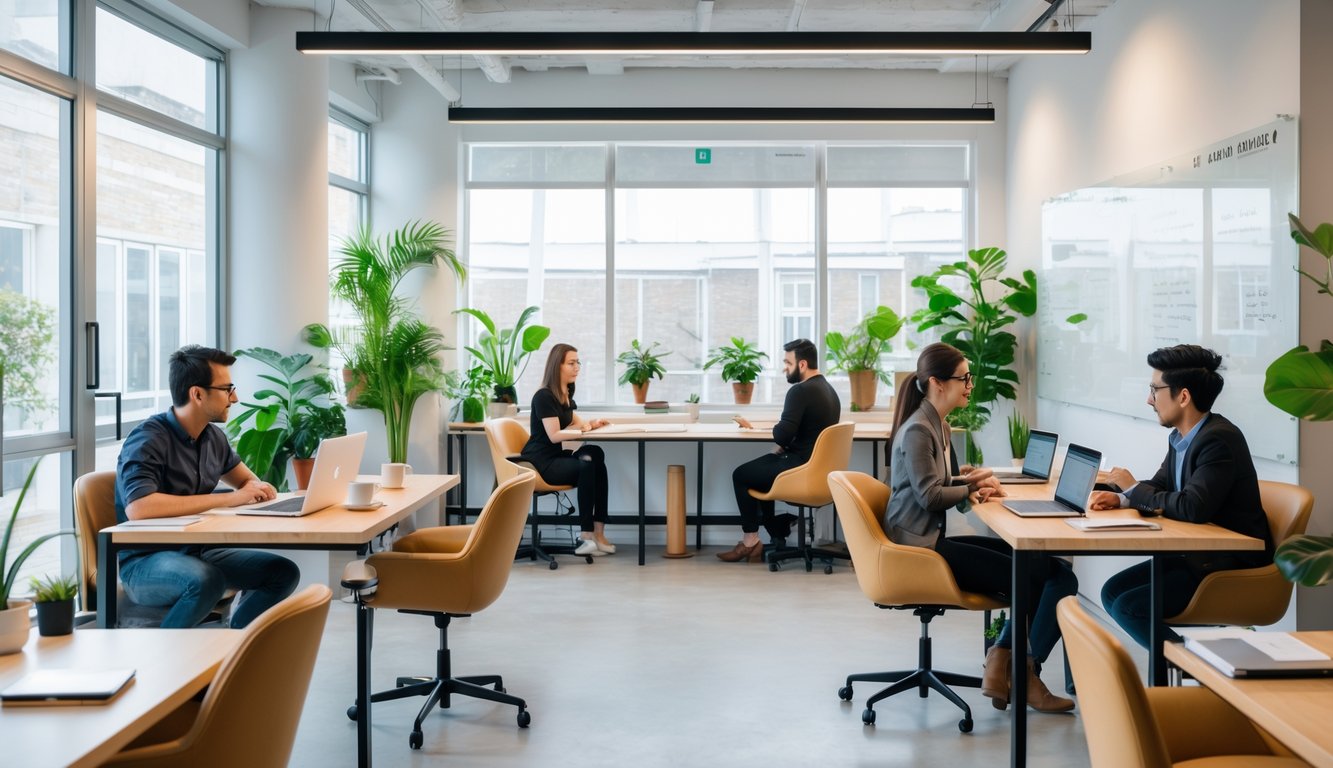
When I walk into a well-designed coworking space, I see how layout, lighting, and thoughtful amenities come together. Flexible desks and well-placed meeting areas each serve a clear purpose.
Spaces featured in creative coworking design ideas show that you don’t need a huge floor plan to make a big impact.
I add natural touches, smart storage, and the right tech tools to transform a small office into a hub for focus and connection. By blending style with function, your team can feel motivated to do their best work every day.
Key Elements of Small Coworking Space Design
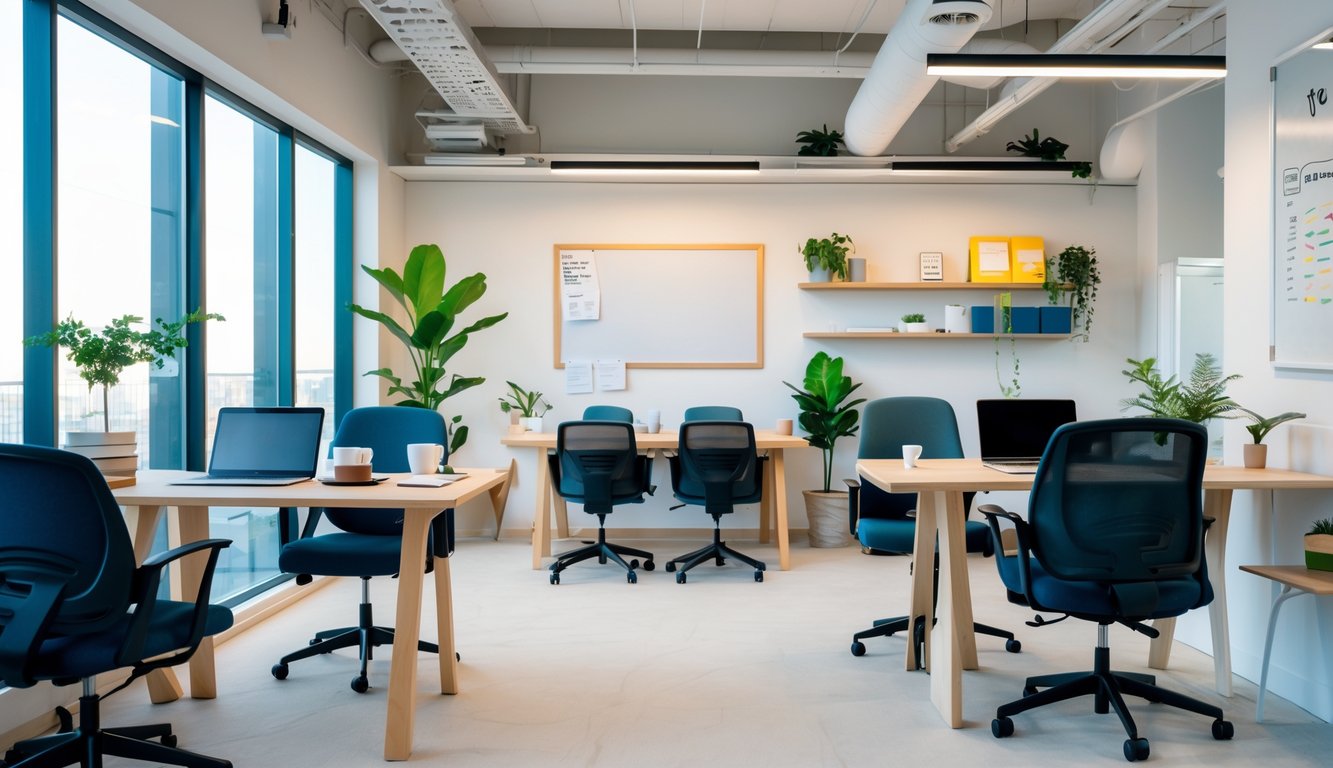
I make every square foot work hard while keeping the space comfortable and inviting. Practical layout choices, adaptable furniture, and intentional use of color help me create a modern coworking space that supports productivity and collaboration.
Optimizing Layout and Flow
I start by mapping out how people move through the space. Clear walkways reduce distractions and make it easy for members to reach meeting rooms, desks, or shared areas.
For a small coworking space, I use zoning to separate quiet work areas from collaborative spots. I do this with plants, low shelves, or glass dividers instead of solid walls.
I keep high-traffic areas like kitchens or printers accessible but away from focused work zones. Sometimes, I place social areas near entrances to encourage quick conversations without disrupting others.
A simple table or diagram helps me visualize:
| Zone Type | Placement Tip | Purpose |
|---|---|---|
| Quiet Work | Away from doors and kitchens | Deep focus |
| Collaboration | Near central walkways | Quick team discussions |
| Social/Break | Close to entrance or windows | Relaxation and networking |
Selecting Versatile Furniture
I choose furniture that serves more than one purpose. Foldable tables, stackable chairs, and mobile whiteboards let me switch from a workshop setup to individual workstations.
For small coworking spaces, I use modular desks that can be grouped for teams or separated for solo work. This flexibility helps me adapt to changing needs.
Storage is a priority. I pick benches with hidden compartments or wall-mounted shelves to keep clutter off the floor.
Some setups combine seating with storage to save space. I also make sure chairs are comfortable for long hours but light enough to move easily.
Using Color Psychology
Color shapes how people feel in a workspace. I use soft blues or greens in quiet zones to help members stay calm and focused.
For collaborative areas, I add warm tones like yellow or orange to encourage energy and conversation.
I avoid painting entire walls in bold colors. Instead, I use accent walls, artwork, or furniture to add personality without overwhelming the room.
Neutral backgrounds make the space feel larger and let me change the mood with colorful details. In modern coworking space designs, the base palette stays simple, but accessories add vibrancy.
Lighting matters too—natural light and lighter colors create an open, airy feeling that makes a small space more inviting.
Creative Coworking Space Ideas for Startups
I focus on layouts and features that make work easier while keeping the space comfortable and inspiring. Good design helps people stay productive, connect with others, and work in the right environment for different tasks.
Flexible Workstations
I set up flexible workstations so people can choose where and how they work each day. This includes height-adjustable desks, shared tables, or small standing counters.
Movable furniture lets me adapt the space for workshops or team projects. Chairs on wheels, folding tables, and modular desks make it easy to rearrange the layout.
To keep the area organized, I use cable management tools and small storage units. In some creative coworking space designs, lockers or cubbies give members a place to store personal items.
A mix of seating types—ergonomic chairs, stools, and lounge chairs—makes the space more inviting. This way, I can switch spots based on my energy or the task at hand.
Open Collaboration Areas
I set up open collaboration zones to make sharing ideas easy. These areas have large tables or clusters of seating for small groups.
I use lightweight furniture so we can move it for brainstorming sessions or events. Whiteboards or writable walls let everyone map out ideas visually.
Good lighting matters. I prefer natural light, but I also use warm LED fixtures to keep the space bright without glare.
In some creative coworking space examples, plants and soft textures make open areas feel welcoming.
If noise is a problem, I add rugs, acoustic panels, or fabric dividers to reduce echoes. This keeps conversations from disrupting nearby workstations.
Private Meeting Pods
I use private meeting pods when I need quiet or confidentiality. These small rooms or booths give me space for client calls, interviews, or focused work.
Each pod has a small desk, a comfortable chair, and good ventilation. Soundproofing blocks outside noise during meetings.
Some pods use glass walls, which keep the space open visually while still providing privacy. In certain modern coworking space designs, pods come with built-in lighting, power outlets, and USB ports for charging devices.
Having a few pods in a creative coworking space makes it easier to balance open collaboration with quiet, focused work.
Biophilic and Wellness-Focused Design
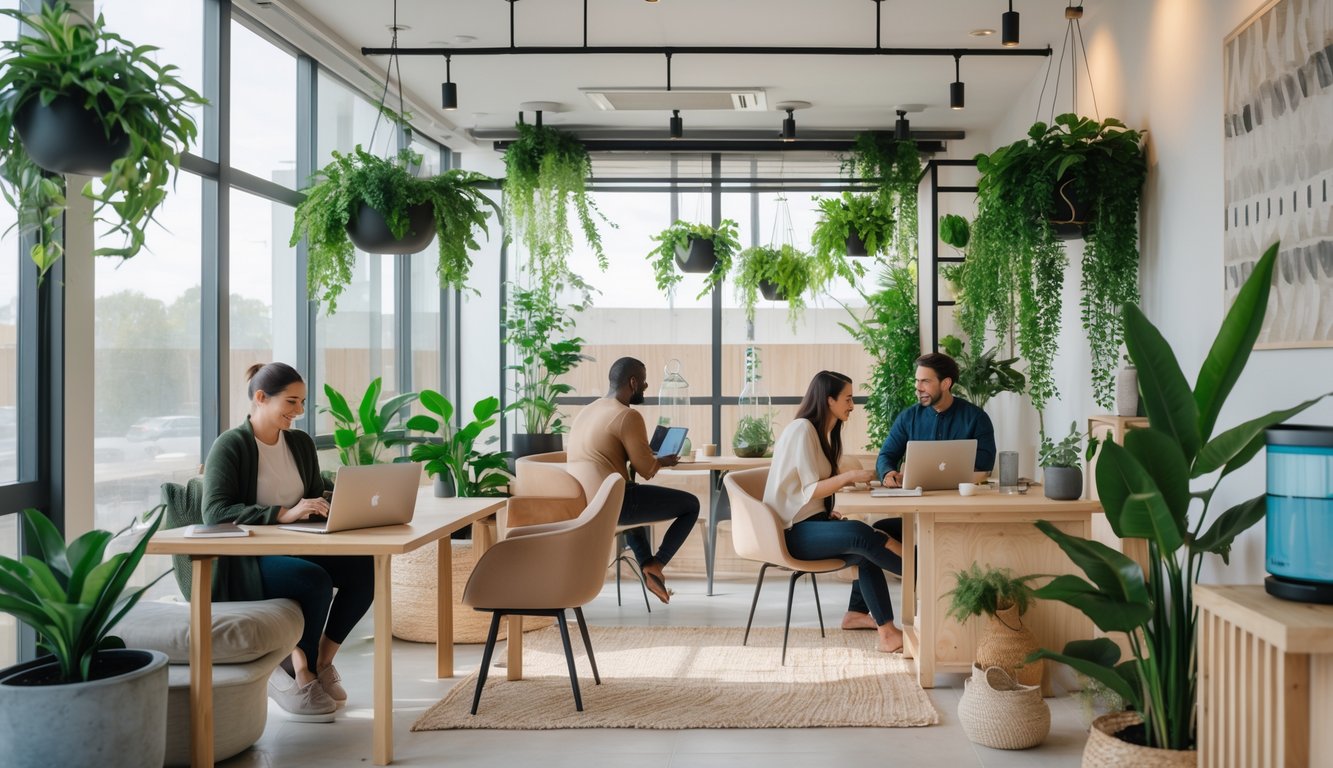
I create workspaces that feel calm, healthy, and inviting. Adding natural elements, using daylight wisely, and setting aside spaces for rest make a small coworking area feel more open and productive.
Incorporating Natural Elements
I add plants to make a space feel alive. Even a few potted plants on desks or shelves improve air quality and reduce stress.
When space is tight, I use vertical planters or wall-mounted greenery. These save floor space and still give the benefits of nature.
Natural materials like wood, stone, and bamboo make a difference. I choose desks with wood finishes or use woven baskets for storage.
Even small touches, like a corkboard or clay pots, bring warmth to the room. I use earthy tones—greens, browns, and soft neutrals—to reduce visual stress and make the space feel grounded.
Maximizing Natural Light
I place desks near windows when possible. Daylight helps regulate energy levels and improves mood.
If sunlight is too strong, I use sheer curtains to diffuse it. In areas with limited windows, I add mirrors to reflect light deeper into the room.
I prefer LED lights set to a warm or daylight tone to mimic natural light cycles. This is similar to how wellness-focused offices use lighting to support productivity.
I avoid blocking windows with large furniture. Instead, I use low shelving or movable partitions to keep the space flexible and open.
Wellness and Relaxation Zones
Even in small coworking spaces, I create a spot to step away from the desk. This might be a corner with a soft chair, a small rug, and a plant for a calming touch.
When I can, I add features like a water dispenser, herbal tea station, or a small bookshelf with inspiring reads. These encourage short, healthy breaks.
A quiet, comfortable zone helps people return to work more focused. Even a single armchair by a window can make a big difference in how people feel during the day.
Maximizing Space Utilization in Small Areas
I use every inch of space without making the room feel cramped. I keep walkways clear, reduce clutter, and pick furniture that serves more than one purpose.
Smart Storage Solutions
In a small coworking space, storage becomes a problem if I don’t plan well. I avoid bulky cabinets and use vertical storage like tall shelves or wall-mounted racks.
This keeps the floor open and makes the room feel larger. I also use under-desk drawers and rolling carts that tuck away when not in use.
For shared supplies, I use labeled bins or baskets to keep things organized and easy to find.
A simple table helps me decide what to store where:
| Item Type | Best Storage Option |
|---|---|
| Office supplies | Labeled bins or desk drawers |
| Documents | Vertical file organizers |
| Tech gear | Wall hooks or cable boxes |
By keeping storage off the floor and close to where it’s needed, I reduce wasted space and improve workflow.
Modular Furniture Systems
I prefer modular furniture because I can rearrange it to fit different needs. In a small coworking space, this flexibility is key.
Desks that connect or separate, folding tables, and stackable chairs let me change the layout without buying new pieces. Some modular systems also have built-in storage, which helps me combine two functions in one item.
For example, a bench with hidden compartments works as seating and storage. I’ve found that lightweight materials make it easier to move pieces around.
This means I can switch from a collaborative setup to a quiet work area in minutes. Investing in modular designs keeps the space adaptable as the team grows or projects change.
Enhancing Productivity and Focus
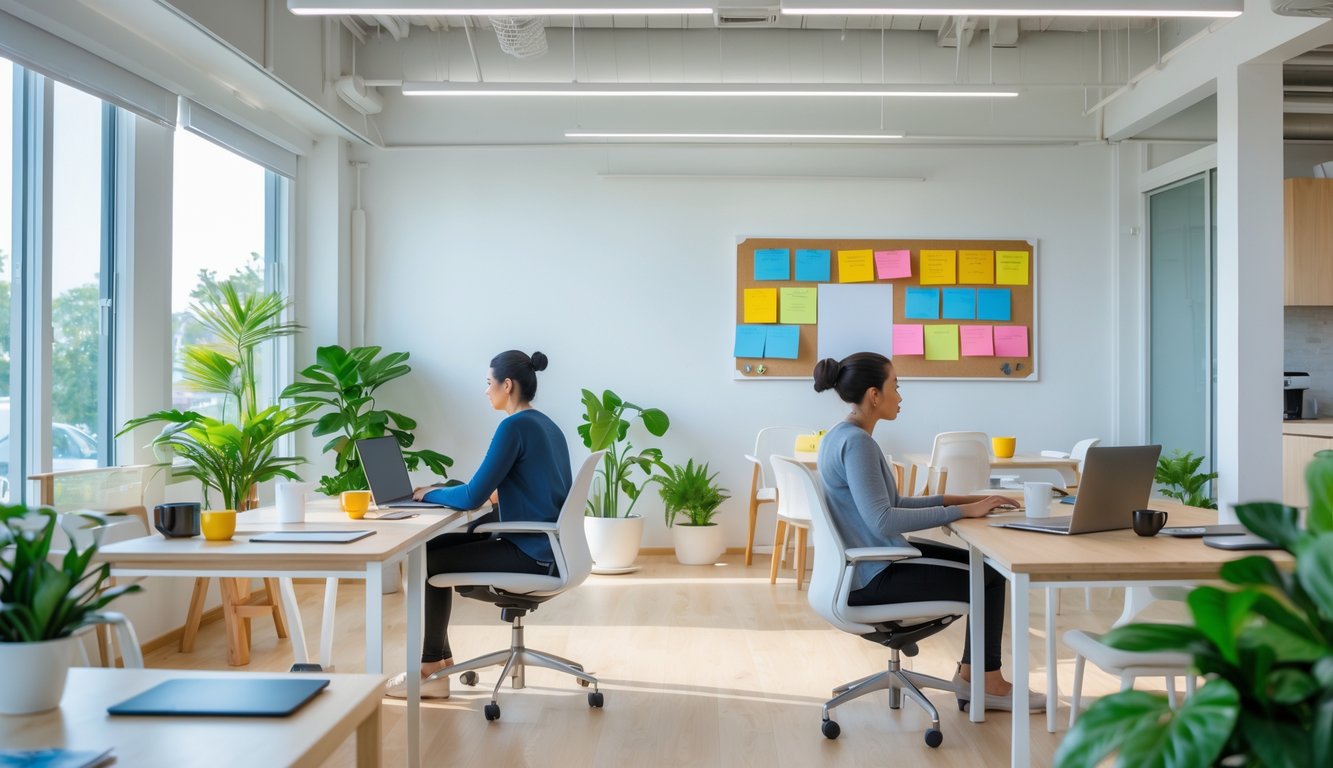
The layout and noise control in a coworking space affect my ability to concentrate. Simple design choices can help reduce distractions and keep everyone working at their best.
Establishing Quiet Zones
When I need to focus, I look for spaces set aside for silent work. A quiet zone works best when it’s clearly marked and separated from high-traffic areas like kitchens or meeting rooms.
I use small rooms or enclosed booths for these areas. Even a corner with partitions can create a sense of privacy.
Clear rules keep the space effective. For example:
- No phone calls
- Headphones required for audio
- Minimal movement during work sessions
Adding comfortable seating, good lighting, and enough outlets encourages people to use the area. These spaces can boost employee productivity without major renovations.
Soundproofing Techniques
Outside noise can disrupt even the best quiet zones. I use acoustic panels on walls to absorb sound.
They’re easy to install and come in designs that match the space’s style. Carpet or rugs can reduce echo, especially in open areas.
I also add heavy curtains near windows to block street noise. For shared walls, I use soundproofing foam or mass loaded vinyl to make a big difference.
If that’s not possible, I place bookshelves or storage units against the wall for extra sound buffering. Some coworking spaces use glass partitions with built-in acoustic film.
This keeps the open feel while cutting noise, which helps people focus without feeling isolated.
Integrating Technology and Modern Amenities
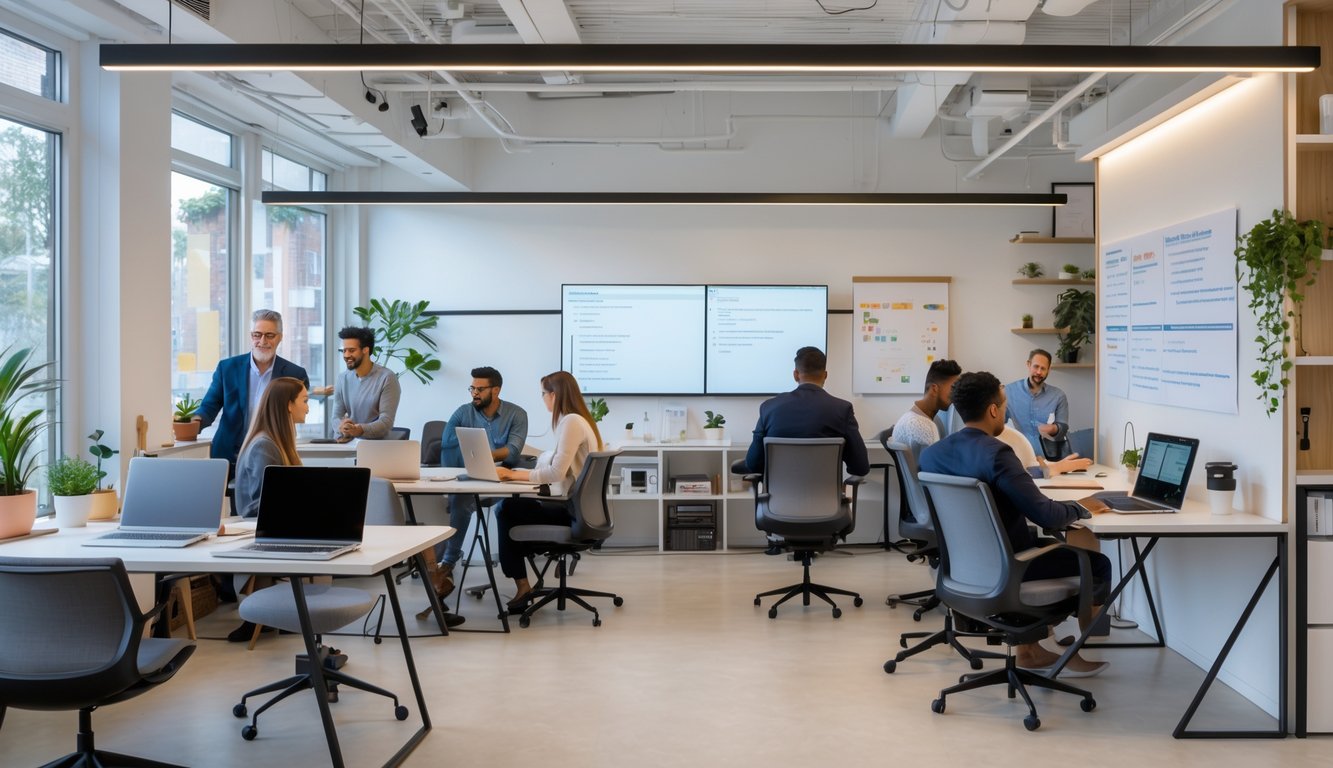
I focus on tools and features that make work faster, smoother, and more comfortable. This includes equipment that supports productivity, spaces that adapt to different tasks, and reliable systems that keep everything running without delay.
Smart Technology Integration
I set up smart meeting rooms with booking systems that sync to my calendar. This helps me avoid double bookings and wasted time.
In my workspace, I use wireless charging stations so I don’t have to hunt for cables. Smart lighting that adjusts to the time of day helps me stay alert without harsh glare.
I use digital whiteboards to make team brainstorming easier. They let me share notes instantly with remote members.
Here’s a quick list of tech upgrades I recommend:
- Smart thermostats for consistent, comfortable temperatures
- Automated access control for secure, keyless entry
- Cloud-based printing so I can print from anywhere in the space
Many modern coworking spaces also add app-controlled lockers, which keep my gear safe without needing a physical key.
Ensuring Seamless Connectivity
For me, fast and stable internet is essential. I always check for high-speed Wi-Fi and wired Ethernet for tasks that need extra stability.
I set up network redundancy so another connection takes over if one fails. This keeps video calls and uploads running smoothly.
A good coworking space offers plenty of power outlets near every desk. I use desks with built-in ports to avoid long extension cords.
In shared areas, I prefer soundproof phone booths for private calls. Many coworking spaces also provide video conferencing tools, making it easy to collaborate with clients or teammates in other locations.