When I set up a coworking space, I want it to feel comfortable, functional, and responsible.
Choosing eco-friendly furniture helps create a workspace that supports productivity while reducing environmental impact.
It’s not just about style. I make choices that use fewer resources, last longer, and keep harmful materials out of the environment.
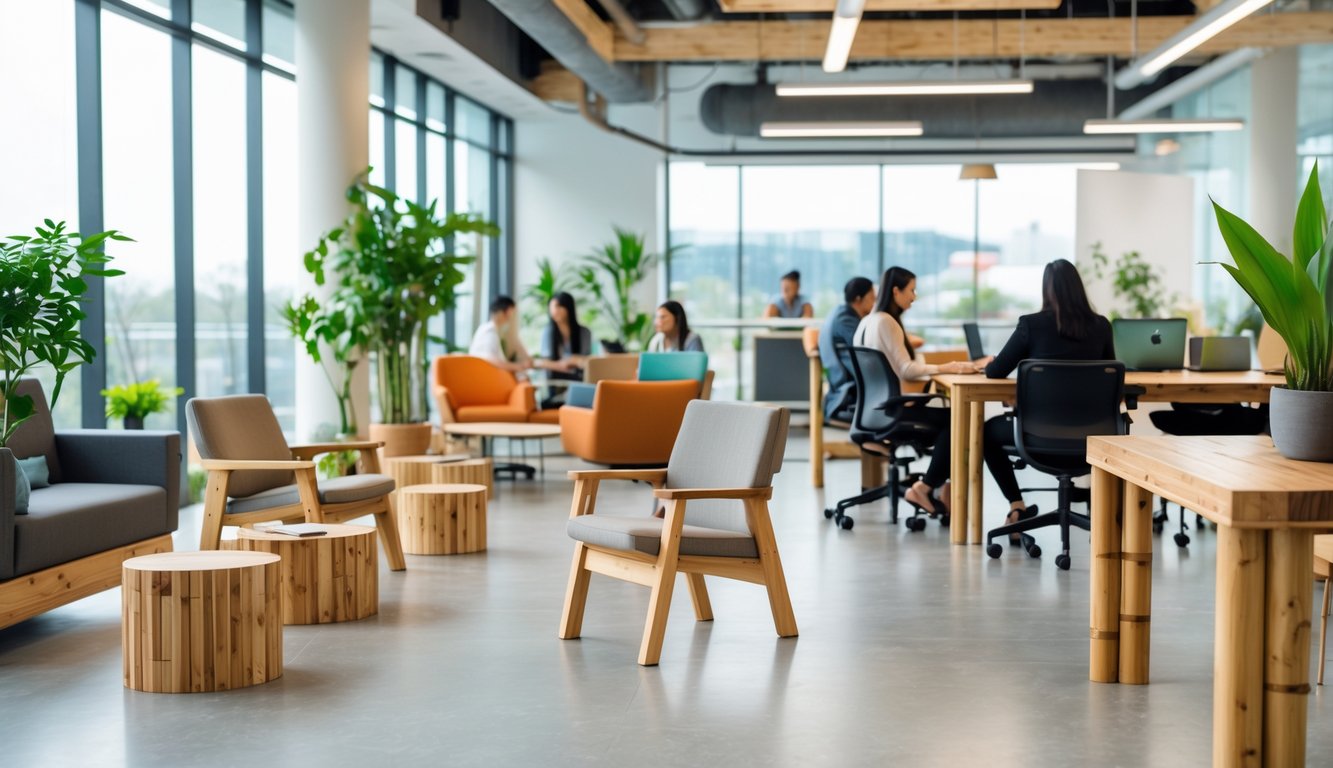
I’ve learned that sustainable design starts with the basics: the right materials, smart manufacturing, and products built to last.
Options like FSC-certified wood and bamboo offer durability without draining natural resources.
Even small changes, like selecting chairs with recycled components or desks made from reclaimed wood, make a big difference over time.
For me, a greener workspace isn’t only about the furniture itself.
It’s also about how it fits into a bigger plan for energy efficiency, waste reduction, and healthier air quality.
By focusing on these principles, I create a coworking space that’s better for the people using it and better for the planet.
The Importance of Eco-Friendly Furniture in Coworking Spaces
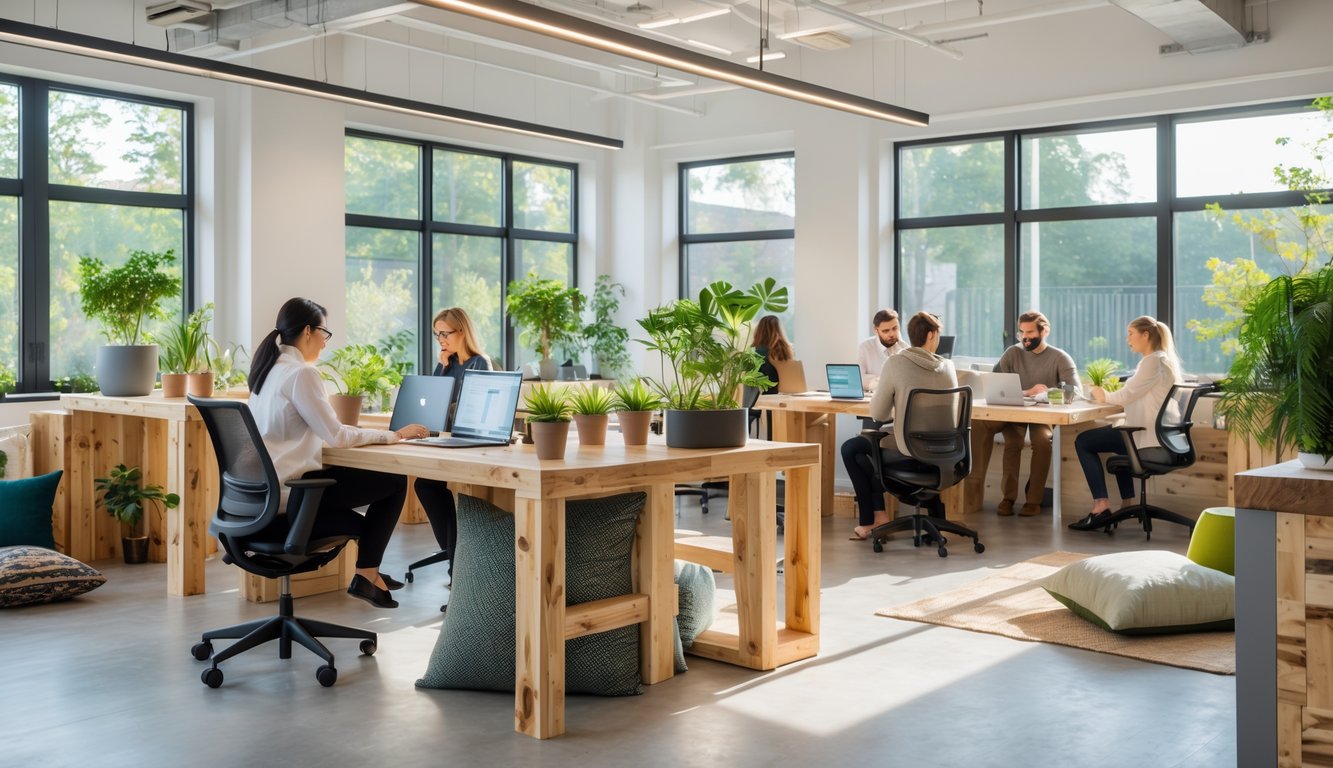
I’ve noticed that the furniture we choose for a workspace affects more than just the look of the room.
It changes how much waste we create, how healthy we feel at work, and even how others see the business.
Environmental Impact of Traditional Office Furniture
Most traditional office furniture uses materials like particleboard with formaldehyde-based glues, synthetic fabrics, and plastic laminates.
These often come from non-renewable resources and can release harmful chemicals into the air.
When these items wear out, they usually end up in landfills.
The breakdown process can release pollutants and take decades.
In contrast, eco-friendly coworking spaces use furniture made from reclaimed wood, recycled metals, and low-VOC finishes.
These choices reduce waste and help lower the carbon footprint of the workspace.
I choose certified sustainable materials, such as FSC-certified wood, to ensure the raw materials come from responsibly managed forests.
This step directly supports long-term environmental sustainability.
Benefits for Employee Well-Being
I’ve worked in spaces with poor-quality furniture, and it makes a big difference in comfort and health.
Many traditional desks and chairs lack ergonomic design, which can lead to back pain, eye strain, and fatigue.
Eco-friendly furniture often uses non-toxic finishes and natural materials, which improve indoor air quality.
Better air quality can reduce headaches, allergies, and respiratory issues.
In coworking spaces, adjustable and supportive seating encourages better posture.
I’ve seen how this boosts focus and energy levels throughout the day.
Some sustainable designs include natural textures and colors, which help create a calmer, more inviting environment.
This is especially important in shared workspaces where stress levels can run high.
Enhancing Brand Reputation Through Sustainability
When I walk into a coworking space that uses reclaimed wood tables or recycled steel frames, I immediately notice the commitment to sustainability.
It sends a clear message about values.
Businesses that invest in eco-friendly furniture often attract members and clients who care about environmental responsibility.
This can be a deciding factor for professionals choosing between coworking spaces.
Highlighting sustainable choices in marketing materials or tours helps set a space apart from competitors.
According to Sustainable Design in Coworking Spaces, using eco-friendly materials not only reduces impact but also appeals to environmentally conscious professionals.
A visible commitment to green practices builds trust and strengthens long-term relationships with both tenants and partners.
Core Principles of Sustainable Design
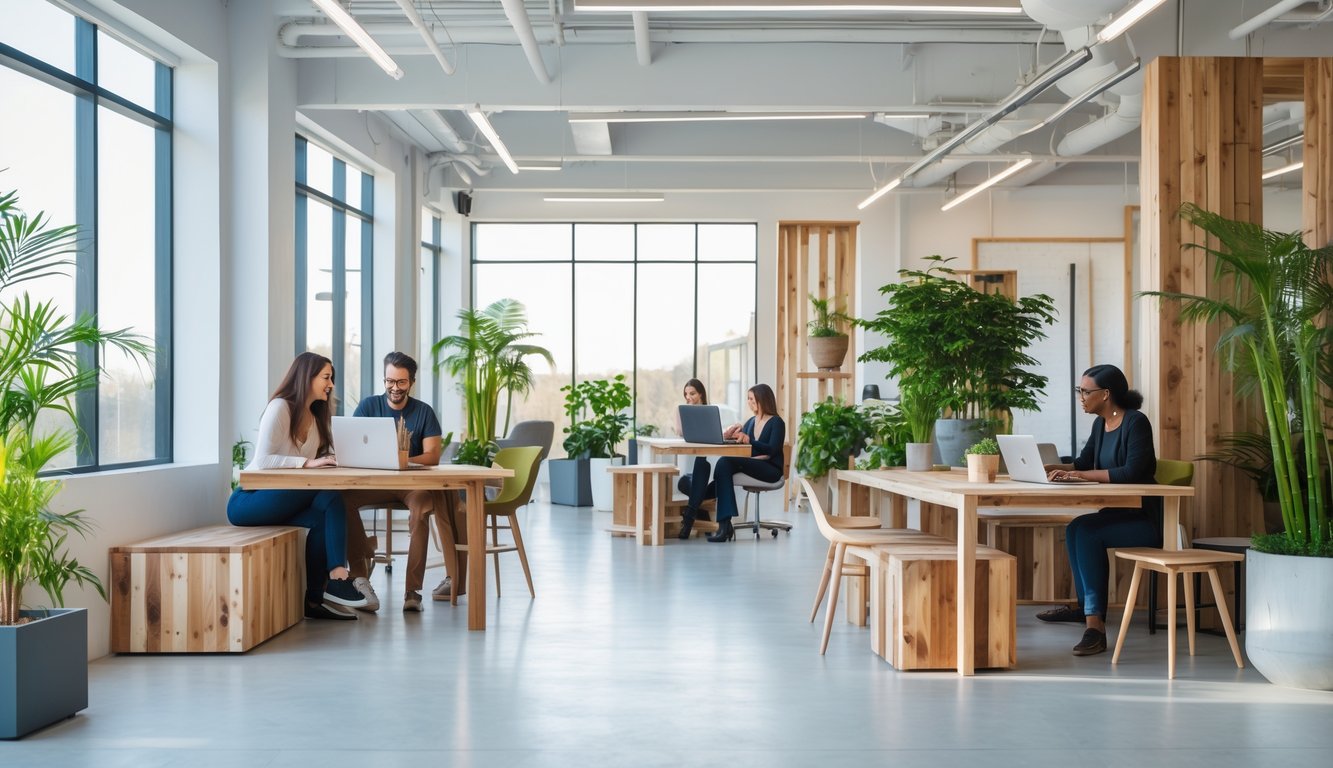
I focus on design choices that improve the workspace while reducing environmental impact.
This means using natural elements, creating healthier air and light conditions, and involving people in keeping the space green.
Biophilic Design in the Workplace
I use biophilic design to help people feel more connected to nature while they work.
This includes adding plants, natural textures, and organic shapes to the space.
I choose furniture made from sustainable wood or recycled materials.
This reduces waste and keeps harmful chemicals out of the air.
Here’s what I find works best:
- Green walls for better air quality
- Wood finishes instead of plastic
- Natural fabrics like cotton or hemp
Spaces with biophilic elements tend to feel calmer and more inviting.
I’ve noticed people stay focused longer when surrounded by greenery and natural materials.
Maximizing Natural Light and Indoor Plants
I arrange work areas to take full advantage of natural light.
This reduces the need for artificial lighting and lowers energy use.
Large windows, glass partitions, and light-colored walls help reflect sunlight deeper into the space.
Indoor plants do more than look nice.
They help filter the air and can lower stress levels.
I often use low-maintenance plants like snake plants, pothos, or peace lilies because they thrive in most office conditions.
A simple setup might include:
| Plant Type | Care Level | Benefit |
|---|---|---|
| Snake Plant | Low | Air purification |
| Pothos | Low | Improves humidity |
| Peace Lily | Medium | Removes toxins |
By combining sunlight and plants, I create a workspace that feels fresh and alive.
Community Engagement and Green Workspaces
I believe community engagement is key to keeping a workspace sustainable.
When people feel involved, they take better care of shared areas and resources.
I’ve seen coworking spaces thrive when members join in on recycling programs, plant care, or energy-saving challenges.
Some spaces host workshops on topics like composting or sustainable living.
In green coworking spaces, shared responsibility is part of the culture.
People learn from each other and make small changes that add up over time.
This approach turns sustainability from a design choice into a daily habit.
Key Materials Used in Eco-Friendly Furniture
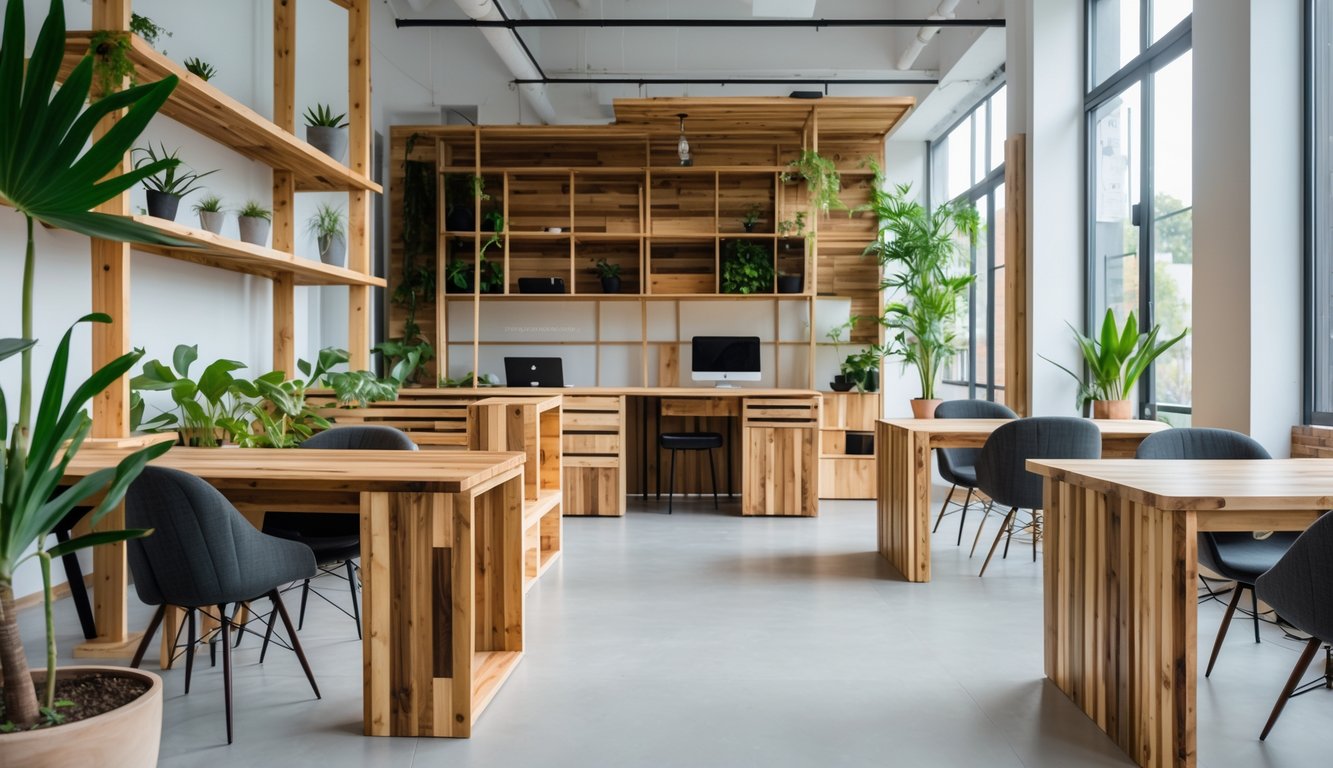
I focus on materials that reduce waste, conserve resources, and improve indoor air quality.
These choices help me create coworking spaces that are both functional and environmentally responsible.
Reclaimed Wood and Recycled Materials
I often choose reclaimed wood because it gives furniture a second life without cutting down new trees.
This wood usually comes from old buildings, barns, or shipping pallets.
It’s strong, durable, and has a unique look that new wood can’t match.
Using recycled materials like metal or plastic also helps cut down on landfill waste.
For example, recycled steel frames can be just as sturdy as new ones.
Recycled plastics can be molded into chairs or tabletops without losing quality.
Here’s what I like about them:
| Material | Main Benefit | Common Use in Furniture |
|---|---|---|
| Reclaimed Wood | Reduces deforestation | Tables, shelving |
| Recycled Metal | Conserves energy in production | Chair frames, legs |
| Recycled Plastic | Diverts waste from landfills | Tabletops, seating |
By using these materials, I help lower the demand for raw resources while keeping the style and strength I need.
Sustainable and Renewable Materials
I also look for sustainable materials that come from responsibly managed sources.
FSC-certified wood is one example.
It ensures the wood is harvested without harming forests.
Renewable materials like bamboo grow quickly and can be harvested without replanting.
Hemp is another option that requires little water and no pesticides.
These materials are lightweight yet strong, making them ideal for coworking furniture.
I prefer suppliers who can show proof of responsible sourcing.
This way, I know I’m supporting practices that protect ecosystems while providing quality products.
Low-VOC Paints and Eco-Friendly Finishes
When I finish furniture, I choose low-VOC paints and eco-friendly finishes to keep the air clean.
VOCs (volatile organic compounds) are chemicals that can release harmful fumes over time.
Low-VOC options help reduce indoor air pollution, which is important in shared workspaces where people spend hours each day.
Eco-friendly finishes like natural oils or water-based sealants protect the furniture without adding toxic chemicals.
I’ve found that these finishes still offer good durability and color quality.
They also make the space feel fresher and healthier, which supports productivity and comfort.
Energy Efficiency and Resource Conservation
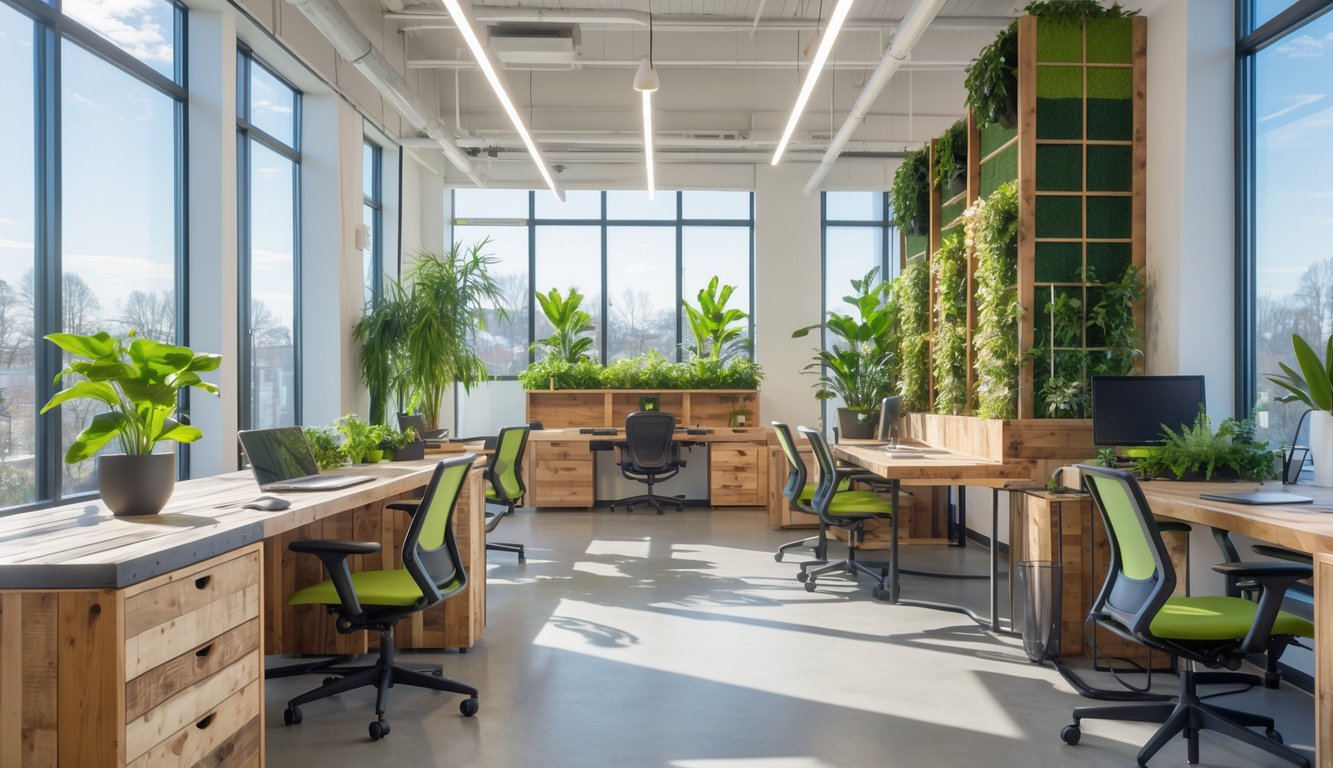
I focus on reducing wasted energy and resources because it lowers costs and lessens environmental impact.
Small changes like upgrading lighting, using renewable power, and managing water use can make a big difference in a coworking space’s daily operations.
LED Lighting and Energy-Efficient Solutions
I replace old bulbs with LED lighting because they use up to 75% less energy than traditional incandescent bulbs.
They also last much longer, which means I spend less time and money on replacements.
I install motion sensors in meeting rooms and restrooms.
These turn lights off automatically when no one is around.
This keeps energy use low without relying on people to remember to flip a switch.
For shared work areas, I choose daylight-harvesting systems.
These adjust indoor lighting based on the amount of natural light coming in.
It keeps brightness consistent while avoiding unnecessary power use.
I pair LED upgrades with energy-efficient appliances—like printers and coffee machines—to further reduce electricity consumption.
Solar Panels and Renewable Energy Integration
I see solar panels as a practical way to cut reliance on fossil fuels.
They generate clean electricity on-site, which can power lighting, computers, and even HVAC systems.
When I install panels on rooftops, I make sure they’re positioned for maximum sun exposure throughout the day.
This boosts power output and shortens the payback period.
Some coworking spaces connect their solar systems to the local grid.
This allows them to sell excess energy back for credits.
It’s a smart way to offset costs while supporting renewable energy growth.
Combining solar with battery storage lets me store extra energy for use during peak hours or outages.
This makes the workspace more resilient and less dependent on the grid, as shown in many sustainable coworking models.
Water Conservation Strategies
I focus on water conservation because it’s environmentally responsible and cost-effective. I install low-flow faucets in kitchens and restrooms to reduce water use without affecting performance.
In restrooms, I choose dual-flush toilets so people can use less water when possible. In kitchens, I use aerators on taps to keep good water pressure while using fewer gallons per minute.
I set up rainwater harvesting systems for non-potable uses like plant watering or cleaning outdoor areas. This lowers the demand on municipal water supplies.
Simple steps like fixing leaks quickly save thousands of gallons each year. These measures help keep water use low while maintaining a comfortable and functional coworking environment.
Waste Reduction and Recycling Initiatives
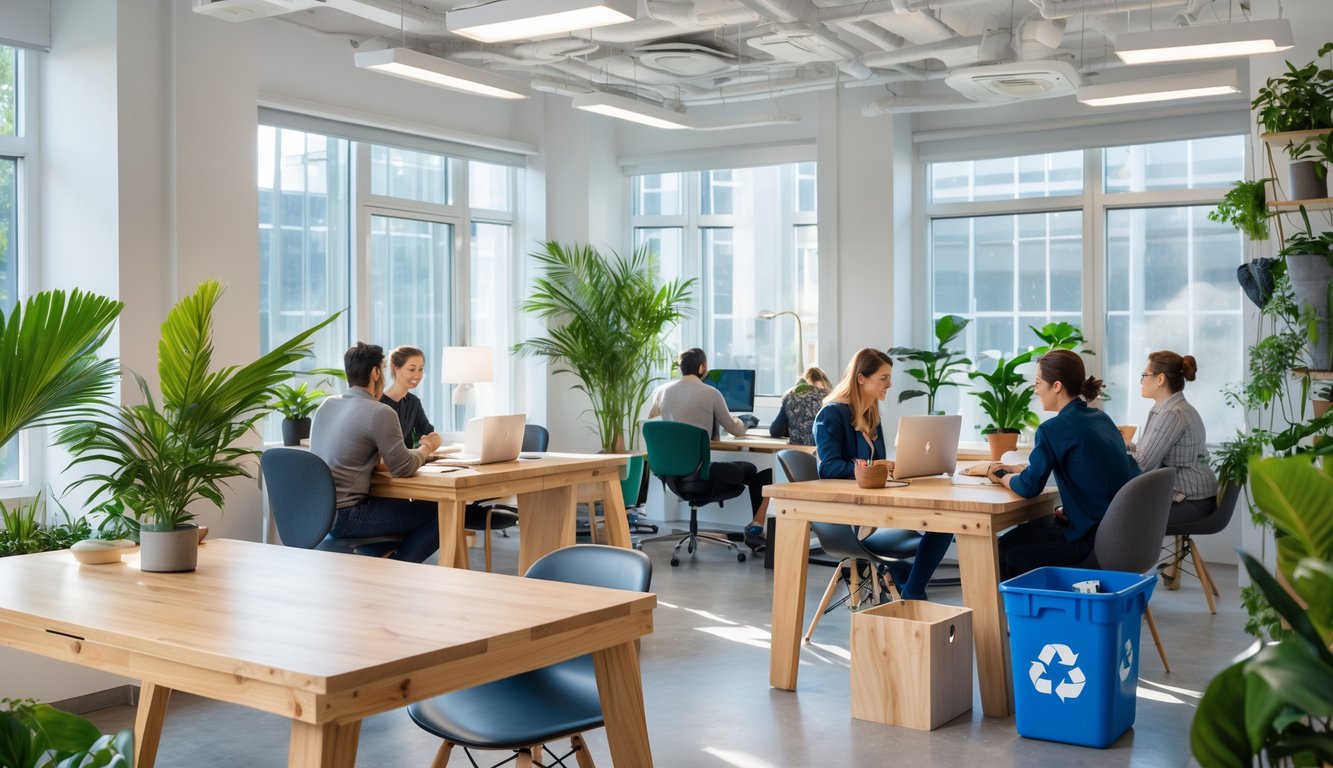
I use furniture and materials in ways that keep waste low and resources in use longer. I find ways to reuse, recycle, and avoid sending items to landfills.
Recycling Programs and Practices
In my coworking space, I set up clearly labeled recycling stations for paper, plastics, metals, and glass. This helps everyone sort waste correctly.
I include a bin for compostable items when food waste is common. I work with local recycling providers to ensure proper processing of materials.
I follow guidelines for accepted materials to avoid contamination. When I replace old furniture, I donate, sell, or repurpose it instead of throwing it away.
Desks made from reclaimed wood can be refinished and reused. I encourage members to recycle electronics responsibly by partnering with e-waste collection services.
Old monitors, keyboards, and cables get handled in an environmentally safe way. You can find examples of these efforts in sustainable coworking spaces that make recycling part of daily operations.
Waste Reduction Strategies in Coworking Spaces
I reduce waste by choosing durable, repairable furniture instead of low-quality items. This lowers the need for frequent replacements and saves resources.
I avoid single-use plastics by stocking reusable cups, plates, and utensils in shared kitchens. For events, I use bulk beverage dispensers instead of bottled drinks.
When I order supplies, I buy in bulk to cut packaging waste. I look for products made from recycled or sustainably sourced materials, such as paper and office accessories.
Some coworking spaces use waste-minimization strategies like composting and digital document storage to reduce paper waste. I encourage digital forms and cloud storage to limit printing.
Certifications and Standards for Sustainable Workspaces
I look for clear, trusted benchmarks when I choose furniture and materials. Verified certifications help me confirm that products meet strict environmental and health standards.
These certifications make it easier to compare options and avoid greenwashing.
Leadership in Energy and Environmental Design
I see Leadership in Energy and Environmental Design (LEED) as one of the most recognized green building rating systems. It evaluates buildings on energy use, water efficiency, materials, and indoor environmental quality.
LEED uses a points-based system with levels: Certified, Silver, Gold, and Platinum. Higher levels show stronger sustainability performance.
For coworking spaces, LEED guides choices on recycled-content furniture, low-emission finishes, and energy-efficient lighting. It also rewards designs that improve daylight access and air quality.
LEED-certified spaces often have lower operating costs due to better efficiency. They can also create healthier environments for members, which is a big plus for shared offices.
You can learn more about how LEED applies to office design from resources like Designing Offices for Sustainability.
Implementing Sustainable Design Standards
When I apply sustainable design standards, I focus on both environmental impact and the well-being of people using the space. I choose furniture with certifications like FSC for responsibly sourced wood or GREENGUARD for low chemical emissions.
I also look for Cradle to Cradle certification, which checks if materials are safe for reuse or recycling. These standards help me avoid products that harm indoor air quality or use unsustainable resources.
In coworking spaces, I use product-level certifications and layout strategies that support natural light and airflow. I design spaces for flexible use to reduce waste and create a healthier workplace.
To understand common furniture certifications, I use guides like Eco-Friendly Furniture Certifications. This helps me make informed and practical decisions.