I’ve spent enough time working on my own to know how isolating it can feel. That’s why I see coworking spaces as more than just a desk and Wi‑Fi.
Coworking spaces give gig workers a flexible, professional place to work while offering the community and resources that solo work often lacks. Whether you’re a freelancer, consultant, or part‑time creative, the right space can make your workday more productive and less lonely.

When I walk into a coworking space, I notice how it blends the freedom of working for myself with the structure of an office. Flexible memberships in many gig‑friendly coworking spaces let me choose when and how I work without a long lease.
The mix of quiet areas, collaborative zones, and shared amenities makes it easier to focus, meet clients, or connect with other professionals.
I’ve found that these spaces open doors to new opportunities. A quick chat in the kitchen can lead to a project referral, and workshops or networking events help me grow my skills.
Understanding the Gig Economy and Coworking Spaces
I see more people choosing short-term projects over long-term jobs. At the same time, shared work environments replace many traditional offices.
These changes affect how I work, where I work, and how I connect with others.
Defining the Gig Economy
When I talk about the gig economy, I mean a labor market of freelancers, contractors, and temporary workers. Instead of one full-time employer, I often work with several clients.
I take on projects that may last days, weeks, or months. Platforms like Upwork, Fiverr, and TaskRabbit help me find work.
Here’s what stands out to me about gig work:
| Feature | Gig Economy | Traditional Jobs |
|---|---|---|
| Pay | Per project/task | Salary/hourly |
| Schedule | Flexible | Fixed |
| Employer | Multiple | Single |
This flexibility gives me control. But it also means I handle my own benefits, taxes, and career planning.
The Evolution of Coworking Spaces
Coworking spaces started as small hubs for tech startups. Now, they serve independent workers, remote employees, and small businesses.
I can rent a desk for a day or a private office for months. Many offer meeting rooms, high-speed internet, and even coffee bars.
Leaderonomics explains that these spaces help the gig economy by giving people like me a professional setting without the cost of a long-term lease.
I also notice how these spaces foster networking. I can meet other freelancers, share ideas, and sometimes find new clients just by chatting in the lounge.
Key Differences from Traditional Workspaces
In a traditional office, I usually have a fixed desk, set hours, and the same coworkers every day. In a coworking space, I might sit next to a designer one day and a software developer the next.
Key differences I experience:
- Flexibility: I choose when and where to work.
- Community variety: I interact with people from many industries.
- Cost control: I pay only for what I use.
Inc.com points out that coworking spaces fuel innovation by mixing diverse skills in one place. This variety keeps my work life interesting and my network growing.
Why Coworking Spaces Matter for Freelancers and Independent Workers
Having the right place to work can make a big difference in productivity and business opportunities. A coworking space gives me access to resources, people, and a work setup that I can’t always get at home or in a coffee shop.
Benefits Over Working from Home
When I worked from home, I often struggled with distractions like chores, TV, or family interruptions. In a coworking space, I can separate my personal life from my work life.
That makes it easier to stay focused. I also find that face-to-face interaction boosts my mood.
Even a quick chat with another freelancer helps me feel less isolated. Many spaces host casual networking events or shared lunches, which makes it easy to meet new people.
Another big plus is reliable infrastructure. I get fast internet, printers, and meeting rooms without having to set them up myself.
This lets me focus on my projects instead of fixing tech problems.
Professional Environment and Flexibility
A coworking space feels more professional than my living room. When I meet clients in a dedicated meeting room, it sends the right message about my work.
It’s also easier to record videos or take calls without background noise. Flexibility is another reason I use these spaces.
Many offer monthly or daily passes, so I only pay for the time I need. Some even have 24/7 access, which is perfect when I work with clients in different time zones.
Being around other independent workers also motivates me to keep a steady work routine. Seeing others focused on their tasks encourages me to do the same.
Supporting Business Growth
A coworking space can help my business grow in ways I didn’t expect. Some spaces offer mentorship programs, workshops, or funding opportunities for members.
This support can be valuable when I’m trying to expand my services or learn new skills. I’ve also gained clients through casual conversations with other members.
Many freelancers and startups in these spaces look for collaborators, making it easier to find paid work without cold outreach.
Some spaces, like those described in this article on supporting startups and freelancers, even provide access to industry-specific networks and events. This can open doors to partnerships that I wouldn’t find on my own.
Community and Networking Opportunities

Working in a shared space gives me more than just a desk and Wi‑Fi. It puts me in an environment where I can meet people, share ideas, and sometimes find new work opportunities.
The mix of social interaction and professional exchange makes a big difference in how I work.
Building Meaningful Connections
When I join a coworking space, I’m surrounded by people from different industries. This variety makes conversations interesting and useful.
I can talk to a designer one day and a marketing consultant the next. Casual chats in the kitchen often lead to valuable contacts.
Unlike formal networking, these moments feel natural and low‑pressure. Many spaces also create community boards or online groups where members can share updates, job leads, or advice.
These tools help me stay connected even when I’m working from home. Some coworking hubs, like those described in The Social Connection: Building Community in the Gig Economy, actively encourage daily interactions so no one feels isolated.
Collaboration and Partnerships
I’ve seen firsthand how coworking spaces spark collaboration. Sitting near someone with complementary skills makes it easier to start a project together.
For example, I once worked next to a web developer who needed copywriting help. I offered my services, and in return, he referred me to one of his clients.
That single conversation turned into ongoing work for both of us. Coworking spaces often replace competition with cooperation.
As noted in Coworking and the Gig Economy: How Shared Spaces Are Changing the Way We Work, freelancers can find partners instead of rivals.
Partnerships form quickly when people share the same space, goals, and deadlines. This kind of environment makes it easier to trust and rely on each other.
Events and Workshops
Many coworking spaces organize networking events, skill‑building workshops, and mixers. I make it a point to attend because they give me a chance to meet people I might not run into during my normal workday.
Some events focus on professional growth, like marketing seminars or coding bootcamps. Others are more social, such as coffee mornings or after‑work gatherings.
At places like those mentioned in Why Coworking Is a Game‑Changer for the Gig Economy, these events often lead to client referrals or mentorship opportunities.
I’ve learned new tools, gained clients, and even made friends through these gatherings. For me, they’re one of the most valuable parts of being in a coworking community.
Design, Amenities, and Workspaces
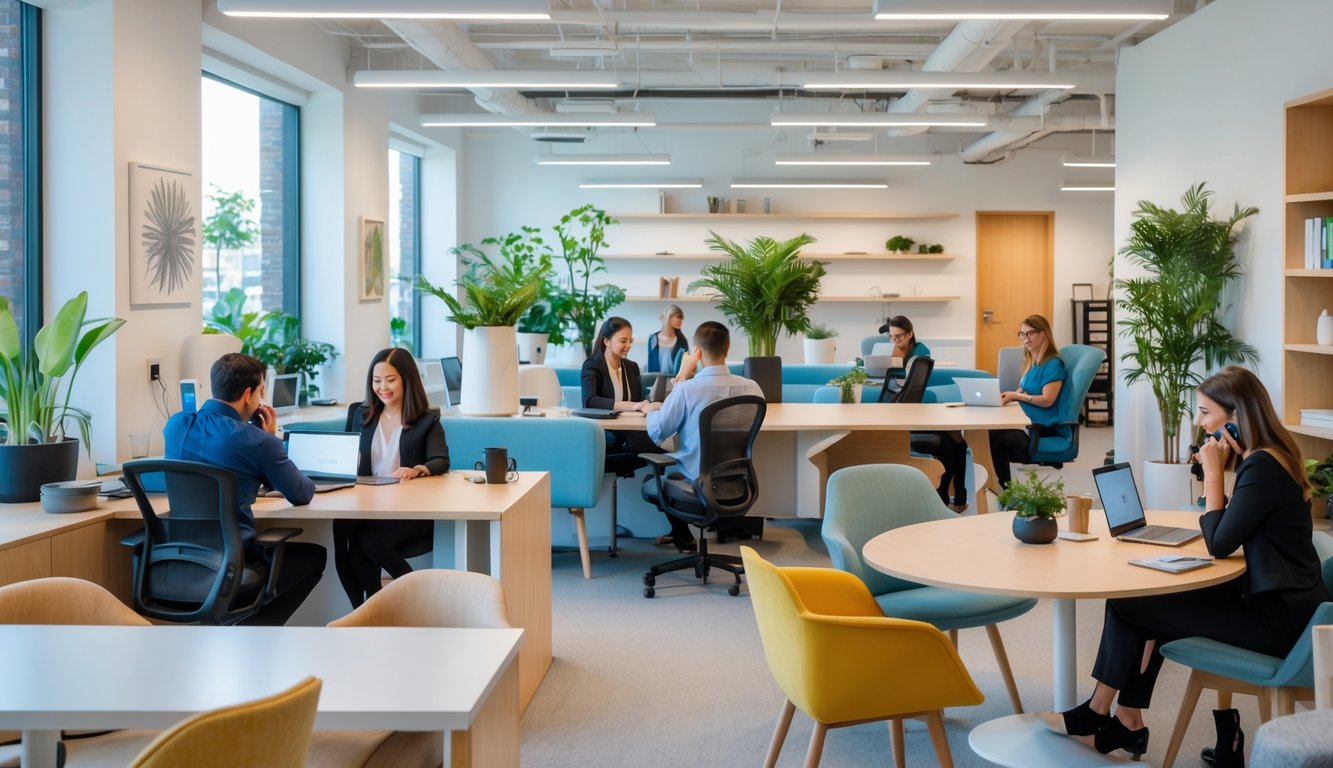
I look for coworking spaces that give me the right mix of flexibility, useful tools, and a comfortable environment. The layout, available resources, and focus on health all affect how well I can work and connect with others.
Flexible Work Areas
I need spaces that let me switch between quiet focus and active collaboration. A good coworking space offers open desks, private offices, and small meeting rooms.
Some places also have phone booths for calls and video meetings. This helps me work without background noise.
I like when the layout supports different work styles. For example, a lounge area for casual chats and a dedicated desk for deep work.
Spaces that follow flexible design trends make it easier for me to adapt my day.
| Workspace Type | Best For | Noise Level |
|---|---|---|
| Open Desk | Short tasks, networking | Medium |
| Private Office | Focused projects | Low |
| Meeting Room | Group work, client calls | Low-Medium |
| Lounge Area | Breaks, casual talks | Medium |
Essential Amenities for Gig Workers
I need more than just a desk and Wi-Fi. The best coworking spaces provide fast internet, printing, and secure storage.
Access to shared kitchens and free coffee keeps me energized during the day. Spaces with 24/7 access let me work whenever it suits me.
I value extras like event spaces for workshops and networking. These features help freelancers like me stay productive and connected.
A quick checklist I use:
- Reliable, high-speed internet
- Comfortable chairs and desks
- Printing and scanning
- Lockers or secure storage
- Kitchen with drinks and snacks
Well-Being and Comfort
If I’m not comfortable, I can’t focus. I look for ergonomic chairs, natural lighting, and good ventilation.
Wellness-focused spaces offer quiet zones, plants, and sometimes on-site fitness rooms. Some use recycled furniture and energy-efficient lighting to create a pleasant environment.
Temperature control matters to me. When spaces are too hot or too cold, I find it hard to concentrate.
A well-maintained climate system keeps me comfortable all day. Even small touches like adjustable desks or relaxation corners improve my workday.
Cost-Effectiveness and Membership Options

Coworking spaces help me keep costs predictable. They give me the flexibility to work where and when I need.
I avoid big upfront expenses that come with traditional offices. Everything is included in one membership fee.
Flexible Membership Plans
When I first explored coworking, I noticed many ways to pay. Some spaces offer monthly memberships for unlimited access, while others have day passes for occasional use.
Some plans start at around $150–$300 per month, which is much less than renting a small private office. This lets me budget without a long-term lease.
Many coworking spaces offer tiered options:
| Plan Type | Access Level | Best For |
|---|---|---|
| Hot Desk | First-come seating | Freelancers, travelers |
| Dedicated Desk | Reserved workspace | Regular daily workers |
| Private Office | Enclosed space | Small teams, entrepreneurs |
I can switch plans as my workload changes. If I get a big project, I upgrade to a dedicated desk.
When things slow down, I scale back to a cheaper option.
Reducing Overhead and Expenses
Before coworking, I paid for rent, utilities, internet, furniture, and cleaning myself. Now, my membership fee covers all of that.
For small teams, coworking spaces can be 60–70% more cost-effective than traditional offices. I can keep more money in my business instead of spending it on overhead.
I save time and money by sharing resources. I don’t need to buy my own printer, coffee machine, or meeting room equipment.
These shared amenities let me focus on my work instead of managing an office. I only pay for the space and services I actually use, which keeps my expenses low while maintaining a professional environment.
The Future of Coworking in the Gig Economy

I see coworking spaces becoming more flexible and specialized. They are adapting to the gig economy by offering services and environments that match how freelancers and entrepreneurs work.
Trends Shaping Coworking Spaces
More coworking spaces now offer flexible memberships like daily passes, part-time desks, and pay-as-you-go options. This helps gig workers manage costs when income changes month to month.
Many spaces provide industry-specific setups. Some focus on creative work with podcast booths, while others cater to tech workers with faster internet and private coding rooms.
Events are a growing trend. Spaces host networking meetups, skill workshops, and mentorship programs to help members connect and learn.
Technology plays a bigger role now. Mobile apps let me book meeting rooms, track usage, and connect with other members before I arrive.
Key changes I expect to continue:
| Trend | Why It Matters |
|---|---|
| Flexible plans | Matches gig workers’ changing schedules |
| Specialized spaces | Supports niche industries |
| More events | Builds professional networks |
| Better tech | Makes work smoother and faster |
Expanding Opportunities for Entrepreneurs
As an entrepreneur, I see coworking spaces as more than just a desk. They give me access to resources I wouldn’t have on my own, like shared printers, legal advice sessions, and marketing support.
Some spaces partner with local banks or investors to help members secure funding. This helps small startups that need capital but lack connections.
I’ve watched coworking spaces become launchpads for new businesses. The variety of skills in one place means I can find a designer, developer, or copywriter just by talking to the person at the next desk.
Spaces that focus on community often feature collaboration boards or internal job postings. These tools help entrepreneurs find short-term help or long-term partners without leaving the building.
As Inc.com notes, these environments boost local economies by supporting small businesses and freelancers.