Remote work has changed how I approach my day, my schedule, and even where I choose to work.
What used to be tied to a single office desk is now open to countless possibilities.
Coworking spaces play a key role in this shift by offering a flexible, professional place to work while keeping the freedom that remote work provides.

These shared spaces solve challenges that working from home can’t always address.
They provide structure, reliable amenities, and social interaction that help me stay productive and connected.
In many ways, coworking spaces bridge the gap between the independence of remote work and the resources of a traditional office.
From boosting focus to supporting mental well-being, coworking spaces shape how we work.
As remote work evolves, they are becoming an important part of the modern work experience.
Understanding the Remote Work Evolution

I’ve watched remote work change from a rare perk to a standard option for many jobs.
These changes come from shifts in workplace culture, advances in technology, and a growing demand for flexibility in how and where we work.
Shifts in the Modern Work Landscape
When I first started working, most jobs required being in a physical office every day.
Now, the modern work landscape includes home offices, coworking spaces, and hybrid schedules.
Many companies have reduced their need for permanent office space.
This change has led to more shared environments like coworking spaces, where people from different fields work side by side.
The shift also changes how teams connect.
I’ve noticed more focus on results instead of hours spent at a desk, giving workers more control over their schedules and work environment.
Key Drivers of Remote Employment
One major driver is the desire for flexibility.
I value being able to choose when and where I work, and I know many others feel the same.
Another factor is cost savings.
Companies save money on rent, utilities, and office supplies, while workers save on commuting costs and time.
Global hiring has also expanded.
Now, a company in one country can hire talent from another without the need for relocation.
This change has opened opportunities for skilled workers worldwide and increased job competition.
Coworking spaces meet these needs by offering professional settings without the commitment of a full office lease.
They also offer networking opportunities that many remote workers miss.
Impact of Technology on Remote Work
High-speed internet drives remote work growth.
Without it, video calls, cloud storage, and real-time collaboration would be much harder.
I rely on tools like video conferencing, shared documents, and project management platforms to stay connected with my team.
These tools let me work with people across time zones almost as easily as if we were in the same room.
Coworking spaces invest in reliable internet, modern equipment, and tech support to attract remote workers.
Some even integrate advanced tools, as seen in innovative coworking models, to keep up with changing work demands.
Technology has turned remote work from a niche option into a practical and efficient way to work for millions.
Coworking Spaces as a Solution for Remote Workers
I’ve seen how the right workspace can change the way I work.
Having access to a place that offers structure, flexibility, and a sense of community can make remote work more productive and less isolating.
Rise of Shared Workspaces
When I started working remotely, I noticed more people around me looking for alternatives to home offices.
Shared workspaces began appearing in cities, suburbs, and even small towns.
These spaces were popular with freelancers and startups at first.
Now, they attract remote employees from large companies too.
Many organizations cover membership costs to help staff stay connected and supported.
In a growing number of cases, coworking spaces have evolved into communities that encourage networking and collaboration.
For me, this means I can meet others in my industry without attending formal events.
I’ve also noticed that shared workspaces often host skill-sharing sessions and casual meetups.
These activities help me learn new tools and keep up with trends while still focusing on my own projects.
Flexible Workspace Options
One reason I like coworking spaces is the variety of setups they offer.
I can choose a quiet desk when I need focus or a lounge area for casual brainstorming.
Some locations provide private offices for short-term use.
This flexibility helps me adjust my environment based on the type of work I’m doing.
Membership plans are also adaptable.
I’ve used day passes, monthly memberships, and even pay-as-you-go options depending on my schedule.
Many spaces, like those described in this article, design their services to fit both occasional and full-time remote professionals.
This means I’m not tied to a single space or long contract.
I can work in different neighborhoods or cities without losing access to a professional setup.
Professional Work Environment
Working from home has its perks, but I sometimes miss the structure of an office.
Coworking spaces give me a professional work environment without the rigid corporate feel.
These spaces usually have fast internet, meeting rooms, and office equipment.
I can host client calls in a quiet, well-equipped space instead of my kitchen table.
Many coworking locations have community managers who keep things running smoothly.
In places like these, having someone on-site to handle logistics lets me focus on my actual work.
The atmosphere also matters.
Being around other remote workers helps me stay motivated and maintain a steady routine.
It’s easier to start my day when I know I’m going somewhere that supports productivity.
Enhancing Flexibility and Work-Life Balance
I can choose where and when I work without being tied to a fixed office.
This freedom lets me stay productive while also keeping my personal life in balance.
Geographic Flexibility
One of the biggest changes for me has been the ability to work from almost anywhere.
Coworking spaces exist in most cities, and many offer day passes or short-term memberships.
If I travel for work or visit family, I can still find a quiet, well-equipped space.
I don’t have to rely on noisy cafes or cramped hotel desks.
Some coworking providers offer global access plans.
These give me entry to multiple locations under one membership, making it easier to maintain consistency in my work environment.
By using flexible workspaces, I can choose a location based on my current needs—whether I want to be close to clients, near home, or in a different city.
Personalized Work Schedules
I no longer have to stick to a strict 9-to-5 schedule.
Many coworking spaces are open 24/7, which lets me plan my day around my most productive hours.
If I want to start early and finish by mid-afternoon, I can.
If I prefer to work late at night, the option is there.
This flexibility helps me avoid burnout and manage my energy better.
Some spaces offer quiet zones for focused work and collaboration areas for team projects.
I move between them depending on my tasks.
Coworking spaces that support flexible work arrangements make it easier for me to balance deadlines with personal appointments, exercise, or family time.
Balancing Home and Work Life
Working from home can blur the line between personal and professional time.
Having a separate place to work helps me keep that boundary clear.
When I leave a coworking space, I feel like my workday is done.
This separation reduces stress and makes it easier to enjoy my personal time.
Many spaces include amenities like onsite cafes, fitness areas, or wellness programs.
These features, as noted in work-life balance focused coworking models, let me take breaks, recharge, and return to work with better focus.
By having a dedicated space outside my home, I can be more present both at work and in my personal life.
Fostering Collaboration and Community

Working in a shared space changes how I connect with others and how I approach my work.
These environments give me direct access to people, resources, and activities that make collaboration easier and more natural.
Opportunities for Networking
When I joined a coworking space, I quickly noticed how many chances I had to meet people from different industries.
Whether it’s during coffee breaks or at structured events like skill-sharing sessions, I can expand my professional network without forcing it.
I’ve met entrepreneurs, freelancers, and even small start-ups who are open to exchanging ideas.
Some spaces, like those described in The Role of Coworking Spaces in Community Building, organize regular workshops that make introductions easy and low-pressure.
Networking here feels more genuine because it happens in everyday situations.
I often learn about new tools or trends just by chatting with the person at the next desk.
Common networking opportunities include:
- Weekly social hours
- Industry-specific meetups
- Skill-swap boards or forums
Facilitating Teamwork
Coworking spaces help me work with others, even if we’re not from the same company. Many spaces provide meeting rooms, whiteboards, and high-speed internet so group projects go smoothly.
I use these setups for brainstorming sessions where ideas flow faster than on video calls. Spaces like those in Why Remote Teams Thrive in Coworking Spaces show how a shared environment encourages quick problem-solving.
Open areas and private rooms let me switch between solo work and group collaboration. Spontaneous teamwork, like helping someone with a design issue, happens naturally here.
Teamwork benefits I’ve experienced:
- Faster decision-making
- Easier sharing of resources
- More creative solutions through diverse input
Building a Supportive Community
I value the sense of belonging I get from my coworking community. Being around people who understand remote work helps me stay motivated.
Some spaces organize wellness activities, lunch groups, or peer feedback sessions. These activities create a culture where we support each other, much like the environment described in How Coworking Spaces Foster Collaboration and Community.
This support reduces feelings of isolation. People celebrate wins and offer advice when challenges appear.
Ways community support shows up:
- Sharing job leads
- Offering mentorship
- Celebrating personal and professional milestones
Addressing Isolation and Supporting Mental Health

Working remotely sometimes makes me feel cut off from others. Having a place to connect face-to-face, share ideas, and work alongside people changes how I feel and work.
Combating Loneliness in Remote Work
When I started working from home, I didn’t expect loneliness to be such a challenge. The lack of casual conversations and shared breaks left me disconnected.
Coworking spaces help by providing consistent social contact. Even brief chats in the kitchen or quick greetings in the hallway lift my mood.
These moments create a sense of belonging that I can’t get from video calls. I find that seeing familiar faces each week helps me feel part of a community, even if we work in different fields.
Social Workspace Benefits
A social workspace gives me chances to connect with others. I can work quietly or join group discussions, depending on what I need that day.
Some coworking spaces organize events like skill-sharing sessions, coffee mornings, or group lunches. These activities make it easy to meet new people without pressure.
Coworking spaces often attract people from different industries. This variety leads to interesting conversations and sometimes collaborations. As research on employee well-being notes, these diverse interactions can boost creativity and problem-solving.
Improving Mental Well-Being
My mental health improves when I separate home and work environments. Coworking spaces give me that boundary.
Being in a shared space encourages a routine, which helps me manage stress. It also reduces the isolation that comes from working alone for long periods.
Many coworking spaces use comfortable seating, natural light, and quiet zones. These features, along with the social aspect, support mental health and work-life balance. I leave feeling more energized and less drained than when I work alone at home.
Productivity and Amenities in Coworking Spaces

The design and resources in coworking spaces affect how well I work. The right setup helps me stay focused and complete tasks efficiently.
Boosting Workplace Productivity
When I work in a coworking space, I get a clear separation between home and work. This shift reduces distractions and gives me a routine.
A dedicated workspace helps me structure my day. I can plan meetings and focus on deep work without the interruptions I face at home.
Some spaces tackle common remote work challenges like isolation and lack of structure. For example, coworking spaces boost productivity by offering quiet zones for focus and open areas for collaboration.
Being around other professionals encourages me to stay on task. Seeing others work hard creates a subtle sense of accountability.
Essential Office Amenities
The amenities in a coworking space influence how productive I can be. Reliable high-speed internet is essential. Without it, video calls and online work become frustrating.
Printing and scanning stations save me trips elsewhere. Meeting rooms with screens or whiteboards make it easy to present ideas or host client calls.
Many spaces include phone booths for private conversations. I use them when I need to discuss sensitive topics without background noise.
Some locations offer flexible hybrid setups that blend in-person and remote tools. This helps me switch between solo work and team collaboration smoothly.
Even small perks like free coffee or stocked kitchens help. They save me time and keep me energized.
Ergonomic Furniture and Office Supplies
Comfort affects my productivity. Sitting in a bad chair for hours leads to back pain and fatigue.
I look for coworking spaces with ergonomic chairs, adjustable desks, and good lighting. These features help me keep good posture and reduce strain.
Some spaces provide high-quality office supplies like noise-canceling headphones, external monitors, and extra chargers. Having these on hand means I don’t need to carry everything with me.
A few let me customize my workstation. I can adjust the chair, desk, and monitor to fit my needs. This flexibility keeps me comfortable during long work sessions and helps me focus.
Economic Impact and Future Coworking Trends
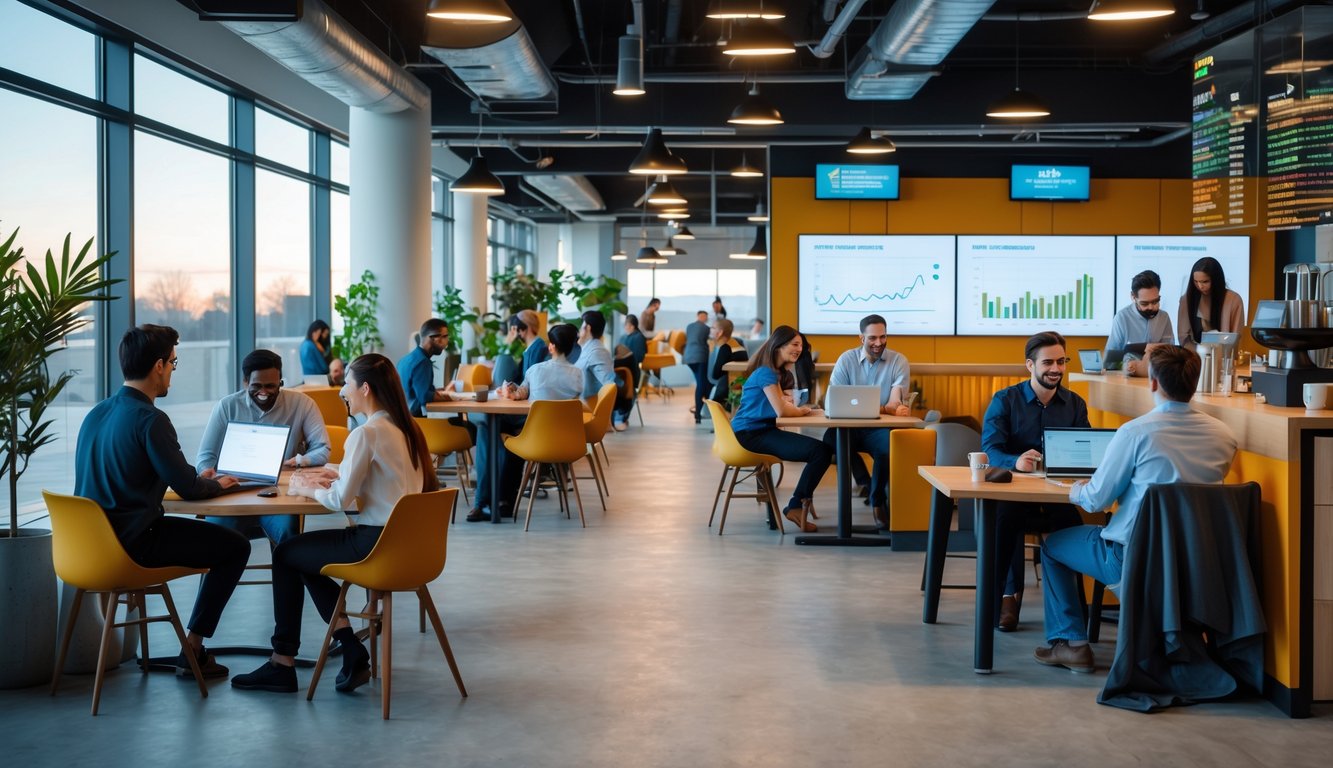
Coworking spaces now offer more than just a desk or Wi-Fi. They shape how remote workers manage expenses, adapt to new work styles, and connect with industry leaders.
Cost-Efficiency for Remote Professionals
One of the biggest advantages for me is reducing overhead costs. Renting a traditional office means paying for utilities, furniture, cleaning, and long leases. In a coworking space, members share these costs.
I save money by paying only for the time or space I need. Many providers offer flexible membership plans, from daily passes to monthly private offices. This lets me adjust my budget to my workload.
Here’s a quick comparison:
| Expense Type | Traditional Office | Coworking Space |
|---|---|---|
| Lease Commitment | 1–5 years | Monthly/Daily |
| Utilities | Separate bills | Included |
| Furniture | Buy upfront | Included |
| Maintenance | Hire services | Included |
When I add in networking opportunities and shared amenities like meeting rooms, the value is clear.
Trends Shaping Coworking Spaces
The industry is growing fast, with market size expected to reach $37.4 billion by 2028 according to global coworking research. More spaces now cater to niche communities, like tech startups, creatives, or wellness professionals.
Technology also changes the experience. Tools like AI-driven booking systems and VR meeting rooms are becoming standard, as seen in future coworking trends.
Sustainability matters more now. Many operators use energy-efficient lighting, recycled materials, and offer bike storage to attract eco-conscious members.
The Role of CzarWorkspace and Industry Leaders
In my experience, companies like CzarWorkspace stand out because they combine affordability with high-quality amenities. They create flexible packages for freelancers, remote employees, and small teams.
Industry leaders set trends by expanding into smaller cities. They offer hybrid memberships and add wellness spaces.
These changes make coworking accessible to more people. At the same time, they keep a professional environment.
CzarWorkspace invests in community-building events. These events help members form real connections, which I value as much as the physical workspace.