Coworking spaces bring people together, but they can also leave a big environmental footprint. A carbon neutral coworking space balances the emissions it creates with actions that remove or offset the same amount of carbon.
This means the space operates without adding extra greenhouse gases to the atmosphere.

I measure and reduce environmental impact by tracking energy use and switching to renewable power.
I also cut waste, improve recycling, and encourage low-carbon commuting options.
These changes help the planet and make the workspace more attractive to people who value sustainability.
What Does Carbon Neutral Mean for Coworking Spaces?
A carbon neutral coworking space balances its carbon emissions with actions that remove or offset the same amount.
This often means reducing direct energy use, switching to renewable power, and offsetting what can’t be eliminated.
Defining Carbon Neutrality in Workspaces
Carbon neutrality means a coworking space’s total carbon footprint is effectively zero.
Any carbon released is matched by an equal amount removed or offset.
A coworking space achieves this by:
- Cutting energy waste through efficient lighting, heating, and cooling.
- Using renewable energy like solar or wind.
- Offsetting emissions with verified carbon credits.
Some spaces earn third-party certifications such as Climate Active carbon neutral to show they meet strict standards.
This signals a strong commitment to sustainability.
Understanding Environmental Impact
A coworking space’s environmental impact goes beyond electricity use.
It includes building design, waste management, and how people travel to and from the workspace.
Spaces that encourage green commuting—like walking, cycling, or public transit—reduce transportation-related emissions.
Locating near bus or train lines helps members commute sustainably.
Waste management matters too.
Recycling programs, composting, and reducing single-use items lower the carbon footprint.
Even small steps, like shutting down unused computers, cut unnecessary energy use in shared offices.
Types of Carbon Emissions
There are three main types of emissions in a coworking space:
| Type | Description | Example in Workspace |
|---|---|---|
| Scope 1 | Direct emissions from owned sources | Gas heating systems |
| Scope 2 | Indirect emissions from purchased energy | Electricity from the grid |
| Scope 3 | Other indirect emissions from supply chain and use | Member commuting, office supplies |
Most coworking spaces start with Scope 2 by switching to renewable energy or improving efficiency.
For Scope 3, encouraging sustainable commuting and sourcing eco-friendly products helps reduce emissions.
Measuring Your Coworking Space’s Carbon Footprint

I track my coworking space’s carbon footprint by identifying where emissions come from, how much energy we use, and how much waste we create.
I gather accurate data to make real changes that lower energy consumption and landfill waste.
Setting Measurement Boundaries
I decide what parts of the space I’m measuring.
Setting boundaries helps me include all key sources of emissions.
For example, I include:
- Electricity and heating for all shared areas.
- Waste output from members and staff.
- Water use in kitchens and bathrooms.
If I rent the space, I check my lease for utility responsibilities.
Some guides, like this one on shared office footprint measurement, suggest asking the landlord for detailed energy and waste data.
I also decide if I’ll count member commuting emissions.
Including travel gives a fuller picture but takes more effort to measure.
Collecting Energy and Waste Data
Once I set the boundaries, I collect the numbers.
I request monthly utility bills for electricity, gas, and water to see how much energy the space uses.
For waste, I track:
- Weight or volume of trash sent to landfill.
- Recycling rates for paper, plastics, and metals.
- Composting totals if available.
Some coworking spaces use a simple spreadsheet.
Others use tools like the Cobot Sustainability Audit to organize data.
I note seasonal changes.
Heating in winter and air conditioning in summer can cause spikes in energy use.
Calculating Carbon Emissions
With the data ready, I convert usage into emissions.
I use CO2e (carbon dioxide equivalent) to measure all greenhouse gases in one unit.
For electricity, I apply the local emissions factor to see how much CO2e is produced per kilowatt-hour.
Gas and heating oil have their own factors.
Waste emissions depend on disposal methods.
Landfilled waste produces methane, while recycling avoids emissions by reusing materials.
I sometimes use online calculators, like the one in Brightest’s office footprint guide, to speed up the process.
Having a clear number helps me set reduction targets and track progress.
Energy Efficiency and Renewable Solutions

I reduce energy waste by using technology that cuts unnecessary power use and by switching to cleaner energy sources.
These upgrades lower utility costs and reduce the environmental footprint of a coworking space.
Implementing LED Lighting and Motion Sensors
I replace old bulbs with LED lighting because they use up to 75% less electricity than incandescent lights and last much longer.
This means fewer replacements and lower maintenance costs.
To avoid lights staying on in empty rooms, I install motion sensors in meeting areas, restrooms, and storage spaces.
The sensors automatically turn lights off when no one is present, which helps reduce energy consumption.
In shared spaces, I sometimes combine daylight sensors with LEDs.
These adjust brightness based on natural light levels, keeping spaces well-lit while using less electricity.
| Feature | Benefit |
|---|---|
| LED Bulbs | Lower energy use, longer lifespan |
| Motion Sensors | Lights off in unused areas |
| Daylight Sensors | Adjusts lighting to natural light |
Smart Thermostats and Efficient HVAC
I use smart thermostats to control heating and cooling more precisely.
These devices learn usage patterns and adjust temperatures automatically, which avoids wasting energy when spaces are empty.
A smart thermostat can lower heating overnight and bring it back up before people arrive.
In summer, it can reduce cooling during off-hours and keep the space comfortable during the day.
I upgrade to efficient HVAC systems with variable speed fans and modern compressors.
These systems use less electricity and maintain more stable indoor temperatures.
According to the Green Office Guide, HVAC systems are one of the largest energy consumers, so optimizing them has a big impact.
I schedule regular maintenance to keep filters clean and systems running efficiently.
Even small issues like clogged filters can increase energy use.
Adopting Renewable Energy Sources
To cut carbon emissions further, I add renewable energy to the coworking space.
Installing solar panels on the roof is one of the most effective steps.
Solar panels generate electricity on-site, which reduces reliance on the grid and lowers long-term energy costs.
If on-site generation isn’t possible, I purchase electricity from renewable providers.
This ensures the space runs on wind, solar, or hydro power.
Many coworking spaces also combine renewable energy with battery storage.
Battery storage saves excess solar power for use later in the day, improving energy independence.
As noted in The Green Office Revolution, renewable integration is a direct way to move toward carbon-neutral operations.
I track energy production and usage through monitoring tools.
This shows the real impact of renewable systems and helps me make adjustments if needed.
Waste Reduction and Sustainable Practices
I focus on simple steps to cut waste.
This includes sorting materials for recycling, composting food scraps, and using reusable items instead of disposables.
These actions lower environmental impact and keep the workspace clean and efficient.
Establishing Recycling Programs
I set up a clear recycling program that everyone can follow.
This means placing labeled bins for paper, plastics, metals, and glass in easy-to-reach spots.
I make sure signs show exactly what can and cannot go in each bin.
Short training sessions or reminder posters help prevent contamination of recyclables.
When items are sorted correctly, the recycling process is faster and more effective.
I also work with local waste management services to ensure the materials actually get recycled.
Some coworking spaces track how much waste they divert from landfills each month.
This data motivates members to keep improving.
Quick tips for better recycling:
- Keep bins clean to avoid odors.
- Use color-coded containers.
- Share monthly recycling results with members.
Composting and Organic Waste Management
I handle food scraps and other organic waste through composting.
This reduces the amount of garbage sent to landfills and creates nutrient-rich soil for plants.
I set up a separate bin for compostable items like fruit peels, coffee grounds, and paper napkins.
I avoid adding meat or dairy, since they can attract pests and slow the composting process.
Some spaces partner with local farms or community gardens to collect compost.
Others use small indoor composting systems with odor control.
According to The Coworking Spaces, composting programs can be simple to maintain with the right setup.
Common compostable items:
| Food Waste | Other Items |
|---|---|
| Vegetable scraps | Paper towels |
| Coffee grounds | Cardboard sleeves |
| Tea bags | Shredded paper |
Minimizing Single-Use Plastics
I reduce single-use plastics by switching to reusable alternatives. I use stainless steel cutlery, ceramic mugs, and refillable water bottles.
I provide filtered water stations instead of bottled water. In the kitchen, I use beeswax wraps or reusable containers instead of plastic wrap.
When I host events, I choose compostable plates and cups or encourage members to bring their own. Many eco-friendly coworking spaces find that these changes reduce waste and save money over time.
Ways I reduce single-use plastics:
- Offer discounts for reusable coffee cups.
- Stock shared kitchenware.
- Use bulk dispensers for snacks instead of individual packets.
Sustainable Transportation and Commuting

I help reduce travel-related emissions by making low-carbon options easier to choose. I improve access to public transport, create safe bike storage, and encourage daily sustainable commuting habits.
Encouraging Public Transport and Carpooling
I choose locations near bus stops, train stations, or tram lines so members can leave their cars at home. I share route maps, schedules, and real-time updates to make public transport more appealing.
Some spaces partner with local transit agencies to offer discounted passes or prepaid cards, as explained in this guide to eco-friendly coworking spaces.
I promote carpooling by setting up a member carpool board or using a rideshare app to connect people with similar schedules. This reduces emissions, parking needs, and travel costs.
A simple carpool sign-up sheet or a dedicated chat group helps keep coordination easy.
Supporting Bike Storage and Facilities
I promote cycling by providing secure and convenient bike storage. I install covered racks or a locked bike room so members feel confident leaving their bikes.
I add showers and changing rooms so people can ride in any weather without worrying about comfort. Many coworking spaces, as mentioned in this article on sustainable commuting, include repair stations with basic tools for quick fixes.
Here’s what works best:
- Indoor or covered racks to protect bikes from rain and theft
- Individual lockers for helmets and gear
- Repair kits with pumps, wrenches, and patch supplies
These small investments make cycling a realistic daily choice for more members.
Promoting Sustainable Commuting Habits
I help people form habits by making the right choice easy. I share tips, reminders, and success stories that highlight the benefits of sustainable commuting.
This includes monthly challenges like “bike to work week” or tracking collective CO₂ savings on a shared display. Seeing measurable impact motivates people to stick with greener options.
I offer flexible work hours when possible. This reduces peak-hour travel and makes commuting easier, as noted in research on shifting commuting patterns.
Green Certifications and Reporting
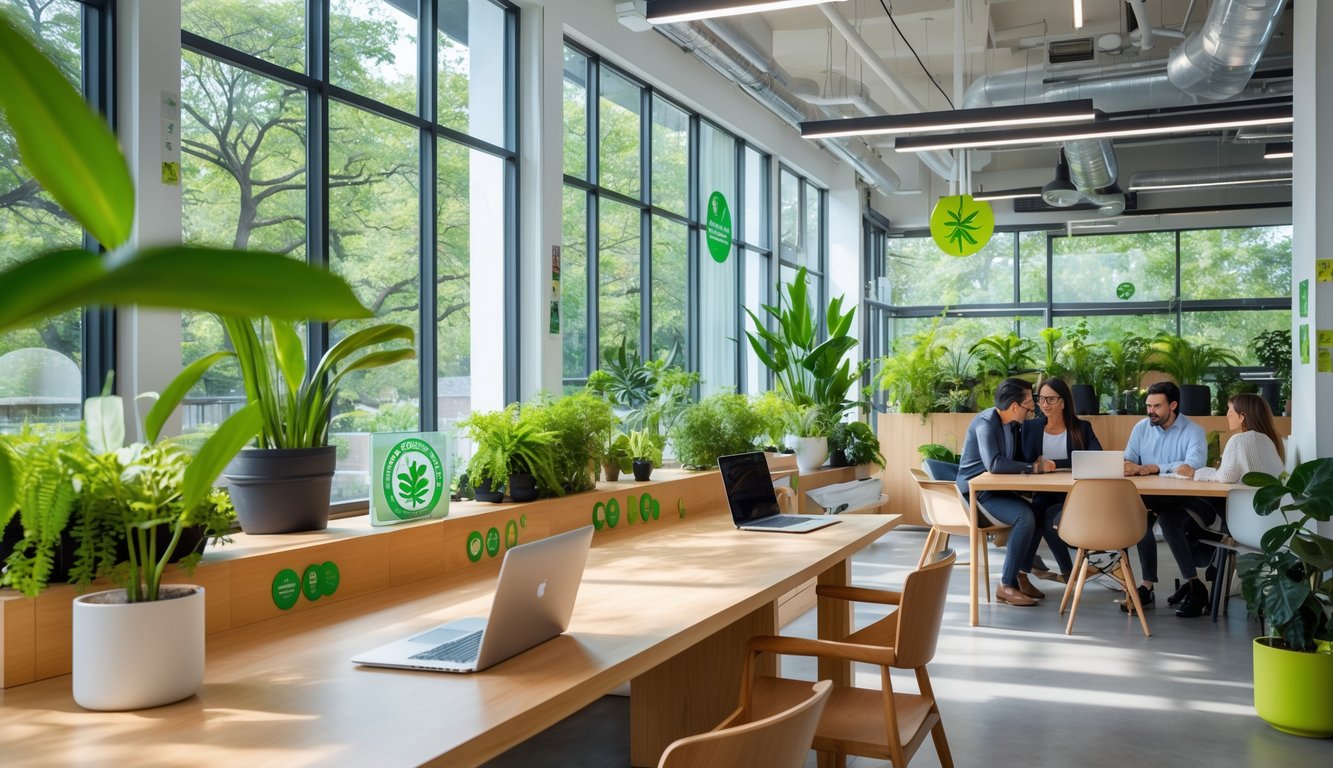
I focus on measurable actions to prove my coworking space is sustainable. I meet recognized environmental standards, track progress with clear data, and share results to build trust.
Pursuing Green Certifications
I use green certifications to confirm my space meets sustainability benchmarks. Programs like LEED and Green Office Certification check:
- Energy efficiency (lighting, HVAC, renewable energy use)
- Water conservation (low-flow fixtures, recycling systems)
- Indoor air quality (ventilation, non-toxic materials)
- Waste reduction (recycling, composting)
I review the criteria for each certification and compare them to my current operations. This helps me set clear upgrade goals.
Some certifications require third-party audits; others use self-reporting with documentation. I keep detailed records from the start so the process runs smoothly.
Transparent Sustainability Reporting
I track metrics like:
| Category | Example Metric | Frequency |
|---|---|---|
| Energy | kWh used/month | Monthly |
| Waste | % diverted from landfill | Quarterly |
| Water | Liters consumed | Monthly |
| Air Quality | CO₂ levels | Weekly |
I use spreadsheets or sustainability software to log and visualize this information.
When I share reports, I provide exact figures and explain the steps I took. This makes my progress transparent and credible.
Showcasing Environmental Commitment
I display certification plaques in my space and feature them on my website. I highlight achievements in newsletters, social media, and tours for potential members.
For example, I share when we achieve carbon neutrality or reduce energy use by 20% in one year. By showing proof of my sustainability efforts, I attract members who value eco-friendly workspaces and strengthen my reputation in the community.
Benefits of Carbon Neutral Coworking Spaces
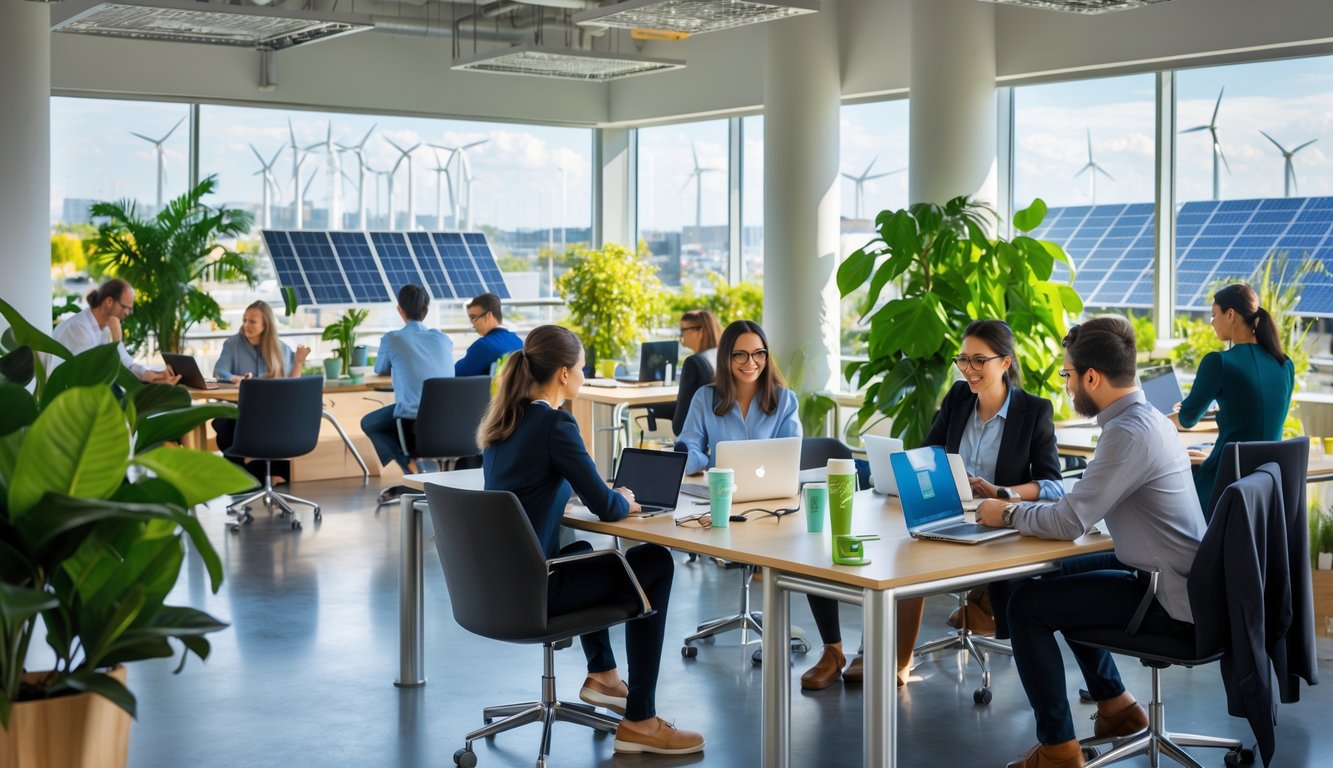
Working in a carbon neutral coworking space helps the planet and brings practical benefits. It can lower running costs, improve comfort, and attract people who value sustainability.
Cost Savings and Operational Efficiency
When a coworking space uses energy-efficient lighting, smart thermostats, and renewable energy, it spends less on utilities. Over time, these savings add up.
Installing solar panels can cut electricity bills and reduce reliance on the grid. Many spaces also reduce waste by using durable, reusable materials instead of disposable items.
This lowers supply costs and minimizes landfill contributions. Some spaces earn green building certifications like LEED, which can lead to tax incentives or lower insurance premiums.
Efficient design means less maintenance, saving both time and money.
Boosting Productivity and Wellbeing
Carbon neutral coworking spaces focus on better indoor air quality by using plants, low-VOC paints, and effective ventilation. I feel more alert and less tired in these environments.
Natural light helps regulate my circadian rhythm, which improves focus and mood. Many spaces use biophilic design with greenery, natural textures, and calming colors.
This creates a more relaxing atmosphere and can reduce stress. By using sound-absorbing materials, I can work without constant distractions.
Attracting Eco-Conscious Members
A carbon neutral coworking space appeals to freelancers, startups, and companies that want to meet their sustainability goals. Many businesses choose these spaces to fulfill their corporate social responsibility commitments.
Spaces that earn certifications like B Corp or Climate Active carbon neutral show they care about environmental standards. This builds trust with members who value transparency.
Eco-conscious members often promote the space through word of mouth or social media. This can lower marketing costs.
A strong green reputation helps attract partnerships with like-minded organizations.
By building a community around shared values, these spaces keep members engaged and loyal.