When I set up my coworking space, I quickly learned that health and safety rules are the backbone of a secure and productive environment. You need to meet legal requirements and create a space where people can work without unnecessary risks.
From fire safety checks to proper ventilation, every detail matters if you want to keep things running smoothly and avoid costly problems.
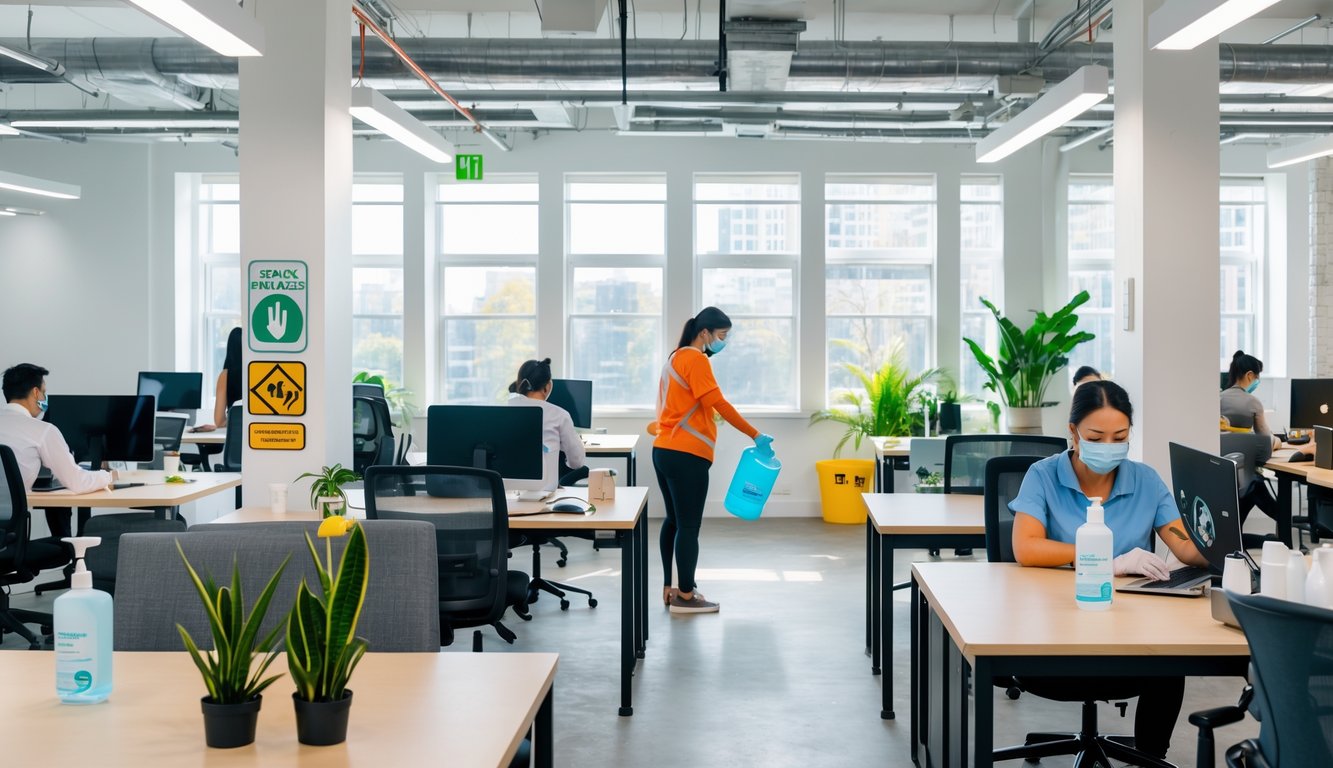
I’ve seen how a clear safety plan makes a huge difference. It’s not only about passing inspections; it’s about making sure everyone feels safe, whether they’re at a desk, in a meeting room, or attending an event.
That means thinking ahead about emergencies, planning for accessibility, and keeping hygiene standards high.
In this post, I’ll walk through the key regulations and practical steps I follow to keep my space compliant and comfortable. We’ll cover everything from risk assessments and first aid readiness to workstation ergonomics and ongoing safety communication.
Understanding Health and Safety Regulations for Coworking Spaces
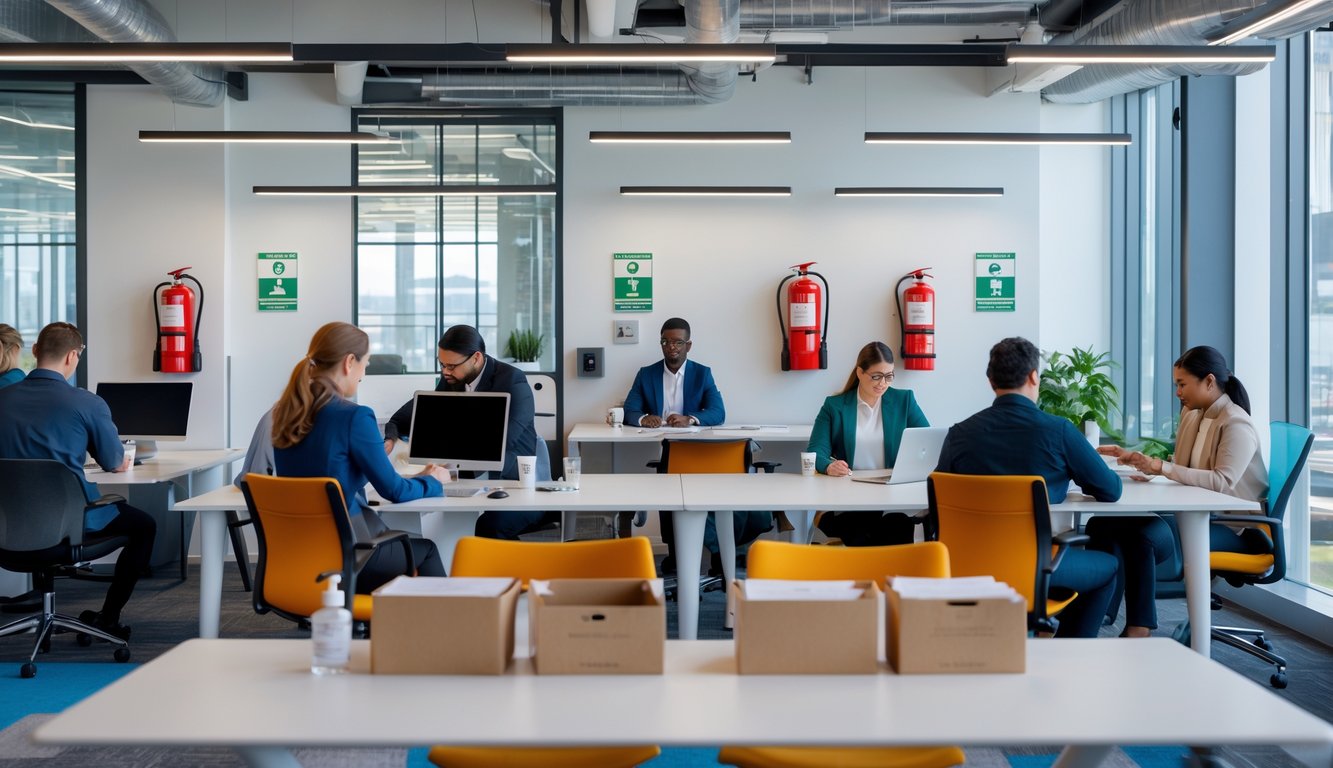
I make sure any coworking space I use follows the right safety rules. This protects both people and business operations.
This means meeting legal standards, preventing accidents, and creating a work environment that feels secure and well-managed.
Key Legal Requirements
When I look at a coworking space, I check if it meets local building codes and fire safety regulations. These rules cover things like emergency exits, fire alarms, and clear evacuation routes.
Health and safety laws also require proper ventilation, safe electrical systems, and accessible first aid kits. In the UK, spaces must comply with the Health and Safety at Work Act and related workplace regulations.
Operators must keep risk assessments up to date. They check for hazards like loose wires, slippery floors, or blocked exits.
If the space offers internet access, managers follow data protection and cybersecurity measures to prevent breaches, as noted in health and safety considerations for coworking spaces.
Checklist I use when reviewing a coworking space:
- Clearly marked emergency exits
- Working smoke detectors and fire extinguishers
- Regular safety inspections
- Accessible first aid equipment
- Secure and stable internet connection
Importance for Freelancers and Businesses
As a freelancer, I rely on my workspace being safe so I can focus on my work without distractions. If the space is unsafe, it could lead to injuries, lost work time, or even legal issues.
For businesses, following regulations helps avoid fines and insurance problems. A safe environment also builds trust with clients and employees.
People are more likely to return to a space where they feel protected.
In shared environments, safety rules also prevent disputes between members. For example, clear rules on equipment use, noise levels, and cleanliness reduce conflict and keep the workspace professional.
Relevant Health and Safety Guidelines
I follow official health and safety guidelines to check if a coworking space is well-managed. These guidelines often include:
- Regular cleaning and sanitizing
- Adequate lighting for all work areas
- Proper waste disposal
- Safe storage of equipment and materials
In some regions, like the UK, operators must also provide display screen equipment (DSE) assessments for people using computers for long periods. This helps prevent eye strain and posture issues.
Fire safety guidelines require clear signage and regular drills. Spaces should also have trained staff or members who know basic first aid.
During and after the pandemic, many coworking spaces added hand sanitizing stations and improved air filtration, as required by updated municipal health and safety policies. I still look for these measures because they help prevent the spread of illness in shared environments.
Risk Assessment and Safety Planning

I keep my coworking space safe by looking for risks early, removing hazards, and setting up clear rules for emergencies. This protects everyone’s health, keeps workstations comfortable, and reduces the chance of accidents.
Conducting Comprehensive Risk Assessments
When I run a risk assessment, I walk through the space and check every area where members work or gather. I look at entrances, exits, kitchens, meeting rooms, and shared desks.
I record each hazard I notice, such as loose cables or blocked fire exits. I also think about how likely each risk is and how serious the harm could be.
I use a simple table to keep my notes organized:
| Hazard | Likelihood | Impact | Action Needed |
|---|---|---|---|
| Loose electrical cord | Medium | Moderate injury | Secure cord with covers |
| Overcrowded meeting room | High | Heat stress, discomfort | Limit occupancy |
I review this list every few months or after major changes to the space.
Identifying Common Hazards
In coworking spaces, I often find the same types of hazards. Electrical risks are common, like overloaded power strips or damaged plugs.
Slips and trips happen when wires cross walkways or when spills aren’t cleaned quickly. Poor lighting can also cause accidents or strain people’s eyes.
I also look for ergonomic issues at workstations. Chairs without proper support and desks at the wrong height can cause back or wrist pain.
Fire safety is another priority. I check that extinguishers are easy to reach and that evacuation routes are clear.
Developing Safety Measures
Once I know the risks, I put safety measures in place. For electrical hazards, I replace damaged cords and add cable covers.
For slips and trips, I set rules for keeping walkways clear and cleaning spills right away. I also post signs in wet areas.
I improve workstation safety by offering adjustable chairs and monitor stands. This helps members work comfortably and avoid strain.
For emergencies, I create an evacuation plan and run practice drills. I also follow coworking space safety measures that include access control and regular sanitation.
Fire Safety and Emergency Preparedness
I make sure my workspace has reliable fire detection, working firefighting tools, and clear escape routes. I also keep my team trained so we can act quickly and calmly if a fire happens.
Fire Alarms and Smoke Detectors
I check that fire alarms and smoke detectors cover all key areas, including kitchens, meeting rooms, and hallways. They meet UK standards under the Regulatory Reform (Fire Safety) Order 2005.
I test alarms at least once a month. For smoke detectors, I replace batteries yearly or as needed.
I schedule professional inspections to confirm devices work properly. Faulty alarms can delay evacuation and put lives at risk, so I treat maintenance as a priority.
Fire Extinguishers and Drills
I keep fire extinguishers in visible, easy-to-reach spots. I label each extinguisher for its type—water, foam, CO₂, or powder—so I know which to use for different fires.
Here’s how I remember:
| Fire Type | Extinguisher Type | Example Use |
|---|---|---|
| Paper/Wood | Water/Foam | Office desks, paper storage |
| Electrical | CO₂ | Computers, printers |
| Flammable Liquids | Foam/Powder | Cleaning supplies, paints |
I run fire drills at least twice a year. These help everyone practice using exits, finding assembly points, and understanding their role in an emergency.
Emergency Exits and Assembly Points
I make sure emergency exits are never blocked. Signs are lit and easy to see, even in low light.
I check that doors open without needing keys or special codes. I mark assembly points a safe distance from the building.
These points are clearly signed and known to all members. During drills, I time how long it takes to get everyone out and fix any problems right away.
Life-Saving Procedures
I post a simple evacuation plan in common areas. It shows exit routes, extinguisher locations, and assembly points.
I train staff in basic life-saving skills like CPR and using an automated external defibrillator (AED). In a fire, smoke inhalation or burns can require immediate first aid before emergency services arrive.
I keep a first aid kit near the main exit so it’s easy to grab during evacuation. Quick access to these tools can help while waiting for paramedics.
First Aid and Medical Readiness
I make sure our coworking space is ready to handle minor injuries and sudden health issues. This includes having the right supplies, ensuring people know how to use them, and knowing when to involve trained healthcare professionals.
First Aid Kits and Supplies
I keep first aid kits in easy-to-reach spots so no one wastes time looking for them. The kits follow OSHA first aid requirements and match the size and risks of our workspace.
Each kit includes:
- Adhesive bandages in different sizes
- Antiseptic wipes
- Sterile gauze pads
- Adhesive tape
- Scissors and tweezers
- Disposable gloves
I check the kits every month. I replace expired supplies and restock items that have been used.
I also label each kit clearly so members know what it’s for and who to contact if something is missing.
In larger spaces, I place multiple kits in different areas. This way, help is never far away, even in a busy office.
Training for Staff and Members
Having supplies is not enough. People must know how to use them.
I arrange basic first aid training for staff and encourage members to join.
Training covers:
- How to stop bleeding
- How to treat burns
- How to handle sprains
- How to perform CPR
Certified trainers, such as those from the American Red Cross, teach the sessions. This makes sure the information is accurate and safe.
We refresh training every year. This keeps skills sharp and up to date with safety guidelines.
I post quick reference charts near first aid kits. Anyone can use them for reminders during emergencies.
Role of Healthcare Professionals
I handle small injuries myself but call healthcare professionals for serious issues. I keep a list of nearby clinics, hospitals, and urgent care centers.
If no medical facility is close, I make sure at least one person on-site has advanced first aid certification. This meets OSHA’s medical service rules and adds extra safety.
I post emergency contact numbers in common areas. This helps everyone get quick access to professional care.
Workstation Safety and Ergonomics
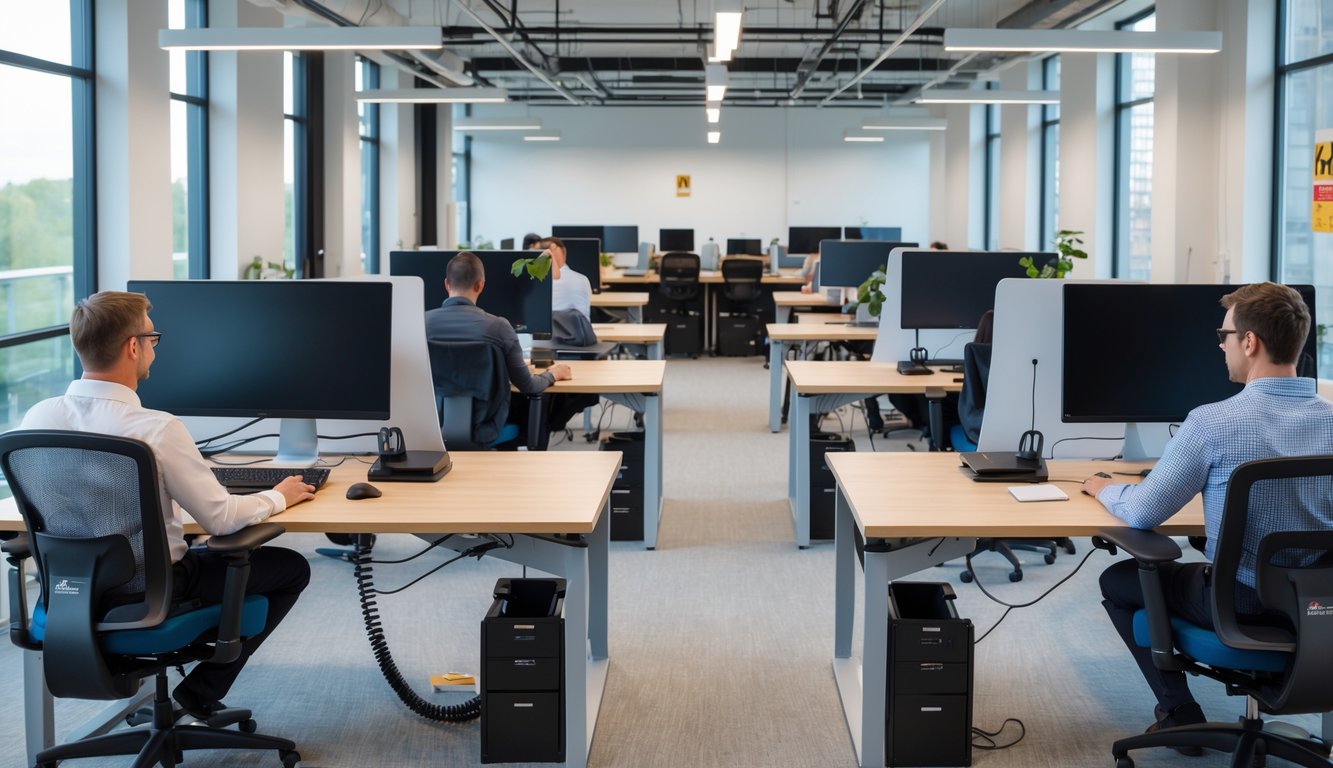
I keep my work area comfortable, safe, and free from risks. I check my furniture setup and arrange my space for comfort and safety.
I use electrical equipment correctly.
Ergonomic Furniture and Workstations
I choose a chair that supports my lower back and lets me adjust the height. My feet rest flat on the floor.
A good chair and desk reduce strain on my neck, shoulders, and wrists.
I set my monitor so the top is at or just below eye level. This helps me avoid leaning forward or tilting my head.
The UK’s DSE Regulations recommend adjusting screen distance, keyboard height, and mouse placement to keep arms relaxed.
I take short breaks to stretch and rest my eyes.
Quick ergonomic checklist:
- Chair height lets feet rest flat
- Monitor at eye level
- Wrists straight when typing
- Enough legroom under desk
Workspace Layout and Distancing
I keep enough space around my workstation so I can move freely. This prevents trips and falls.
In shared offices, I follow spacing rules to reduce crowding. During health concerns, I keep at least 1–2 meters between desks, as suggested in coworking space safety measures.
I arrange my desk so frequently used items are within easy reach. This stops me from twisting or overreaching.
Layout tips:
- Keep walkways clear
- Avoid blocking emergency exits
- Place power cords along walls or under covers
Electrical Safety
Before using plugs, sockets, and cables, I check they are in good condition. Damaged cords can cause shocks or fires.
I avoid overloading extension leads. If I need more outlets, I use a surge-protected power strip.
In coworking spaces, I test shared equipment for safety, following electrical safety practices. I switch off devices when I leave for the day.
Safe electrical habits:
- Inspect cables regularly
- Keep liquids away from plugs
- Use only certified equipment
Hygiene, Cleaning, and Sanitization
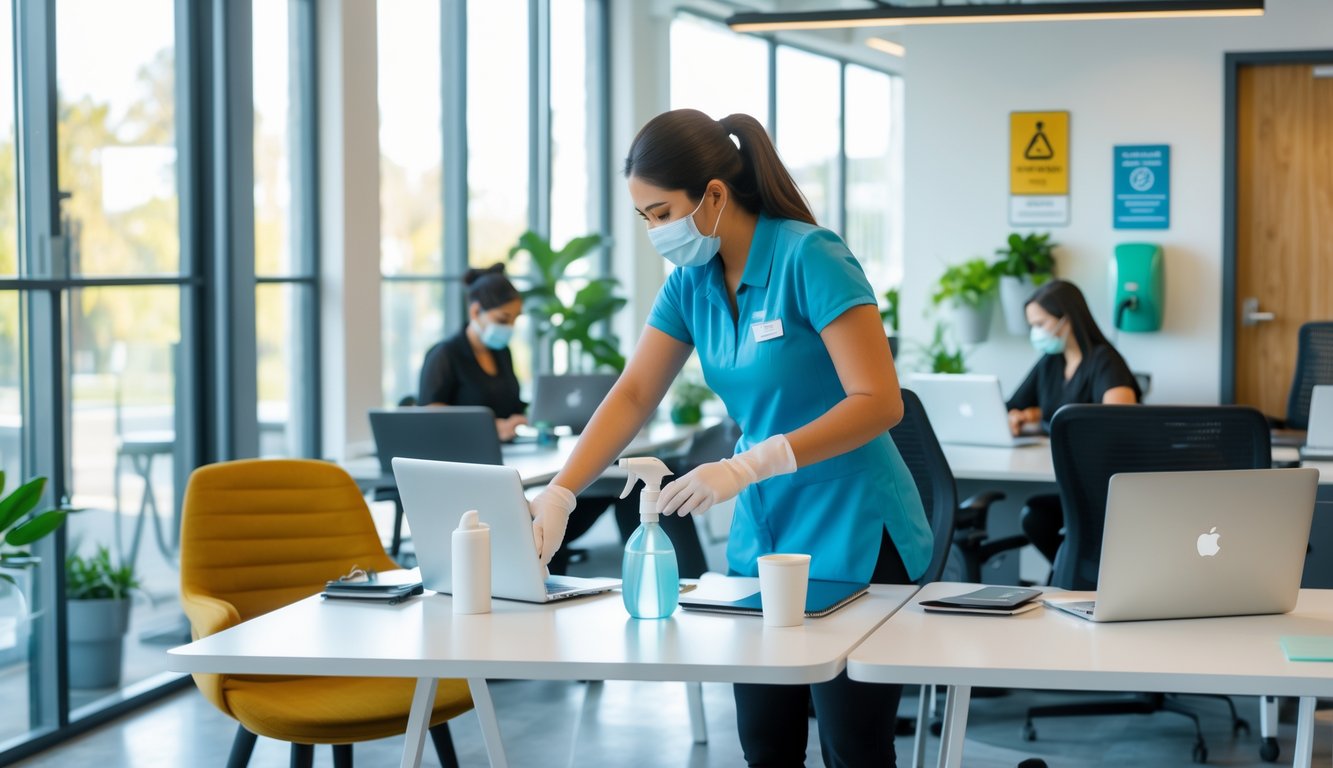
I keep my workspace safe by following clear cleaning schedules, enforcing hygiene rules, and sanitizing all shared items. This reduces the spread of germs and keeps the environment pleasant.
Regular Cleaning Protocols
I schedule cleaning regularly, not just when things look dirty. High-touch areas like door handles, desks, and light switches get disinfected at least once a day.
For larger spaces, I follow EPA cleaning guidance to pick safe products. I keep a log of cleaning times.
I train staff on proper use of disinfectants, including correct dilution and contact time. This makes sure surfaces are sanitized.
Daily cleaning checklist:
- Empty trash bins
- Wipe desks and tables
- Disinfect door handles
- Clean shared kitchen counters
- Vacuum or mop floors
Hygiene Standards for Shared Facilities
Shared restrooms, kitchens, and break areas need extra care. I follow OSHA sanitation standards to meet basic health rules.
I stock restrooms with soap, paper towels, and touch-free waste bins. I check supplies twice a day.
Kitchens have signs reminding people to wash hands before and after use. I provide hand sanitizing stations in high-traffic areas.
I post cleaning schedules so members can see when the last cleaning happened.
Restroom hygiene tips:
- Use hands-free faucets or paper towel dispensers when possible.
- Keep ventilation running to reduce moisture and odors.
- Disinfect sink handles and stall locks daily.
Sanitization of Amenities
Shared keyboards, meeting room phones, and coffee machines collect germs quickly. I clean these amenities after each use or at least once daily.
For electronics, I use alcohol-based wipes that are safe for screens and plastic. In kitchens, I sanitize coffee makers, microwaves, and fridge handles with food-safe cleaners.
I keep disinfectant wipes next to shared equipment so members can clean before and after use. In coworking spaces, cleaning compliance prevents illness.
Amenity sanitization table:
| Amenity | Cleaning Frequency | Cleaning Method |
|---|---|---|
| Shared keyboards | After each use | Alcohol wipes |
| Coffee machines | Daily | Food-safe cleaner |
| Meeting room phones | After each meeting | Alcohol wipes |
| Fridge handles | Twice daily | Disinfectant spray |
Accessibility and Inclusivity in Coworking Spaces
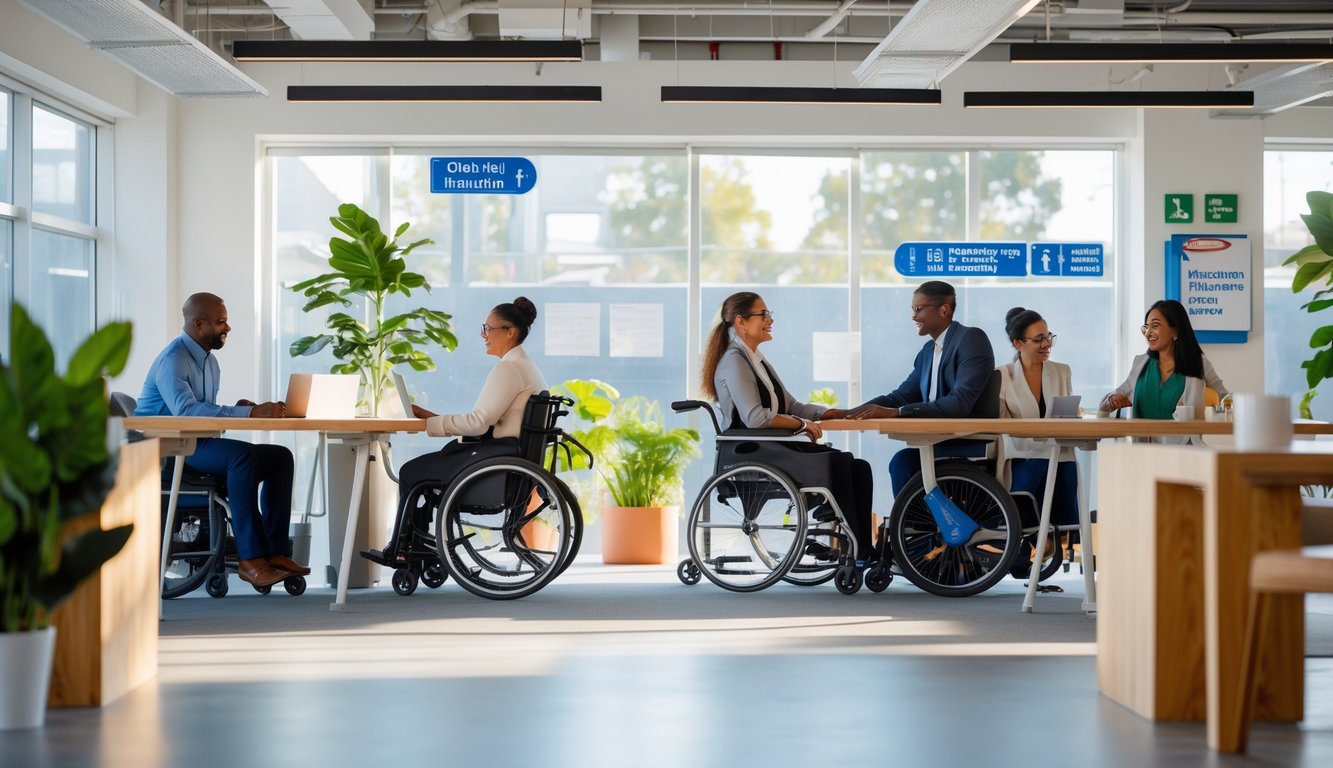
I make my coworking space easy for everyone to use and welcoming to all backgrounds. I focus on clear physical access, thoughtful design, and a supportive environment.
Physical Accessibility Features
I check that the building meets legal standards like the ADA guidelines in the US or the UK Equality Act. This includes ramps, elevators, and wide doorways for wheelchair users.
Accessible bathrooms are important. I install height-adjustable desks and keep hallways clear of clutter.
I add clear signage with large print and braille for navigation. In shared areas, I use non-slip flooring to reduce fall risks.
I make sure meeting rooms have enough space for mobility devices. Lever-style door handles instead of knobs help everyone.
Inclusive Design for Diverse Needs
I design spaces for people with sensory, cognitive, or neurodiverse needs. I include quiet zones for focused work and areas with softer lighting.
I use adjustable lighting and noise control to help people work in comfort. Furniture with different seating heights supports various body types.
I provide captioning on video calls and offer assistive listening devices for events. I make sure my policies reflect respect for all members.
When I choose décor, I avoid patterns that cause visual strain. Simple, calm designs help everyone feel at ease.
Supporting Community Well-Being
I encourage open communication so members can share their needs without fear of judgment.
I host workshops on disability awareness and inclusive communication. This creates a welcoming culture.
I work with healthcare professionals to improve the space, as suggested in health and safety coworking tips.
I offer flexible memberships for people with different schedules or health conditions. I provide online options for events so remote members can join.
Safety in Events and Community Activities
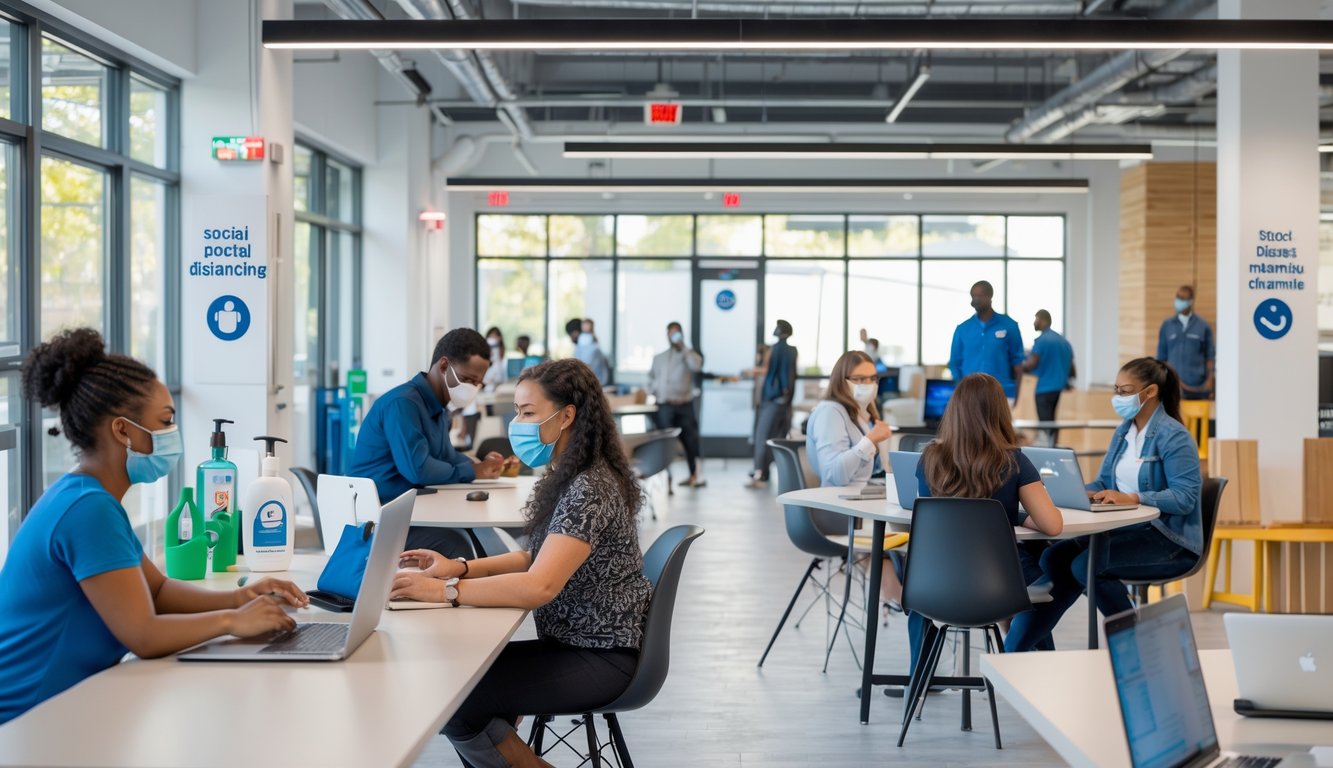
I make sure every gathering in our coworking space follows clear safety steps. This includes keeping shared areas clean and managing crowd sizes.
I prepare for emergencies so everyone can focus on connecting and learning.
Health Protocols for Workshops
When I host workshops, I check the room layout. I arrange seating for comfortable spacing and avoid overcrowding.
I keep hand sanitizer at the entrance and encourage its use before handling shared materials. I clean tables, chairs, and tools before and after each session.
If food or drinks are served, I use covered containers and single-use utensils. I make sure ventilation is good by opening windows or using air purifiers.
I keep a small first-aid kit nearby in case of minor injuries. I note the location of the nearest fire exit for quick communication.
Safety Measures for Social Events
For social events, I limit the number of guests to match the space’s safe capacity. This prevents accidents and allows easy movement.
I check that emergency exits are clear and fire safety equipment works, as suggested in critical safety steps for shared spaces.
I make sure all areas, including hallways and restrooms, are well lit to avoid trips or falls.
If alcohol is served, I offer water, provide food, and arrange for safe transportation options like rideshare discounts.
Wellness Activities and Yoga Classes
When I organize yoga classes or wellness sessions, I inspect the floor for hazards like loose mats or slippery spots.
I ask participants to bring their own mats and towels when possible. If I provide mats, I clean them with disinfectant after each use. I follow health and personal safety tips to keep things safe.
I keep the class size small so the instructor can monitor everyone’s movements and help prevent injuries.
Temperature and ventilation matter too. I make sure the space is warm enough for stretching but cool enough to avoid overheating.
Communication and Ongoing Compliance
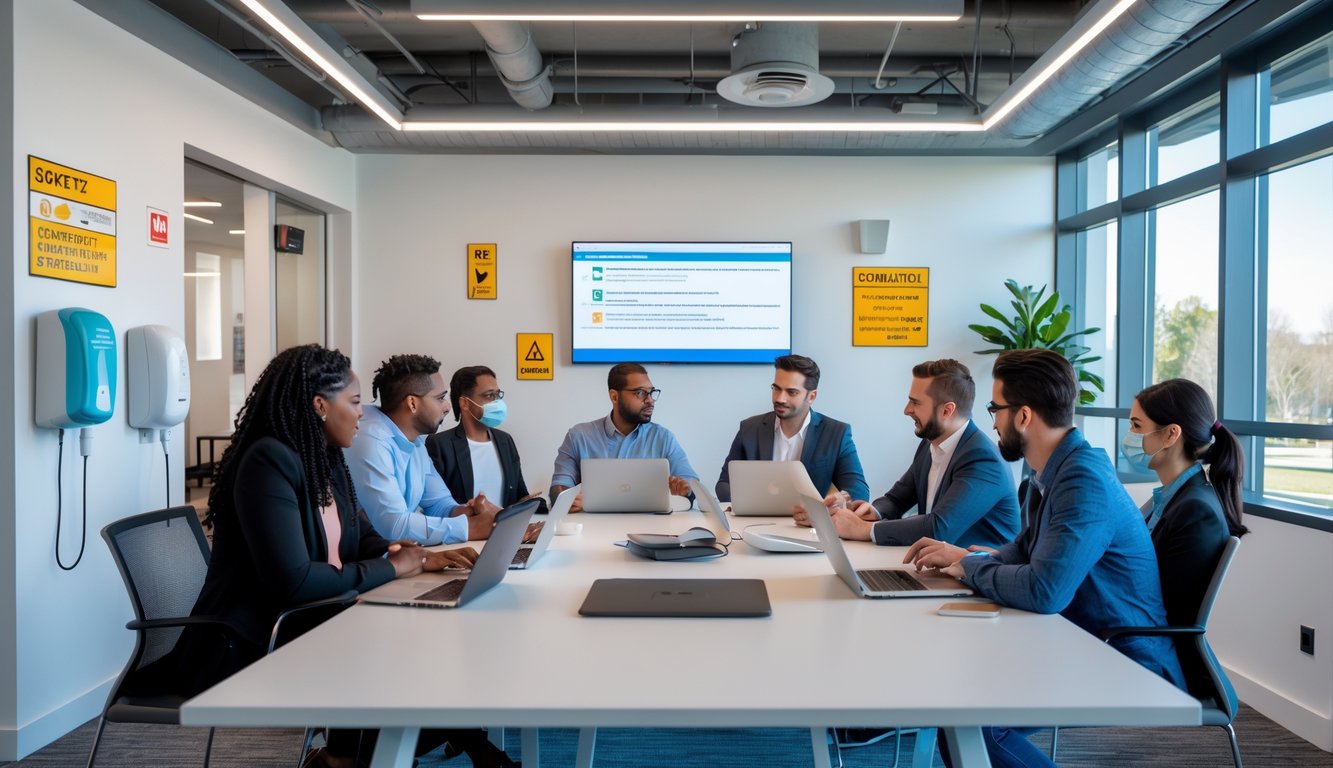
I make sure everyone in the coworking space understands the rules and knows what to do in an emergency. I update them on any changes so the space stays safe and organized.
Displaying Health and Safety Information
I post clear health and safety guidelines in places where people will see them often, like entrances, kitchens, and meeting rooms. These signs include rules on hygiene, fire exits, and first aid contacts.
I use simple language and clear symbols on signs so everyone can understand them quickly. For example, I include diagrams for evacuation routes and label all fire extinguishers.
To avoid clutter, I group related information together. A simple table works well:
| Topic | Location of Info | Updated |
|---|---|---|
| Fire Exit Map | Main hallway | Quarterly |
| First Aid Kit Location | Reception wall | Quarterly |
| Hygiene Rules | Kitchen | Monthly |
Posting this information helps meet health and safety regulations for shared workspaces.
Emergency Communication Procedures
I keep emergency communication simple and fast. Everyone needs to know how to report a problem and how they will receive alerts.
I use multiple channels for alerts, such as:
- Email notifications
- Text messages
- A public address system
I train members on how to respond to fire alarms, medical incidents, and severe weather. I show them where to gather after evacuating.
During drills, I check if the communication system works well. If someone misses an alert, I update my process. I follow OSHA-aligned emergency procedures to keep everyone safe.
Regular Policy Updates
I review safety policies at least every six months. When local laws or building rules change, I update the guidelines right away.
When policies change, I share updates in three ways:
- Email to all members
- Printed notices in common areas
- An announcement during community meetings
I explain why the change is happening so people understand and follow the new rule.
Amenities and Facility Management
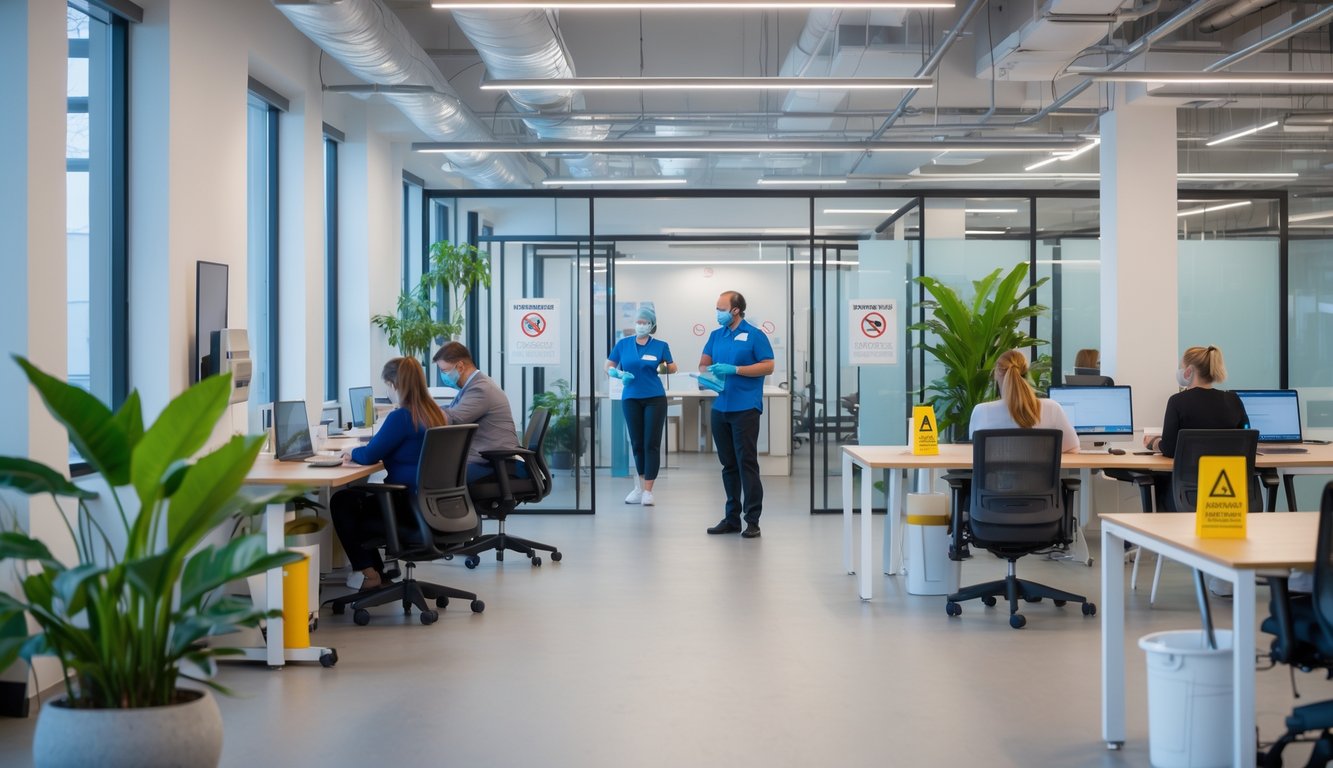
I keep shared facilities safe, clean, and easy to use for everyone. I pay close attention to how people use equipment and keep all amenities in good working order.
Safe Use of Coffee Machines and Kitchens
I check that coffee machines sit on stable surfaces and plug into outlets that meet safety standards. I keep paper towels and cleaning supplies nearby to clean up spills.
In the kitchen, I label cleaning products and store them away from food. I remind members to unplug appliances like kettles or toasters after use to prevent overheating or fire.
A simple kitchen safety checklist helps:
| Task | Frequency | Responsible |
|---|---|---|
| Wipe counters | Daily | Members/Staff |
| Empty coffee grounds | Daily | Staff |
| Check cords/plugs | Weekly | Staff |
| Clean fridge | Weekly | Members/Staff |
I post clear signs for handwashing, food storage rules, and safe microwave use. These steps help keep the space hygienic and reduce the risk of accidents.
Maintenance of Shared Amenities
I schedule regular inspections for all shared facilities, from printers to lounge furniture. I repair or replace worn or broken items quickly to avoid injuries.
For high-use areas like bathrooms, I check supplies and cleanliness several times a day. I also make sure ventilation systems work well to maintain air quality.
When I manage meeting rooms, I test projectors, screens, and cables in advance. This prevents last-minute technical issues and keeps the space reliable.
If an amenity is out of order, I post a clear notice and arrange repairs right away. This keeps members informed and avoids unsafe use of faulty equipment.
Personal Protective Equipment and Member Responsibilities
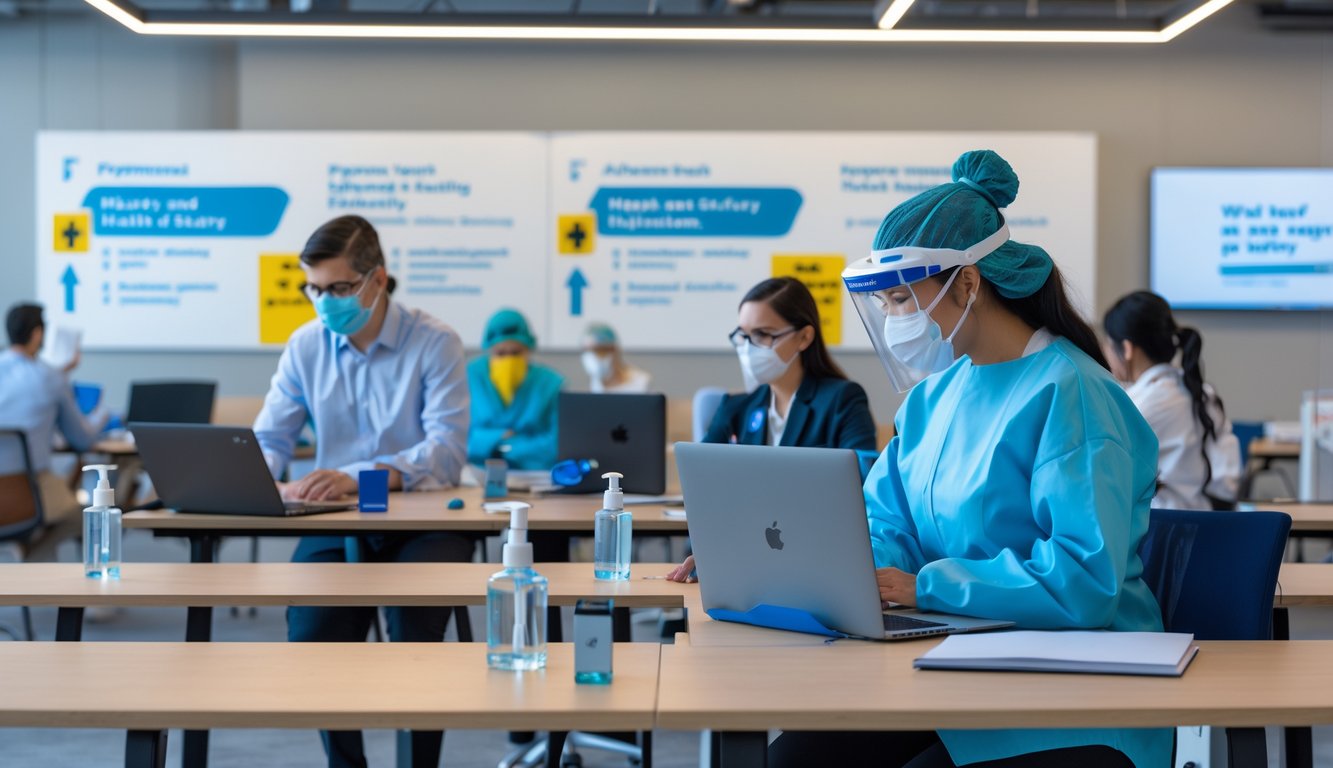
I keep our coworking space safe by using the right protective gear when needed and by following clear safety practices. This means wearing PPE for certain tasks and understanding how each person’s actions affect everyone’s health and safety.
Guidelines for PPE Usage
I use personal protective equipment (PPE) when there’s a clear risk from chemicals, noise, or other hazards. PPE includes gloves, safety glasses, ear protection, respirators, and protective clothing.
I follow OSHA standards for PPE to make sure the gear meets safety requirements. I check that items fit well, stay in good condition, and are stored in a clean, dry place.
If I see damaged or worn PPE, I replace it right away. I also clean reusable items after each use to keep them sanitary and effective.
Here’s a quick PPE checklist I use:
| PPE Item | When I Use It | Key Check Before Use |
|---|---|---|
| Safety Glasses | Drilling, cutting, or grinding | Lenses clear, no cracks |
| Gloves | Handling chemicals or sharp tools | No holes, proper fit |
| Ear Protection | Loud equipment operation | Cushions intact |
| Respirator | Dust or fume exposure | Filters clean and secure |
Member and Staff Safety Responsibilities
Safety is a shared responsibility between members and staff. I follow posted safety rules and report any hazards right away.
Employers provide and maintain PPE under OSHA regulation 1910.132. I also use PPE correctly.
I make sure I am trained on how to wear and adjust PPE. I never skip it during risky tasks.
If I see someone not following safety practices, I speak up or alert staff.
We keep walkways clear and store tools properly. We also avoid blocking emergency exits.
These actions help keep the coworking space safe for everyone.