I’ve found that coworking communities make it much easier to keep work and personal life in balance.
They give you a dedicated space, flexible hours, and a supportive network.
These features help you stay productive without letting work spill into every part of your day.
This balance is essential for long-term focus, health, and happiness.

When I work in a shared space, I notice how the mix of structure and freedom creates a healthier routine.
The environment encourages collaboration but also respects the need for quiet, focused time.
Many spaces offer wellness activities, ergonomic setups, and community events.
These options give you simple ways to care for both your work and yourself.
I’ll share how these environments promote balance, from building connections that make work more enjoyable to offering resources that support mental well-being.
Whether you’re freelancing, running a business, or working remotely, these spaces help you create a daily rhythm that works for you.
The Importance of Work-Life Balance in Coworking Communities
I’ve learned that keeping a healthy separation between work and personal life is harder when I work from home full-time.
Coworking communities give me tools, spaces, and routines that help me stay productive without letting work spill too far into my personal time.
Defining Work-Life Balance
For me, work-life balance means having enough time and energy for both my job and my personal life.
It’s not about splitting hours evenly but about meeting my responsibilities without feeling constantly rushed or drained.
In a coworking space, I create a clear boundary by physically leaving my home and entering a dedicated work environment.
This makes it easier to focus during work hours and relax afterward.
Some coworking communities offer wellness activities, like yoga or quiet rooms, which support mental and physical health.
These small features help me reset during the day so I can bring my best self to both work and home life.
When I manage my schedule well in a coworking setting, I’m more present in both areas of my life.
Challenges Faced by Modern Professionals
Remote work gives me flexibility, but it also blurs the line between my job and personal time.
It’s easy to keep checking emails late at night or skip breaks because there’s no one around to remind me.
Distractions at home—like chores, family, or noise—can pull me away from important tasks.
Over time, this lowers productivity and increases stress.
Coworking spaces help by offering dedicated desks, meeting rooms, and quiet zones.
These features reduce interruptions and let me focus without feeling isolated.
Some spaces host networking events, which give me social interaction that I might miss when working remotely.
This balance of focus and connection helps me avoid burnout while still meeting deadlines.
The Evolution of Work-Life Integration
I’ve noticed that work-life integration is becoming more common than strict separation.
Instead of rigid boundaries, I blend work and personal activities in a way that supports my lifestyle.
Coworking spaces adapt to this shift by offering flexible hours, community events, and even family-friendly amenities.
Some allow me to start early, take a midday break for errands, and return later to finish tasks.
According to The Coworking Spaces, these environments encourage healthy routines by giving me control over where and when I work.
This flexibility lets me handle personal needs without sacrificing productivity.
Coworking communities combine structure with adaptability, making it easier for me to manage both professional goals and personal well-being.
How Coworking Spaces Foster Work-Life Balance
I’ve found that the way a workspace is set up can make a big difference in how I manage my day.
Having control over my schedule, a clear boundary between work and home, and less time spent commuting all help me stay productive without feeling burned out.
Flexible Work Arrangements
In many coworking spaces, I can choose when and how I work.
Some offer 24/7 access, while others have extended evening hours.
This lets me plan my day around personal needs, not just office rules.
I can book a desk for a single day or get a monthly membership.
Spaces like these often have private offices, shared desks, and quiet zones.
I can switch environments when I need a change.
The variety of seating, meeting rooms, and quiet areas helps me match my work setting to my tasks.
If I need focus, I can work in a silent area.
If I want collaboration, I can join an open desk zone.
Physical Separation of Work and Home
When I worked from home full-time, it was hard to “switch off” at the end of the day.
By having a dedicated place to work outside my house, I create a mental and physical boundary between my professional and personal life.
Coworking spaces give me a consistent routine.
I leave my home, enter a professional environment, and return later with work done.
This separation helps me avoid distractions like laundry or TV during work hours.
Many facilities design their spaces for focus, with ergonomic furniture, good lighting, and quiet areas.
This makes it easier to stay in a work mindset compared to working at the kitchen table.
Spaces like these help freelancers and remote workers who need structure.
Reduced Commute and Time Management
Coworking spaces often set up locations in central areas or near public transport.
This shortens my commute and leaves me with more time for personal activities.
Some spaces open in suburban neighborhoods, so I can work close to home without the long trip to a city office.
This balance saves money on travel and reduces stress.
Less commuting also means I can start my day earlier or take longer breaks when I need them.
Research on work-life balance benefits shows that time saved from travel can be redirected to exercise, hobbies, or family.
This makes my workday feel more efficient and less rushed.
Community and Collaboration Benefits

Working in a shared space gives me more than just a desk.
It connects me with people who can offer support, share ideas, and make work feel less isolated.
These connections often lead to new opportunities and a stronger sense of purpose in my daily routine.
Building a Supportive Network
When I joined my first coworking space, I quickly met other freelancers and remote workers who understood my challenges.
We exchanged tips on finding clients, managing time, and staying motivated.
Many spaces host events like skill-sharing sessions or casual coffee meetups.
These make it easy for me to build trust and find people I can rely on for advice or feedback.
Some coworking communities also connect members online.
This lets me stay in touch even when I’m working from home or traveling.
Over time, these relationships become a professional safety net I can turn to when I need help or encouragement.
Opportunities for Collaboration
In a coworking environment, I often meet people with skills that complement mine.
For example, I might work with a designer on one project and a copywriter on another.
This variety keeps my work interesting and helps me learn new approaches.
Many spaces encourage collaboration through project boards, networking lunches, or member spotlights.
According to Coalition Space, flexible coworking provides a professional setting without the limits of traditional offices.
This makes it easier to team up when the right project comes along.
Shared spaces reduce the barriers to starting a partnership.
A quick chat over coffee can turn into a formal project in just a few days.
Social Interaction and Belonging
Working alone at home can feel isolating.
In a coworking space, I’m surrounded by people who greet me, share lunch, or chat during breaks.
This daily interaction makes my workday feel more balanced.
Some spaces, like those described by Coworking Spaces Worldwide, plan social events that help members connect beyond work.
I’ve attended trivia nights, group walks, and even volunteer activities.
These moments create a sense of belonging.
I feel like part of a community where people notice if I’m having a tough day and celebrate when I reach a milestone.
Enhancing Productivity and Personal Growth

The right work setting helps me focus better, get more done, and keep improving my skills.
Access to quiet spaces, useful tools, and chances to learn makes it easier for me to stay productive while also growing in my career.
Distraction-Free Work Environment
When I work in a coworking space, I can choose areas designed for focus.
Quiet zones and soundproof booths let me work without constant interruptions.
If I need to discuss ideas, I use private meeting rooms that keep conversations separate from the main work area.
This helps me avoid background noise and stay on task.
Many spaces have clear rules about noise levels and phone calls.
These guidelines create a respectful environment where everyone can focus.
Reducing distractions means I can finish tasks faster and with fewer mistakes.
It also leaves me with more energy for creative thinking and problem-solving.
Access to Specialized Amenities
Having the right tools nearby saves me time and effort. In my coworking space, I book meeting rooms with projectors or whiteboards for client calls or team planning.
I use printing stations, high-speed internet, and ergonomic chairs to make long work sessions more comfortable. Some spaces offer podcast studios or photography areas for creative projects.
Here’s what I often use most:
| Amenity | How It Helps Me |
|---|---|
| Meeting rooms | Professional setting for presentations |
| High-speed Wi-Fi | Smooth video calls and file sharing |
| Printing/scanning | Quick access to documents |
| Ergonomic furniture | Reduces strain during long hours |
These resources let me work more efficiently. I can focus on my work instead of worrying about logistics.
Encouraging Learning and Development
I value the chance to learn from others. Many coworking communities host workshops, guest talks, and networking events that help me improve my skills.
I’ve attended sessions on time management, marketing, and coding. These events are easy to join and give me practical tips I can use right away.
Being around people from different industries inspires me to try new approaches. I ask for feedback, share ideas, and discover new tools through these interactions.
Supporting Mental Health and Well-Being
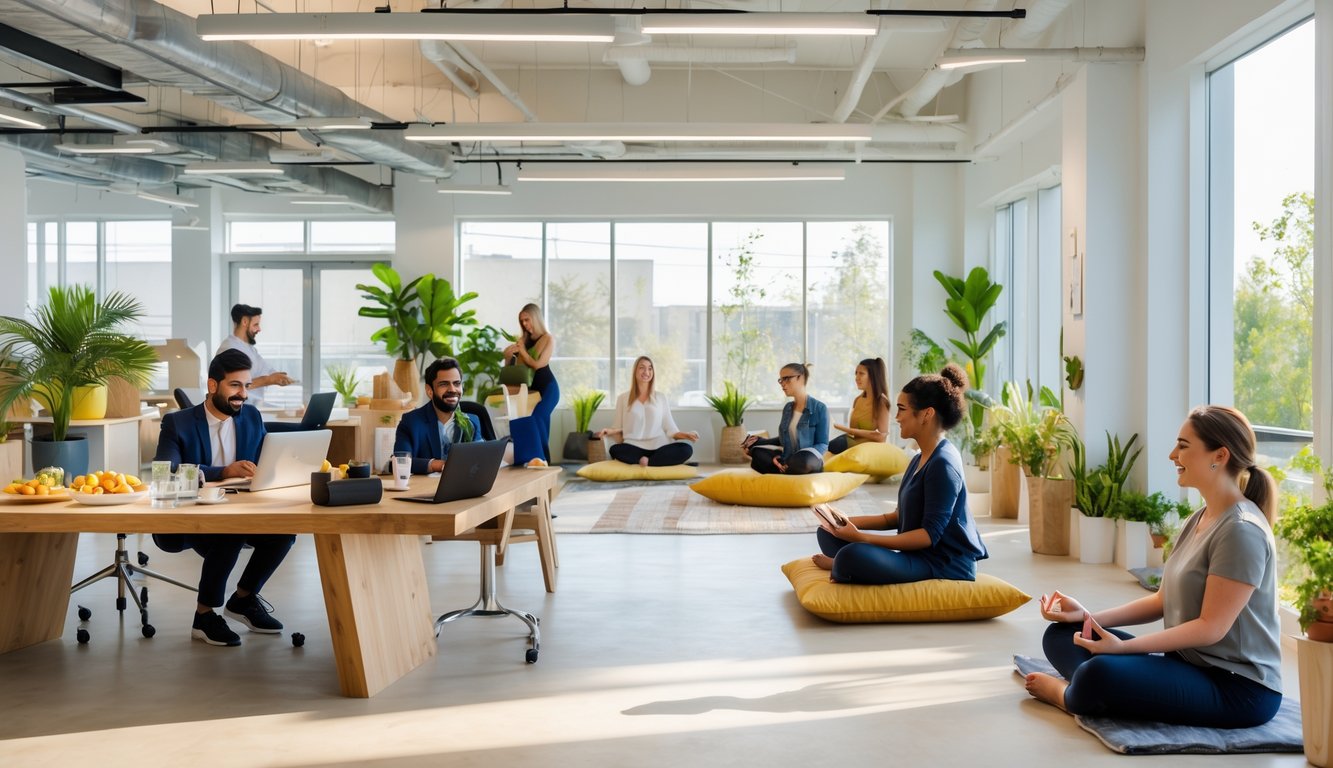
I create a work environment where people feel supported and connected. I offer resources for mental health, encourage healthy routines, and make sure the space feels safe and welcoming for everyone.
Wellness Programs and Events
I organize activities that help members care for their mental health. This includes guided meditation sessions, weekly yoga classes, or short mindfulness breaks during the day.
These activities give people a chance to pause and reset. Sometimes, I invite guest speakers to talk about stress management or work-life boundaries.
Practical tips from experts can help people handle busy schedules. I also set up small group activities like walking clubs or healthy lunch meetups.
These activities promote well-being and help members connect with others who share similar goals. For example, even simple wellness events can reduce feelings of isolation and improve morale.
Positive Work Atmosphere
I pay close attention to how the space feels every day. A positive atmosphere starts with clear communication, respect, and kindness between members.
When people greet each other and share ideas, the energy in the room improves. Lighting, noise levels, and comfortable seating also matter.
I design the layout to support focus and allow for casual conversations. When members feel included and valued, they stay engaged and motivated.
A shared community board for wins, updates, and events keeps everyone connected. A supportive work environment can reduce stress and boost job satisfaction.
Balancing Stress and Relaxation
I encourage members to take short breaks throughout the day. A quick walk outside or a few minutes in a quiet lounge can help clear the mind.
We have areas for relaxation, such as a reading corner or a space with soft seating and plants. These spots give people a mental reset without leaving the building.
When deadlines pile up, I remind members to set realistic goals and avoid overloading their schedules. This balance between productivity and rest is key to long-term mental health.
Tailoring Work-Life Balance for Remote Workers and Freelancers

I plan my day to help separate work from personal time. Small, consistent habits keep me productive without letting work spill into my downtime.
Creating Routine and Structure
When I first started working remotely, my days felt scattered. Setting a clear start and end time changed that.
I treat my work hours like any other job, even if I’m at home or in a coworking space. I break my day into focused work blocks and short breaks.
This keeps me from sitting too long and helps me reset my mind. I often use the Pomodoro Technique—25 minutes of work followed by a 5-minute break.
Having a dedicated workspace is important. Even in a shared coworking area, I pick the same spot each day.
That routine signals to my brain that it’s time to focus. To keep myself accountable, I plan tasks the night before.
I use a simple list with three priority items. Anything else I finish is a bonus and helps prevent burnout.
Maintaining Motivation and Focus
I find motivation by knowing why I’m doing the work. I set small, achievable goals so I can see progress every day.
This helps me avoid the slump that sometimes comes with remote work. I also limit distractions.
I keep my phone on silent and check messages only during breaks. In coworking spaces, I choose quieter areas or use noise-canceling headphones.
When I notice my focus slipping, I change my environment. Sometimes I move to a lounge area or take a short walk outside.
These small shifts refresh my mind. I connect with other remote workers and freelancers, either in person or through online groups.
Sharing tips and challenges reminds me I’m not working in isolation. Even if my job is independent, I can still feel connected.