I’ve noticed that the coworking spaces I enjoy most have one thing in common—plenty of sunlight. It’s not just about making a room look nice.
Natural light supports wellness by boosting mood, reducing eye strain, and helping you feel more alert throughout the day. When you spend hours working indoors, the quality of light around you can make a real difference in how you feel and perform.
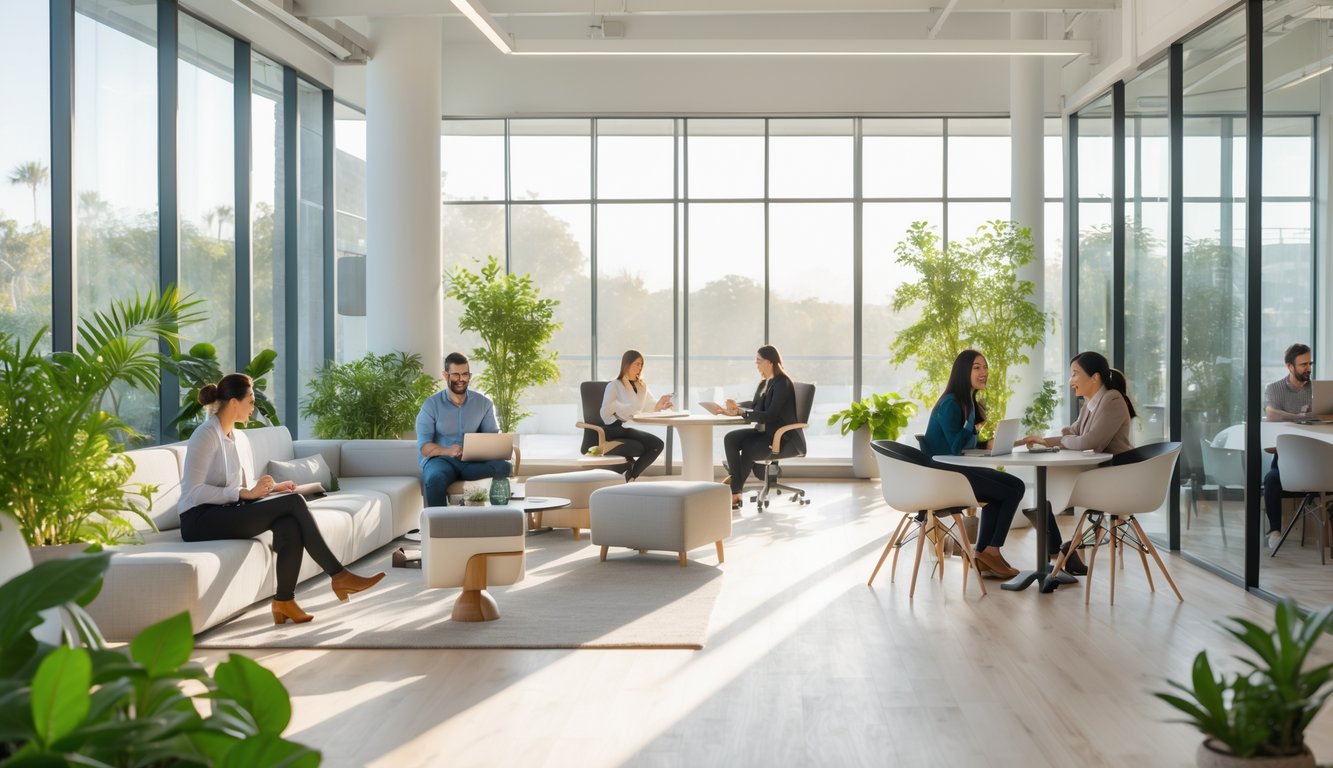
Large windows, skylights, or open layouts let daylight in, making the atmosphere feel more open and energizing. Research shows that access to natural daylight in the workplace can reduce fatigue and improve comfort.
Many coworking spaces now design their layouts to capture as much sunlight as possible. Thoughtful design choices can make a shared workspace healthier and more inviting.
From wellness benefits to practical lighting strategies, there’s a lot to explore about creating a bright and balanced environment that works for everyone.
Why Natural Light Matters in Coworking Space Wellness
When a workspace has plenty of natural light, people seem more comfortable and focused. Natural light affects how our bodies feel, how our minds work, and even our energy levels during the day.
Impact on Employee Well-Being
When I spend time in a coworking space with large windows or skylights, I feel more connected to the day’s natural rhythm. Daylight helps regulate my circadian rhythm, which supports better sleep and more consistent energy.
Natural light can also reduce eye strain compared to harsh artificial lighting. Softer, indirect sunlight makes it easier to work for longer periods without headaches.
Many coworking spaces use open layouts so light can reach more areas. Some add outdoor terraces or gardens, giving people a chance to step outside and recharge.
Influence on Productivity and Work Performance
My focus improves when I work near a window. Studies show that natural light can boost alertness and help people stay on task for longer.
In coworking spaces, this often leads to better work output without feeling drained. Natural light also supports sharper thinking, and I experience fewer midday slumps in bright environments.
Even short breaks in sunlit areas help me reset and return to work with more clarity. Some coworking hubs prioritize open layouts and window placement, making it easy to choose a spot that matches my task.
Connection to Mental Health and Mood
Natural light has a clear link to mood. Bright, sunlit spaces often feel more positive and welcoming, which helps reduce stress.
When I work in a space with good daylight, I tend to feel calmer and more motivated. Daylight exposure helps my body produce serotonin, a chemical linked to feelings of well-being.
Coworking spaces with thoughtful lighting design—like those that integrate greenery and daylight—feel more uplifting. This can make a big difference in how I approach my work and interact with others.
Health Benefits of Natural Light in Work Environments
When my workspace has good natural light, I feel more alert and my eyes don’t tire as quickly. I also tend to get better rest at night.
Reduction of Eye Strain and Headaches
Working in a space with plenty of daylight gives me much less eye strain. My eyes don’t have to work as hard to adjust to harsh artificial lighting.
Workers in daylight-rich offices report a 51% drop in eye strain and a 63% drop in headaches compared to those in low-light spaces. You can read more about these findings in this report on workplace wellness.
Filtered natural light through blinds or sheer curtains reduces glare and helps prevent squinting, which can trigger headaches. During long computer sessions, my eyes feel less dry, and I can focus longer without discomfort.
Support for Circadian Rhythms and Sleep Quality
Natural light helps keep my circadian rhythm on track. This internal clock controls my sleep and wake cycles.
Morning sunlight, especially the blue wavelengths, signals my body to be alert. Afternoon daylight helps me feel more awake without extra caffeine.
Workers with access to daylight sleep better and report improved sleep quality. You can learn more about the science of light and body clocks in this overview of natural light’s impact on health.
When my sleep improves, I notice a better mood, sharper focus, and steadier energy.
Decrease in Sick Days and Absenteeism
Since I started working in a space with large windows, I’ve taken fewer sick days. I believe natural light supports my immune system and reduces stress.
Daylight helps regulate vitamin D levels, which play a role in immune function. It also improves mood, lowering the risk of stress-related illness.
Some offices report fewer cases of absenteeism after improving natural light access. One study found that better lighting design led to measurable gains in employee health and attendance, as discussed in this Harvard Business Review article.
Fewer sick days mean I can keep up with projects and maintain a steady workflow.
Design Strategies to Maximize Natural Light
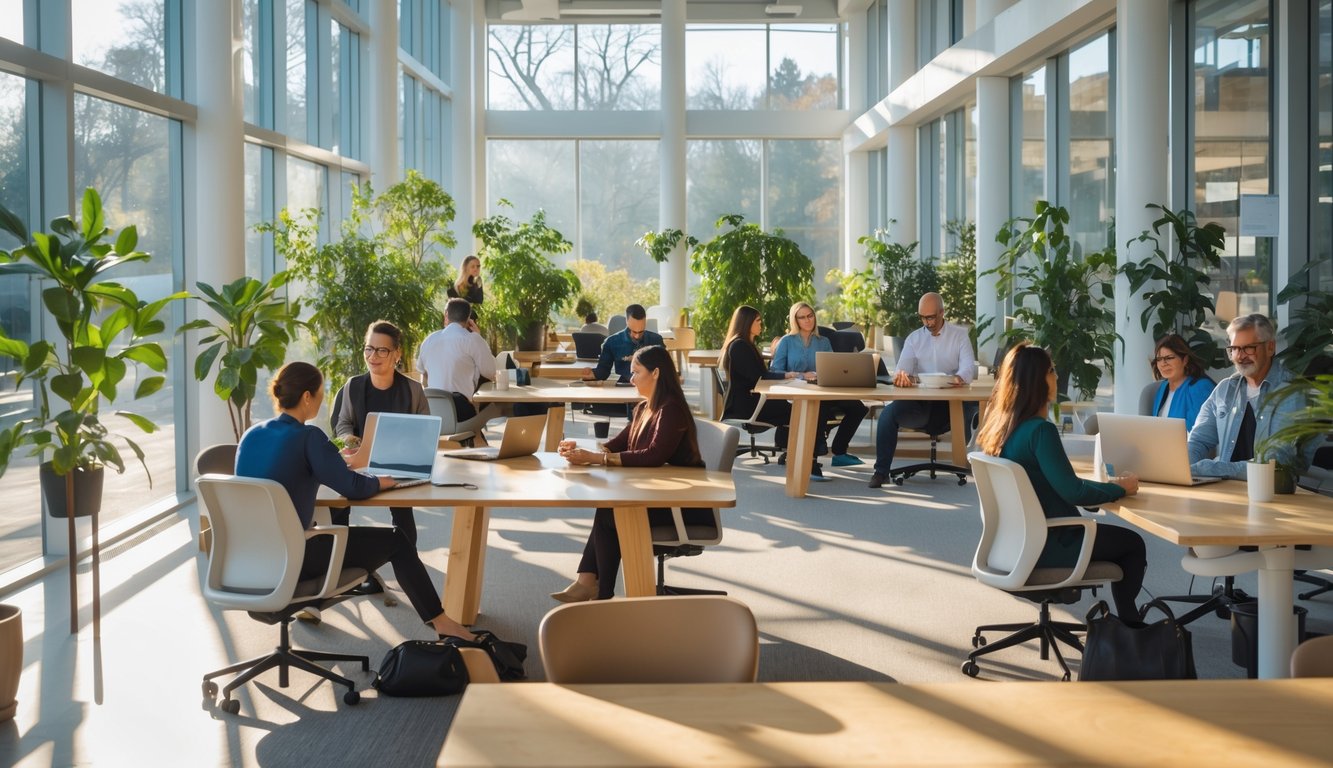
I arrange spaces so sunlight can travel deeper indoors, reduce the need for artificial lighting, and create a more comfortable work environment. I also look for ways to control glare and heat while keeping the space bright and open.
Optimal Placement of Workstations Near Windows
I place desks and workstations close to windows so people can benefit from direct daylight. This reduces eyestrain and makes the workspace feel more open.
To avoid glare on screens, I position monitors at a right angle to the window. I keep tall storage units or partitions away from window areas so light can spread across the room.
When planning seating, I make sure walkways and shared areas don’t block the path of light. Keeping the space near windows clear improves both brightness and airflow.
If a window faces a busy street, I use sheer curtains to filter light without losing visibility. This keeps the natural feel while reducing distractions.
Use of Glass Partitions and Reflective Surfaces
I use glass partitions instead of solid walls to let daylight pass between different areas. This works well in coworking spaces where private offices still need a visual connection to shared zones.
Frosted or textured glass provides privacy while still allowing light to travel. I pair this with reflective surfaces like light-colored desks, glossy finishes, or mirrors to bounce light further into the space.
Here’s a quick example of how I combine materials:
| Element | Purpose |
|---|---|
| Glass partitions | Spread light between rooms |
| Mirrors | Reflect light deeper indoors |
| Glossy finishes | Increase brightness without glare |
This approach makes even interior workstations feel brighter without adding more windows.
Incorporating Large Windows, Skylights, and Adjustable Blinds
I prefer large windows for maximum daylight, especially in shared lounge or meeting areas. When possible, I choose floor-to-ceiling designs to make the most of the view and light.
For upper floors or spaces without exterior walls, I add skylights to bring sunlight from above. Skylights work well in central zones where windows aren’t an option.
To manage brightness and heat, I install adjustable blinds. These let me fine-tune the amount of light during different times of day.
In sunny climates, I use blinds with reflective backing to reduce heat gain while keeping the room bright. If you want more ideas for increasing daylight in work environments, this guide on maximizing natural light in building design is a helpful resource.
Balancing Natural and Artificial Lighting
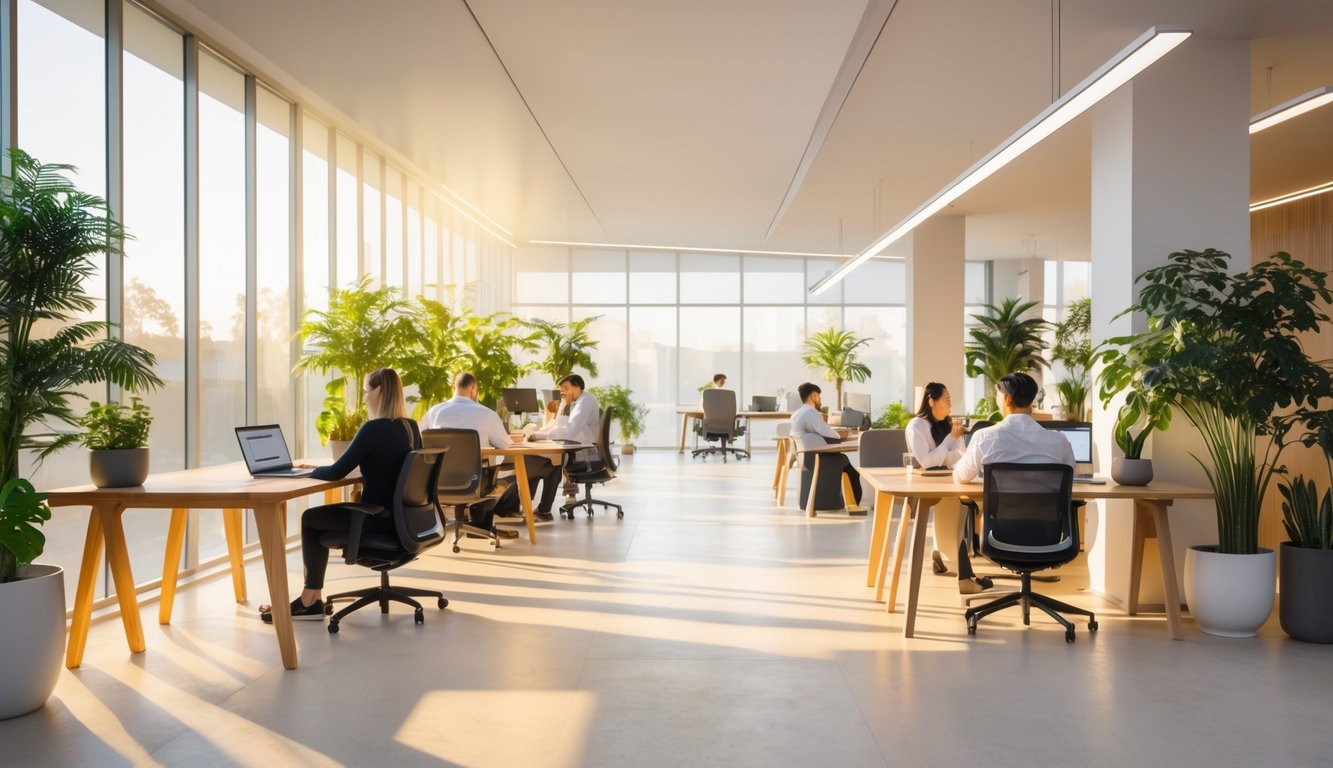
I create workspaces where daylight and electric light work together instead of competing. This helps reduce energy consumption, improve visual comfort, and keep lighting consistent.
Lighting Strategies for Even Light Distribution
I place desks near windows so people can get as much daylight as possible without glare. If sunlight is too strong, I use adjustable blinds or sheer curtains to soften it.
For artificial lighting, I choose LED fixtures with a neutral color temperature, usually around 4000K. This blends well with daylight and avoids harsh contrasts.
I use a layered lighting approach:
- Ambient lighting for general brightness
- Task lighting for focused work
- Accent lighting for specific areas
Combining these layers keeps light levels even across the space. I avoid having bright spots next to dim areas because that strains the eyes and makes the room feel unbalanced.
Role of Light Sensors and Automated Controls
I use light sensors to adjust artificial lighting based on available daylight. When the sun is bright, the system dims the electric lights.
When clouds roll in, the lights brighten automatically. This approach saves electricity and keeps light levels steady without manual changes.
Occupancy sensors turn off lights in unused areas. In a coworking space, daylight harvesting—using sensors to measure natural light and adjust fixtures—can save on utility bills.
It also makes the lighting feel more natural because it changes gradually. Automated controls let me focus on work instead of constantly tweaking light switches.
Minimizing Negative Effects of Fluorescent Lighting
I’ve noticed that fluorescent lighting can cause eye strain, headaches, and a flicker that some people find distracting. To reduce these effects, I replace old fluorescent tubes with high-frequency electronic ballasts or switch to LED alternatives.
When I need to keep some fluorescents, I choose bulbs with a color rendering index (CRI) above 80. This makes colors look more natural and reduces visual fatigue.
I also mix in natural light and warm LED task lamps to soften the overall feel. This balance helps reduce the cold, flat look that fluorescent lighting often creates.
For more tips on creating comfortable, energy-efficient lighting in workspaces, I found this guide on balancing natural and artificial light helpful.
Aesthetic and Psychological Advantages of Sunlit Coworking Spaces
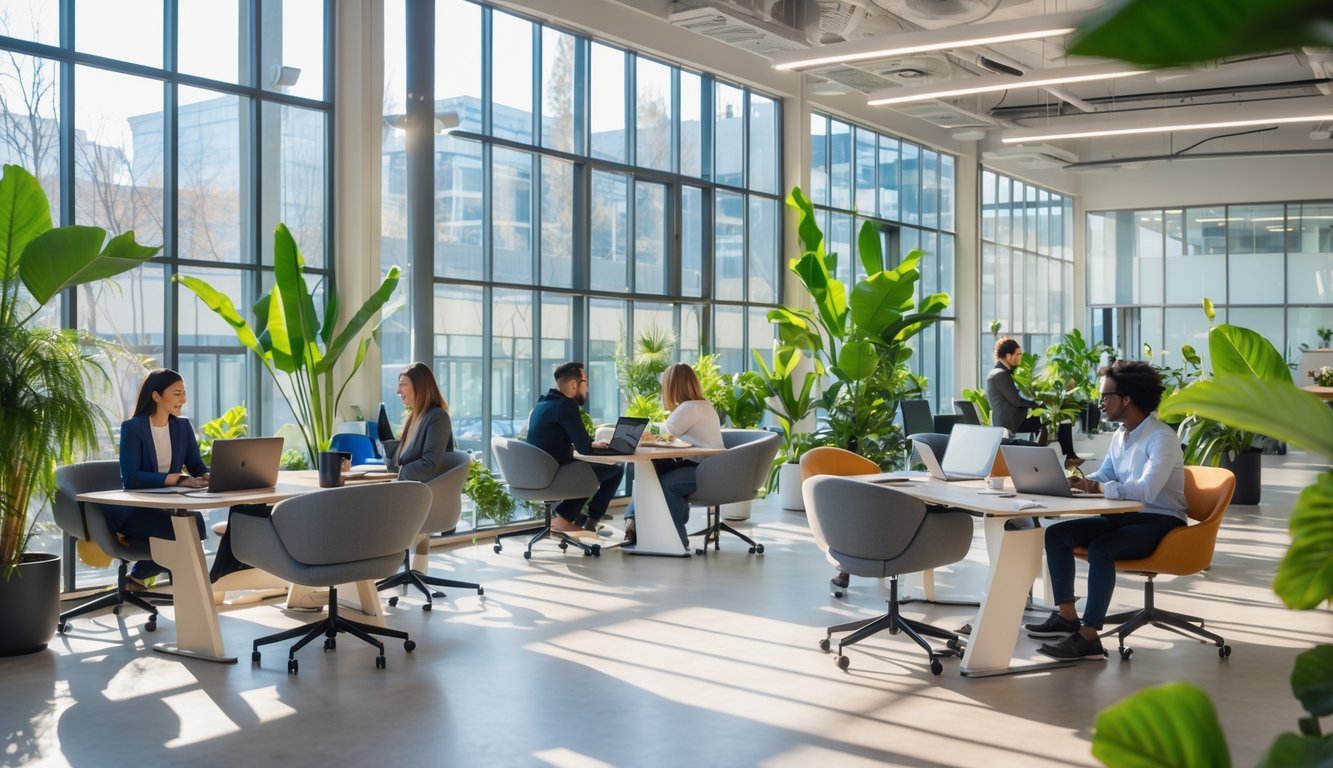
I notice that natural light changes how a space feels and how people work in it. It improves the look of the room and supports mental clarity.
Natural light also makes the office environment more welcoming for everyone.
Boosting Aesthetic Appeal and Biophilic Design
When I walk into a coworking space filled with sunlight, the colors look richer and the room feels more open. Natural light highlights textures like wood, stone, or fabric and makes the design stand out.
I often see spaces use biophilic design by adding plants, natural materials, and views of the outdoors. This combination connects me to nature even while indoors and creates a calmer mood.
Sunlight also reduces the need for harsh overhead lights. This improves the aesthetic appeal by removing glare and shadows that can make a space feel cold or uninviting.
Studies show that coworking spaces with plants and daylight encourage people to spend more time in them.
Enhancing Creativity and Focus
I find it easier to focus when I work in a sunlit area. Exposure to daylight helps regulate my body’s circadian rhythm and keeps my energy steady throughout the day.
Sunlight supports creativity by stimulating the brain. A bright, well-lit workspace reduces eye strain and mental fatigue, which frees up more energy for problem-solving.
In coworking spaces with large windows or skylights, people tend to collaborate more. The positive effect of natural light on mood and energy can make group work feel less draining and more productive.
Fostering a Positive and Inviting Work Environment
A sunlit office environment feels warmer and more open. It encourages me to stay longer and work more comfortably.
Bright spaces often feel cleaner and more organized, which can reduce stress. Natural light also makes shared areas like lounges or meeting rooms more inviting.
People are more likely to use these spaces when they feel pleasant and well-lit. I’ve seen coworking hubs use daylight as part of their design strategy to create a positive work environment.
For example, spaces that prioritize natural light often attract members who value comfort and well-being as much as productivity.
Sustainable and Remote Work Considerations
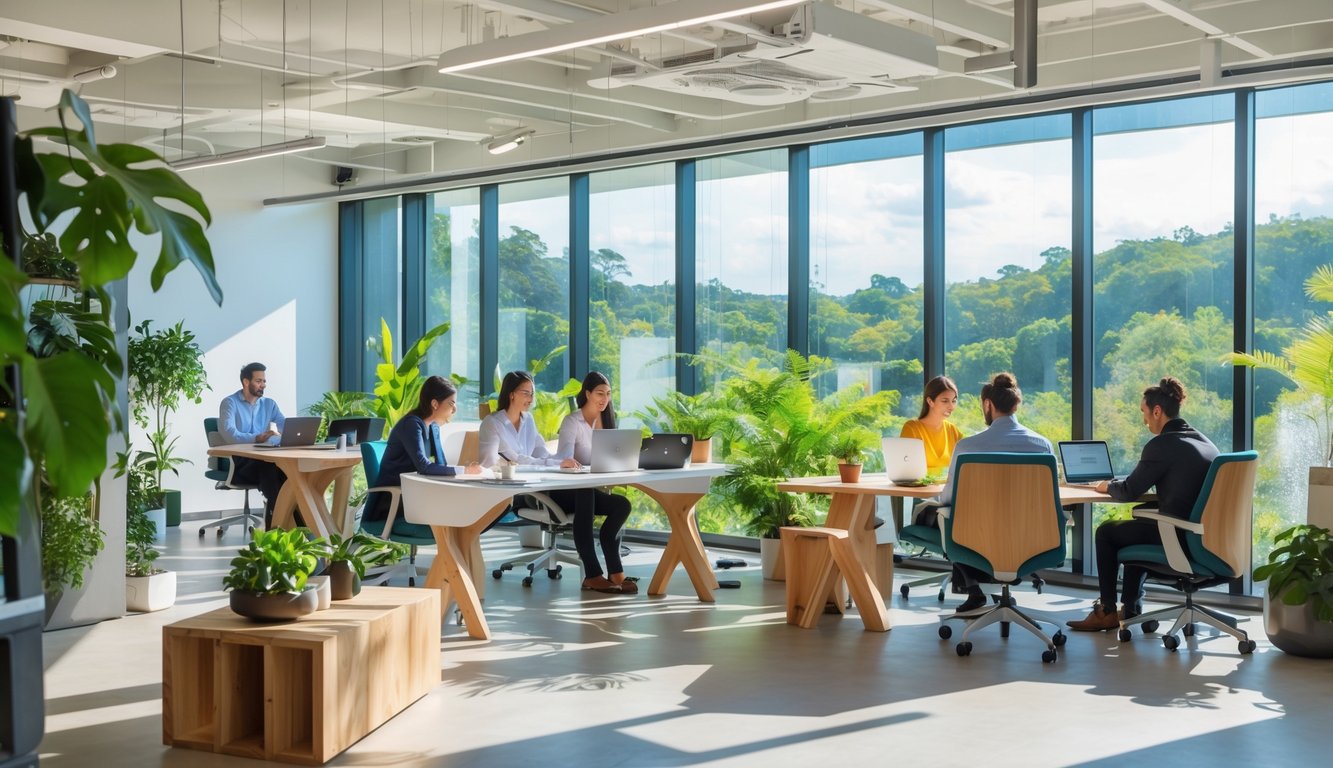
I’ve found that natural light can do more than improve mood. It can lower energy use, support healthier air, and make remote work setups more comfortable.
By thinking about lighting alongside ventilation and workspace design, I can create an environment that feels good and works efficiently.
Reducing Energy Consumption in Coworking Spaces
When I design or choose a coworking space, I look for ways to cut down on artificial lighting. Large windows, skylights, and open layouts help sunlight reach more areas.
This reduces the need for overhead lights during the day. Some spaces use north-facing windows or floor-to-ceiling glass to bring in steady, low-glare light.
Many sustainable office designs use this approach to keep spaces bright without overheating them.
I also check for LED lighting with motion sensors. These turn off when no one is in the room, saving power.
Pairing natural light with energy-efficient fixtures can lower both electricity bills and environmental impact.
Natural Light Solutions for Remote and Hybrid Workers
When I work from home, I try to set up my desk near a window so I can get steady daylight. Natural light helps me stay alert and reduces the eye strain I get from screens.
Hybrid workers can benefit from flexible layouts in coworking spaces. Some eco-friendly coworking designs place desks near windows and include outdoor seating areas.
This gives me options to work indoors or outside depending on the task and weather. If direct sun causes glare, I use adjustable blinds or sheer curtains.
That way, I can control brightness without blocking all the light.
Integrating Air Quality and Light Exposure
I’ve noticed that light and air quality often go hand in hand. Spaces with large windows can open to let in fresh air and daylight.
Some coworking spaces use biophilic design. They add plants to improve air quality and soften light levels.
For remote work, I often open windows during the day. This brings in fresh air and daylight, which helps me feel more awake.